

|Videos|April 10, 2023
PPE Standardization Practices and Key Takeaways
Experts in infection prevention review PPE standardization practices and Heather Saunders, MPH, RN provides her key takeaways for other healthcare practitioners on best practices related to PPE.
Advertisement
Episodes in this series

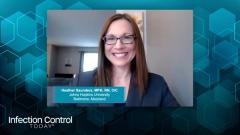
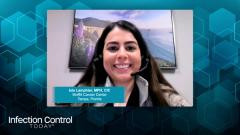
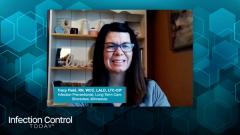
Heather Saunders, MPH, RN, CIC: When it comes to personal protective equipment (PPE) practices, there are a couple of different governing bodies that facilities should pay attention to. Obviously, we look to CDC (Centers for Disease Control and Prevention) to determine what are infection prevention recommendations, when should we be using personal protective equipment and how should we be using personal protective equipment. How long should we be using personal protective equipment? We're going to look to CDC to answer those questions for us. And then we're going to look to OSHA (Occupational Safety and Health Administration) for the employer's understanding of what they're supposed to be providing to their employees and how they're supposed to be training employees on the use of personal protective equipment. So that's really our regulatory body surrounding the provision of personal protective equipment to our healthcare workers. And then we have NIOSH (National Institute for Occupational Safety and Health), which is also a branch of CDC, but they're really involved in the quality of our personal protective equipment. Vetting our PPE and ensuring that we are providing quality PPE to our healthcare workers. So, when choosing a mask, we're going to look to NIOSH to ensure that that mask is vetted, that it is quality mask. For example, that our respirators are NIOSH approved respirators. We're going to look to them to ensure that we are choosing the right personal protective equipment. So those three governing bodies should help facilities to ensure that they are training their healthcare workers on the correct PPE practices and using the right personal protective equipment for the situation. And then our facilities may want to go above and beyond. They may want to create additional policies and protocols for standardizing their use of PPE in their own facilities.
So, when healthcare workers are choosing the different types of personal protective equipment they're using, I would say that there are three things that they really need to pay in mind when making that decision. Number one, they need to choose the personal protective equipment that is best for their situation. And what I mean by that is that the personal protective equipment needs to be in line with what is recommended for caring for a patient on droplet, airborne, or contact precautions. In the use of personal protective equipment for standard precautions, they need to think about, will I be at risk of a splash or spray in the situation, what type of personal protective equipment should I use? So best for the situation. Second, they need to ensure that the personal protective equipment is best for the wearer. So, the person wearing the PPE needs to consider, is this the best equipment for me? For example, the mask that I'm wearing is it going to offer me the best fit. The third thing that they really need to pay in mind is ensuring that the use of their personal protective equipment is least contaminated.
Well ladies, thank you so much for taking the time to talk with us today and have this conversation. I think it is so incredibly important. Hopefully, this is helpful to our community as they continue to wrestle through the use of personal protective equipment, making sure that we are using personal protective equipment in a way that is keeping ourselves safe and keeping everyone else safe. Thank you so much.
Isis Lamphier, MPH, CIC: Thank you, Heather.
Tracy Field, RN, WCC, LALD, LTC-CIP: Thank you, Heather.
Isis Lamphier, MPH, CIC: Thank you, everyone, and all the health care workers for all that you do for our staff and for our patients.
Tracy Field, RN, WCC, LALD, LTC-CIP: Thank you, everybody.
Transcript edited for clarity
Advertisement
Related to this article
This week on Infection Control Today, the stories ranged from emerging drug-resistant pathogens circling the globe to a landmark decade of surface science—all against a backdrop of ongoing outbreaks and a hard look at what the profession owes its own workforce.
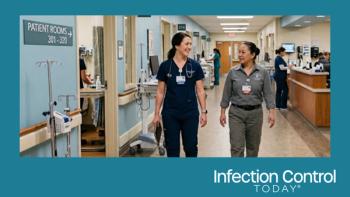
During National EVS Week, appreciation matters, but partnership matters more. Environmental services professionals bring infection prevention expertise and a unique understanding of the health care environment that can help identify barriers, improve cleaning and disinfection practices, and ultimately protect patients.
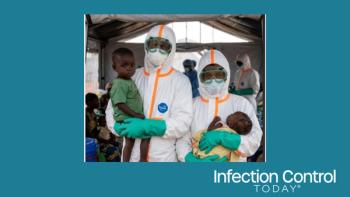
Nearly 4 months into the DRC's Bundibugyo virus disease outbreak, some indicators suggest transmission may be slowing. But shifting hotspots, treatment-center capacity problems, community deaths, and incomplete surveillance data show why national case totals alone cannot determine whether containment has been achieved.

"You can't underinvest in public health and then expect it to have a fast and swift response."
Brian C. Castrucci, DrPH, discusses Cyclospora, surveillance, workforce capacity, misinformation, and rebuilding public trust.
Read the Q&A and watch the full ICT interview.
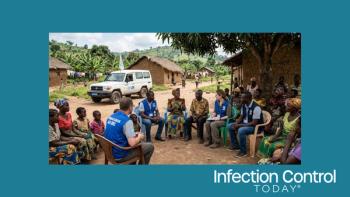
Is the Ebola outbreak in the DRC getting better?
The answer depends on which numbers you examine.
Several important indicators are moving in the right direction, including slower case growth and a declining Rₜ. But major gaps remain in contact tracing, testing, community deaths, safe burial coverage, and treatment capacity in some of the hardest-hit areas.
ICT takes a deeper look at the latest outbreak data and why the numbers suggest cautious optimism, not victory.

At AHE Exchange 2026, ICT spoke with experts representing commercial laundry services, EVS, and infection prevention about the systems behind a successful reusable linen program.
They discuss linen quality, reject rates, unnecessary waste, frontline education, data, PAR levels, infection prevention oversight, and why strong relationships between health care facilities and their laundry providers matter.

How do you celebrate an infection that never happened?
That's one of the unusual challenges infection preventionists share with teachers.
Both can spend their careers changing outcomes they may never see. Both educate people who don't always want to listen. Both are second-guessed. Both face burnout. And both must somehow keep remembering why they started.
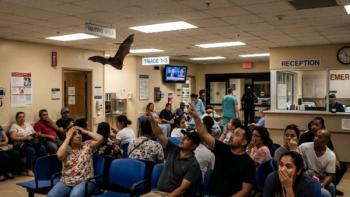
There’s a bat in the hospital. Now what? Before anyone swats it, grabs it, or throws it away, infection prevention needs staff to understand one thing: That bat may be critical evidence in determining whether patients and employees need rabies PEP. One bat. One bad decision. A potentially enormous exposure investigation.
Advertisement
Advertisement
Trending on Infection Control Today
1
What Is Trichophyton indotineae? Drug-Resistant Ringworm Spreads to 29 Countries
2
Infection Control Today Launches First Digital Magazine for Infection Prevention Professionals
3
ICT Weekly Rounds – September 17, 2026: RIngworm, Measles, Ebola Updates
4
National EVS Week 2026: Why Environmental Services Is Essential to Infection Prevention and Patient Safety
5