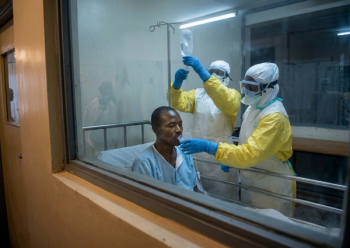
On October 22, 2026, French health authorities reported something no one had documented before: a person infected with Shamonda virus, a midge-borne virus previously known only in animals.1-3 The patient was severely immunodeficient, receiving care for a serious illness at a hospital in Lyon, and died in early October.1
As an infection preventionist (IP), when I envision an emerging pathogen entering my facility, I think about high fever and a history of exotic travel. This virus did not need to travel far; it had already been circulating among farm animals in Eastern France since the summer.1
What authorities have shared about this patient’s illness comes down to 2 words: complications cérébrales, or brain complications. According to what has been reported so far, those complications were very probably linked to the virus.1 Whether the virus caused or contributed to the death, and how the patient became infected, are still under investigation.2
That gap is what makes the story. One case tells us this virus is able to infect a human. What it cannot tell us is how often, how severely, or whether the virus is transmissible from person to person.
Top 3 Takeaways
- A first human infection warrants investigation. The reported case involved a severely immunocompromised patient in Lyon, and the virus’s role in the patient’s death remains unresolved.
- Transmission questions remain open. An infected midge bite is the leading hypothesis; this case does not establish person-to-person transmission.
- One Health connects the investigation. Understanding the relationship between animal infections, biting midges, and human exposure is central to assessing the significance of this case.
The Clinical Picture in Lyon
Today, not very much. Using a One Health approach, subject matter experts specializing in human disease, animal disease, and environmental health are working together to determine how this happened.1 French authorities are collecting information on the source of infection and possible routes of transmission to inform the investigation and identify whether there is any potential risk to public health.3
The patient’s age, sex, underlying illness, date of symptom onset, how the infection was diagnosed, and which specimen tested positive have not been released. What has been officially reported is in Figure 1.
Microbiology Baseline: From West Africa to Europe
For the microbiology refresher: Shamonda virus belongs to the genus Orthobunyavirus in the family Peribunyaviridae, within the Simbu serogroup of related viruses.4,5 It is an enveloped virus with a negative-sense, single-stranded RNA genome.4,5
Shamonda virus was first detected in Nigeria in the mid-1960s and has been reported sporadically in cattle in West, East, and southern Africa and in Japan.1 In Japan, it was linked to malformed calves in 2015 and 2016.6 In South Africa, it turned up in Culicoides biting midges in 2017 and in an aborted goat fetus in 2021.4 In this case, the European species of the midge has not yet been identified (Figure 2).2
In Europe, signs of illness in animals were first reported in June, the virus was identified in late July, and it has since been found in farm animals in 12 countries and on the Channel Island of Jersey.² Cattle are the main hosts, and this summer, France also identified sporadic infections in sheep, goats, and members of the horse family.¹
Unraveling the Transmission Route
The leading hypothesis is a bite from an infected Culicoides midge in eastern France, where the virus circulated in animals during spring and summer 2026.1 WHO Director-General Tedros Adhanom Ghebreyesus notes the patient was in an area where the virus was circulating in animals and where these midges were present.3 The European Centre for Disease Prevention and Control (ECDC) says the midge species involved is still unknown and that midge activity is declining with cooler weather.2
Key questions remain open:
- Where the patient lived, worked, or traveled during the likely exposure window.
- Whether the patient had contact with cattle, small ruminants, or horses.
- Whether the patient received blood products, tissue, or an organ before becoming ill. No statement mentions these routes, and none rules them out.
- Which viral clade, or genetic lineage, infected the patient, and whether it matches the virus circulating in nearby herds.
- Whether the virus was detected before or after the patient’s death.