
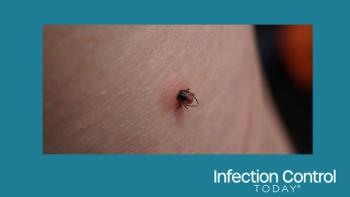
A study of 193,260 individuals found overlapping tick-borne antibody levels more frequently among those with Lyme antibodies, highlighting diagnostic challenges when active coinfections are not confirmed.
A study of 193,260 individuals found overlapping tick-borne antibody levels more frequently among those with Lyme antibodies, highlighting diagnostic challenges when active coinfections are not confirmed.

A new $17 million international clinical trial will evaluate personalized phage therapy for recurrent antibiotic-resistant urinary tract infections, bringing together researchers from 13 countries.

Merck has announced that the FDA accepted its supplemental application to expand ENFLONSIA's indication to include children younger than 2 years who remain at increased risk for severe RSV disease during their second RSV season.
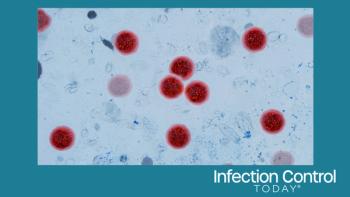
Roche has introduced 2 new research-use PCR assays for Cyclospora cayetanensis, expanding laboratory testing options as public health officials continue to respond to one of the largest Cyclospora outbreaks in US history.

Phase 3 ISLEND trials presented at AIDS 2026 found an investigational once-weekly oral HIV regimen maintained viral suppression comparable to daily therapy while improving treatment satisfaction and flexibility.
Food safety experts explain how epidemiology, traceback investigations, surveillance, and food safety practices work together to identify contamination sources during Cyclospora outbreaks while highlighting ongoing challenges in protecting the food supply.

The FDA has expanded its Cyclospora outbreak investigation to 9 states. Infection preventionists should review food safety protocols, vendor recalls, and surveillance for prolonged diarrheal illness.
Atea Pharmaceuticals completed enrollment in its Phase 3 C-FORWARD trial evaluating Bemnifosbuvir and Ruzasvir, advancing a simplified treatment approach for chronic hepatitis C.

Think you know your infection control acronyms? Test your expertise with our ICT Expert Acronym Challenge! From CLABSI to VRE, this 20-question puzzle covers essential health care-acquired infection prevention terminology that every infection control professional should master. How many can you match correctly? Try the challenge now! Perfect for IPC specialists, infection prevention coordinators, and health care epidemiologists!
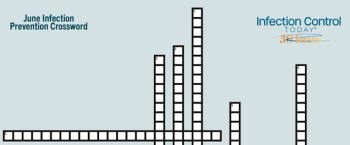
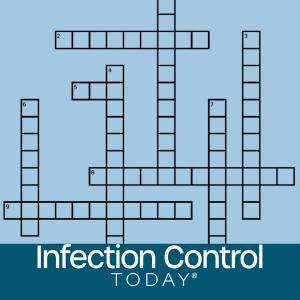
Test your infection prevention and control knowledge with this IPC-themed crossword puzzle featuring terms and concepts related to hand hygiene, sterilization, PPE, outbreak prevention, and healthcare-associated infections. Designed for health care professionals, the puzzle offers an engaging way to reinforce key IPC principles while promoting education and awareness.

A 7-year study at a 1,900-bed academic medical center in Singapore found no epidemiological link between contaminated endoscopes and postprocedural bloodstream infections, despite routine microbiological surveillance detecting residual contamination.

A Kansas jury awarded $7.65 million in a fatal KU Medical infection case tied to contaminated heater-cooler devices, renewing attention on Mycobacterium chimaera risks, device disinfection failures, and patient safety in cardiac surgery.

The cohosts of Contagious Conversation speak with Tori Whitacre Martonicz, lead editor of Infection Control Today, about her presentation at the SoCal SPA Spring Conference, and how the conference speakers emphasized leadership beyond titles, urging SPD professionals to share knowledge, speak up, and turn everyday insights into safer patient care practices.

Childhood vaccination coverage is declining, with sharp drops in influenza uptake and widening disparities by race, income, and access. CDC data warn that these trends increase outbreak risk and underscore the urgent need for targeted vaccination efforts.

Phase 3b ENCORE data show ARIKAYCE improves symptoms and culture conversion in newly diagnosed MAC lung disease, supporting earlier use. Findings suggest potential to shift treatment earlier and improve outcomes in this difficult-to-treat infection.

Cepheid has been selected by the CDC as a national collaborator to accelerate rapid diagnostic development during public health emergencies. With early access to outbreak samples and genomic data, the company aims to shorten response timelines and strengthen U.S. pandemic preparedness through scalable, high accuracy PCR testing solutions.

At CROI 2026 in Denver, ViiV Healthcare unveiled new data on ultralong-acting HIV treatments, including first-in-human results for third-generation integrase inhibitor VH184 and early capsid inhibitor data. Updated prevention and real-world findings highlight progress toward 4-month dosing and expanded options across adult and pediatric populations.

This Pathogen Pulse examines infection prevention worldwide. Minnesota is investigating a TMVII fungal outbreak with 13 confirmed and 27 suspected sexually transmitted cases in the Twin Cities. CDC researchers report 10,530 travel-associated dengue cases from 128 countries between 2010 and 2024, which can help detect global outbreaks earlier. Further, China, the first human Streptococcus parasuis case in Henan was confirmed, with no livestock exposure, raising environmental transmission concerns.

Join Health Watch USA on February 18, 2026, as Christos Argyropoulos, MD, PhD, MS, FASN, discusses how repeated COVID-19 vaccinations compare with COVID-19 disease in patients with kidney disease, with implications for infection prevention, risk communication, and care of vulnerable populations.

A multicenter study of 401 patients with invasive aspergillosis found similar 90-day survival with mold-active triazoles and liposomal amphotericin B as primary therapy. As IA risk expands beyond traditional populations, the findings underscore the role of antifungal stewardship and careful treatment selection in infection prevention.

Nearly 570 million people worldwide were living with a chronic respiratory disease in 2023, according to a new Global Burden of Disease analysis. While mortality has declined globally since 1990, deaths are rising in high-income North America, driven by interstitial lung disease and pulmonary sarcoidosis, with older adults facing the greatest risk.

Look back with ICT at their print issues and look ahead at what ICT's 30th year will hold!

ICT’s top articles of 2025 spanned essential glove-use standards, CDC guidance on H5N1 monitoring, AI-driven infection prevention in operating rooms, advanced influenza surveillance for public health reporting, and APIC’s warning on communication restrictions that threaten outbreak response. Together, they highlight the evolving, high-stakes role of infection prevention in safeguarding health care and communities.

Long-term wastewater surveillance revealed hidden SARS-CoV-2 transmission, detected variants early, and supported new EU public health mandates, demonstrating wastewater-based epidemiology as a critical early-warning tool for infection prevention, environmental hygiene, and outbreak preparedness.
A large population study of more than 1,100 adults suggests there are really 2 biologically meaningful nasal states: noses dominated by Staphylococcus aureus and noses ruled by protective commensals like Corynebacterium and Dolosigranulum. Intermittent carriers fall in between, prompting researchers to rethink long-standing categories of S aureus colonisation and risk.

Whooping cough is surging across West Virginia just as vaccine misinformation and new exemption policies erode one of the state’s most reliable defenses against the disease, leaving infants and other high-risk residents increasingly vulnerable.

Thank you, IPC professionals, from Infection Control Today!

“We believe it is essential to reaffirm what decades of rigorous research have already demonstrated. Vaccines do not cause autism," a statement from SIDP, APIC, and HOPA stated, released this morning (Nov 21, 2025).
On October 20, hospitals worldwide will pause to highlight a vital truth we all know but seldom openly acknowledge: environmental hygiene saves lives. Clean Hospitals Day 2025 offers an opportunity to unite teams, appreciate the environmental services (EVS) professionals who ensure safe care environments, and establish lasting habits that endure well beyond the celebration.
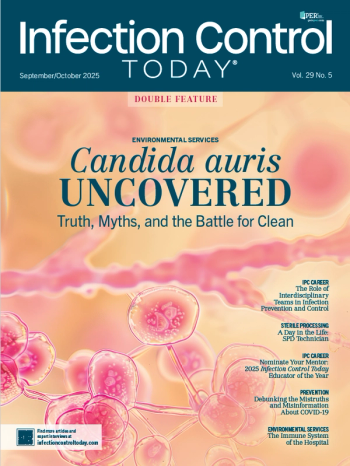
Check out the latest print edition of Infection Control Today: September/October 2025.
Published: June 5th 2026 | Updated: June 29th 2026
Published: August 11th 2025 | Updated: August 13th 2025
Published: March 5th 2024 | Updated: August 5th 2024
December 23rd 2020

