
Central line-associated bloodstream infection (CLABSI) can cause harm to patients or even lead to fatalities, while also resulting in additional expenses for hospitals.

Tori Whitacre Martonicz, MA, is the lead editor of Infection Control Today. She has been a writer and editor for over 30 years and has an MA and BA in English Composition/Literature from the University of Akron in Akron, OH. She lives in Ohio with her husband, Eric; son, Drake; 2 tiny dogs, Selena Brigid Sophia and Doctor Danger Dog; and a big black cat, Freya. She loves reading, writing, gardening, and spending time with her loved ones.
Contact her through her email: tmartonicz@mjhlifesciences.com.
Central line-associated bloodstream infection (CLABSI) can cause harm to patients or even lead to fatalities, while also resulting in additional expenses for hospitals.

Reducing tests has benefits like better antibiotic use and fewer hospital infections. It can also prevent some cases of catheter-associated UTIs.

To celebrate 40 years, the Certification Board of Infection Control and Epidemiology wants to showcase the certification milestones on their website.

Infection Control Today speaks with the CEO of Blue Water Biotech about how to get around antimicrobial resistance and why there may not be a need for more antibiotic creation.

Lifetime's new short film educates viewers on preventing meningitis B, which can cause the devastating loss of loved ones and features Soleil Moon Frye and Melissa Joan Hart.

In this third installment of the interview, managers at Sage Memorial Hospital describe how the OhmniLab robots have become part of their team, complete with Navajo names.

Karen Hoffmann, MS, RN, CIC, FSHEA, FAPIC, will be honored with the Carole DeMille Achievement Award during the 2023 APIC conference in Orlando, Florida, held June 26 to 28, 2023. She also discusses the poster she will be presenting.

Because of the COVID-19 pandemic, the infection prevention field had to think outside the box they were used to. The Navajo Nation was no different. Outside their box, they found UV-C robots.

The FDA released a draft guideline for creating and distributing tattoo inks to prevent microorganisms from tainting the inks and causing severe infections. They are asking for input.

Investigators studied the risk factors for surgical site infections after abdominal hysterectomy procedures using NHSN data and diagnosis codes from administrative data.

What is the CDC's Antimicrobial Resistance Funding map? A key opinion leader explains.

Listen to how a doctor in rehabilitation who works with patients with brain and neurologic injuries is now working with patients with long COVID.

What is infection control and prevention like on the Navajo Nation? Find out in this first of 3 installments in a conversation with managers at the Sage Memorial Hospital, Navajo Health Foundation.

Legionnaires’ disease is a severe infection and fatal in 10% of cases.

Improper handling of insulated instruments can lead to serious complications, including fatal surgical site infections for patients and staff.

Sterilization in hospitals often lacks coordination with other departments, which may hinder knowledge exchange and performance. What can be done to overcome this challenge?
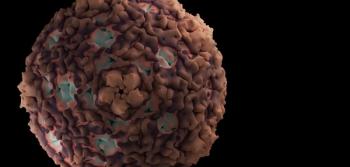
Bug of the Month helps educate readers about existing and emerging pathogens of clinical importance in health care facilities today.

New data about an antibiotic was announced at ECCMID that can treat Pseudomonas aeruginosa and Acinetobacter baumannii infections.
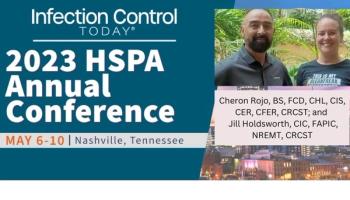
ANSI/AAMI Protective Barriers 70 (PB70) has been updated. A presentation at the annual HSPA conferences explained the changes, and ICT spoke to the presenters. Listen to the interview!

“The public health emergency ending doesn't mean that infectious disease [threats] are over, whether from COVID-19 or otherwise.”

“It doesn't matter if the public health emergency goes away or not. Because we haven't taken advantage of the public health emergency over the last 2 years to understand and address the gaps quite apparent to every American out there.”

A veteran in the sterile processing field, Sharon Greene-Golden gave several presentations at the HSPA Annual Conference. She spoke to ICT about them.

Infection Control Today finds out what the update to AAMI TIR34, “Water for the reprocessing of medical devices,” says.

A unique poster at the Healthcare Sterile Processing Association Conference presents how to prepare and perform sterile manual processing for delicate and sharp instruments.
To control C auris, focus on using antibiotics and improving diagnostics. New treatments in development offer hope for better management. This is the fourth and final installment in CDC's interview with the ICT.

Are you attending the HSPA 2023 Conference in Nashville, Tennessee, from May 6-10? Check out this list to see the best things to do while you’re in town.
CDC warns about Candida auris spreading if health care workers don't take preventative measures in an interview with Infection Control Today.
To prevent the spread of C auris, the CDC recommends that IPs and environmental hygienists play a critical role. In this interview, the medical scientists clarify what specific actions they should take.
To ensure the accuracy of the information concerning Candida auris, Infection Control Today has spoken with 2 medical scientists from the CDC.

Findings provide the first published evidence of the relationship between standard precaution adherence and the safety of health care workers and patients.