
Which of the various low and high-tech measures proposed to mitigate SARS-CoV-2 transmission, from hand hygiene to air cleaners, actually work? A new study gives practical tools for assessment and insights into their effectiveness.

Tori Whitacre Martonicz, MA, is the lead editor of Infection Control Today. She has been a writer and editor for over 30 years and has an MA and BA in English Composition/Literature from the University of Akron in Akron, OH. She lives in Ohio with her husband, Eric; son, Drake; 2 tiny dogs, Selena Brigid Sophia and Doctor Danger Dog; and a big black cat, Freya. She loves reading, writing, gardening, and spending time with her loved ones.
Contact her through her email: tmartonicz@mjhlifesciences.com.
Which of the various low and high-tech measures proposed to mitigate SARS-CoV-2 transmission, from hand hygiene to air cleaners, actually work? A new study gives practical tools for assessment and insights into their effectiveness.
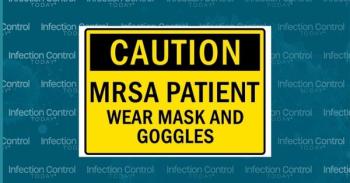
A critical analysis questions the universal application of contact precautions (CP) for MRSA prevention, considering potential harms, environmental sustainability, and evidence-based alternatives.

Learn about vital vaccination recommendations during pregnancy to prevent respiratory diseases like RSV, COVID-19, and influenza. NFID's Robert H. Hopkins, Jr. MD, offers insights and strategies for effective communication.

A recent study from Chapel Hill, NC, shows some bloodstream infections are reduced by nearly 50% when trained nurse observers assist catheter insertion teams.

Explore how AION Biosystems' iTempShield, a skin-wearable device and software system, could transform infection monitoring for chemotherapy patients, enhancing early detection, and reducing hospitalizations.
This systematic review explores the role of robots and smart environments in infection prevention and control (IPC) within health care settings. A few advancements in IPC automation were identified, emphasizing the need for increased awareness and global accessibility.

The Texas Ambulatory Surgery Center Society (TASCS) hosts an annual infection prevention seminar to educate and support Texas ASCs. Learn about its significance and insights from experts.
For Thanksgiving, Infection Control Today® asked its Editorial Advisory Board what they're thankful for. From family to dreams coming true, they express gratitude for various aspects of life and work.
Mass General Brigham and Salem Hospital face a class action lawsuit over potential hepatitis and HIV exposure to hundreds of patients. The lawsuit alleges negligence and emotional distress, with the hospital claiming a minimal infection risk.

This interview with Cheron Rojo, BS, FCS, CHL, CIS, CER, CFER, CRCST, delves into a robust year-long study, starting in 2021, investigating the often-overlooked risks associated with insulated medical devices impacting both patients and medical staff.

Read about a cluster randomized clinical trial that found that direct gloving without prior hand hygiene significantly improved infection prevention practice adherence among health care personnel.
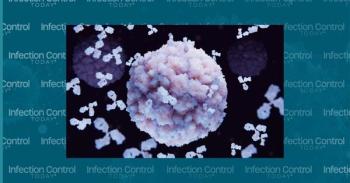
A recent study in a Hong Kong hospital investigated a rhinovirus outbreak and its transmission via air dispersal. The research aimed to improve understanding of rhinovirus transmission in health care settings. This article summarizes the study's findings and implications for infection control.

Read a literature review that examines methods for laundering reusable surgical scrubs. Discover the importance of water temperature, disinfectants, and more in infection control.
Recent CDC HICPAC revisions regarding SARS-CoV-2 control face criticism from the World Health Network and others due to alleged breaches in committee structure and erroneous infection control guidance, potentially impacting COVID-19 management and immunocompromised individuals in health care.

Kari A. Mergenhagen, PharmD, BCPS, BCIDP, discusses the potential of doxycycline in reducing C difficile infections among hospitalized patients with pneumonia. This interview delves into doxycycline's influence on patients with a prior C difficile history, demographic generalizability, exclusion criteria, and concerns regarding antibiotic resistance.

Pharmaceutical company Qnovia partners with the University of Virginia (UVA) to create inhaled drugs for lung infections, bolstering their development pipeline with assets for pneumonia and biodefense-related pulmonary infections.
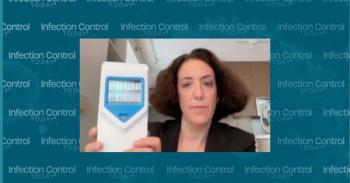
A study led by Piyali Chatterjee, PhD, and the Central Texas Veterans Health Care System explores the potential of handheld filtered Far UV-C devices in reducing hospital-acquired infections. Freestyle Partners, LLC, supported this research.
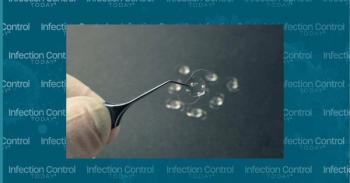
A recent American Journal of Infection Control study, led by Katharine Hoffman, MPH, CIC, LSSGB, and Lisa Waldowski, DNP, RN, CIC, applies Lean Six Sigma to improve eye device reprocessing. The research highlights the challenges, emphasizes adherence to manufacturer instructions, and promotes best practices for patient safety.
Benjamin Chen, MD, MPH, speaks about how a journal watch in infection prevention keeps professionals updated on research, fosters evidence-based practices, and supports education and quality improvement efforts.

ICT speaks with Christopher Reid, PhD, a biological and biomedical Sciences professor, delving into his investigations on antibiotics and fungicides and how his team's investigations will "provide an extra tool in a clinician's" toolbox for treating bacterial fungal infections."
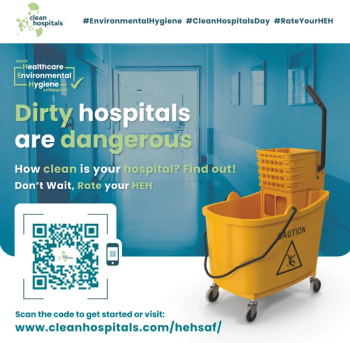
“Celebrate Clean Hospitals Day with us. We're an association that is trying to get out there and make people's lives a bit safer and better. Join us!” Alexandra Peters, PhD
Recent INFORM and EPOCH studies shed light on the significant risk and poor outcomes faced by immunocompromised individuals due to COVID-19, emphasizing the need for tailored prevention strategies.

Infection Control Today analyzes the surprising findings from its recent informal survey on the minimum educational requirement for infection preventionists.
In an interview with Amy Spallone, MD, from The University of Texas MD Anderson Cancer Center, the study investigates the effects of COVID-19 precautions on healthcare-associated infections, revealing surprising results in central line-associated bloodstream infections (CLABSIs), C difficile infections, and more.
International Infection Prevention and Control Week highlights the importance of preventing infections in health care and other settings. Share this poem to help educate others about IPC.
A study in Maryland from June 2019 to December 2021 analyzed 140 Candida auris cases, revealing that patients often resided in disadvantaged neighborhoods with higher crowding, uninsured rates, and racial diversity. ICT speaks to the lead author.

Dr. Isaac Kohane explores AI's rapid medical evolution and the challenges of accuracy, updating, and education in infectious diseases at IDWeek 2023.
BiomX Develops BX004-A, a Phage Therapy, for Cystic Fibrosis Patients with Pseudomonas Infections. A phase 1b/2a study presents promising results at IDWeek 2023.

The investigational mRNA-1647 vaccine discussed at IDWeek 2023 shows great promise in the fight against cytomegalovirus (CMV) infection. Developed using messenger RNA technology, it incorporates essential CMV antigens and has demonstrated safety and effectiveness in clinical evaluations.

An 18-month trial with 801,668 ICU admissions showed that mupirocin nasal ointment effectively reduces Staphylococcus aureus and MRSA infections by 18% and 15% respectively, offering hope in ICU infection prevention.