The Bug of the Month helps educate readers about existing and emerging pathogens that are clinically important in today's health care facilities.
The Bug of the Month helps educate readers about existing and emerging pathogens that are clinically important in today's health care facilities.

AI is transforming hand hygiene monitoring by replacing limited manual observation with continuous, data-driven surveillance. New tools use computer vision and machine learning to detect sanitizer use and identify gaps in adherence.

Animal bites send millions to U.S. emergency departments each year, with risk rising during holidays and periods of increased household activity. This article examines bite-related infection risks, rabies exposure, and what infection preventionists can learn from seasonal trends to better protect patients and communities.

Improper linen handling in long-term care facilities can increase cross-contamination risk. Experts say laundry workflows, directional processing, and consistent wash parameters play a critical role in infection prevention by limiting microbial spread during the collection, sorting, laundering, and storage of contaminated textiles.

Find the most current author's guidelines for Infection Control Today.

The COVID-19 pandemic has accelerated a shift away from droplet-based precautions toward a “through the air” framework that recognizes aerosol transmission across a continuum of particle sizes. As measles, SARS-CoV-2, and influenza circulate simultaneously, this article explains why ventilation, respirators, and higher air change rates must become core infection prevention strategies in health care facilities.

Shared medical equipment, such as IV pumps, workstations on wheels, and wheelchairs, often lacks clear cleaning ownership in hospitals. Experts say that defining responsibility, setting cleaning frequencies, and implementing verification processes can reduce the risk of cross-contamination and strengthen infection prevention programs without adding staff.

Lawmakers are pressing HHS to release a CDC study on reusable health care textiles and PPE. Industry leaders say reusable gowns and linens could strengthen supply chains, reduce waste, and protect health care workers during emergencies, but the report remains unpublished.

Cloud fax, combined with AI and NLP, is helping health systems transform unstructured documents into FHIR-ready data. Experts say modernized fax workflows can support interoperability, reduce data silos, and help rural and under-resourced providers participate in digital health initiatives.

At HIMSS26, one presentation discussed how health systems invest heavily in digital front doors, but patients often struggle to navigate campuses once they arrive. Experts say integrating digital wayfinding into healthcare apps can reduce missed appointments, improve patient experience, and support equity for vulnerable populations.
Fragmented systems make coordinated care difficult for people with intellectual and developmental disabilities. A new interoperability model using the eLTSS standard connects healthcare providers and community organizations to share person-centered service plans and improve outcomes for vulnerable populations.

A new human factors study reveals the hidden complexity behind sterile processing. Research from the Medical University of South Carolina shows how sterile processing, operating rooms, and courier networks function as one interconnected system. Understanding “work as done” rather than “work as imagined” may be key to improving surgical safety and supporting frontline staff.

Over 50% of surgeries experience delays that increase the risk of infection. Tampa General's ambient AI reduced OR turnover times by 12%, preventing dangerous complications and enabling more than 832 additional cases annually. Real-time data transforms surgical safety and efficiency.
Dental assistants manage sterilization, infection control, and patient education—yet most states require zero formal training. They earn the lowest wages in dental offices. Meet Sherrie Busby's 42-year mission to secure standardized credentialing and fair recognition. (Audio podcast)
Dental assistants help bridge communication gaps between dentists and patients. Experts say patient education, follow-up conversations, and modern diagnostic tools are essential for helping individuals understand treatment recommendations and make informed oral health decisions.
Dental Assistants Recognition Week spotlights the critical role dental assistants play in infection prevention, patient safety, and instrument sterilization. From PPE adherence to surface disinfection and patient education, these professionals manage complex clinical and administrative tasks that protect both patients and dental teams in high-risk aerosol-generating environments. (Entire interview)


Hospital-onset bacteremia is common in burn patients—and often tied to burn severity and surgical wound care, not lapses in quality. New data suggest that HOB may be a poor standalone quality metric for burn centers, raising questions about the fairness of benchmarking in value-based care.


When sterile instruments look perfect but hidden soil remains, patient safety is at risk. In this in-depth ICT article, Marjorie Wall, EDBA, CRCST, CIS, CHL, CSSBB, explains why ultrasonic cleaning is not just equipment, but a critical quality system, and how failures in cavitation, lumen flushing, or water quality can quietly undermine infection prevention in the operating room and sterile processing department.

A multicenter randomized trial of 276 patients with sepsis found that precision immunotherapy targeting immune dysfunction improved organ failure scores by day 9 compared with placebo. Although mortality differences were not statistically significant, the results suggest that biomarker-guided treatment strategies could help personalize sepsis care and improve clinical outcomes.

Long-acting injectables have transformed HIV management, but viral suppression alone is not enough. Researchers are advancing mRNA vaccines, broadly neutralizing antibodies, latency-reversing agents, pediatric immune strategies, and gene editing to eliminate reservoirs and achieve remission. Here’s how next-generation HIV therapeutics aim to move beyond lifelong ART.
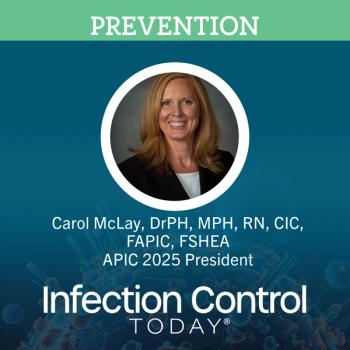
As her 2025 APIC presidency concludes, Carol McLay, DrPH, MPH, RN, CIC, FAPIC, FSHEA, discusses public health funding cuts, science advocacy, global partnerships, workforce development, and why infection preventionists must speak up. In this exclusive ICT interview, she shares lessons from a tumultuous year and her vision for strengthening the infection prevention profession worldwide.
As her 2025 APIC presidency concludes, Carol McLay, DrPH, MPH, RN, CIC, FAPIC, FSHEA, discusses public health funding cuts, science advocacy, global partnerships, workforce development, and why infection preventionists must speak up. In this exclusive ICT interview, she shares lessons from a tumultuous year and her vision for strengthening the infection prevention profession worldwide.

Before a disinfectant reaches a hospital unit, it undergoes rigorous laboratory testing, formulation science, and regulatory validation. In this ICT Q&A, Candice Taylor, MA, explains how R&D bridges lab efficacy with real-world health care workflow, antimicrobial resistance concerns, and the evolving future of infection prevention technology.
A national survey of infection preventionists reveals deep concerns about staffing shortages, lack of leadership support, limited authority, and outdated surveillance systems. IP professionals warn that without structural investment, modernization, and executive recognition of their operational value, patient safety, regulatory compliance, and hospital financial stability remain at risk.

Infection prevention professionals are weighing in on the CDC’s updated vaccine schedule. An ICT survey reveals mixed familiarity, rising patient questions, and a strong call for clearer guidance and communication tools. Here’s what IPC leaders say about implementation, confidence, and the real-world impact of vaccine policy changes.

For Rare Disease Day and Week, ICT presents: Rare autoimmune diseases affect millions worldwide, yet vaccine guidance for these patients remains complex. Understanding disease mechanisms, immunosuppression, and vaccine modalities is critical to reducing infection risk. This article explores practical strategies to guide safe, individualized vaccine decisions in rare autoimmune conditions and protect vulnerable populations.