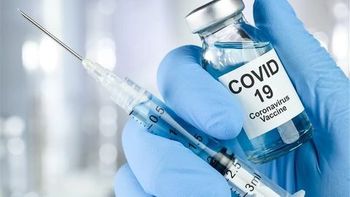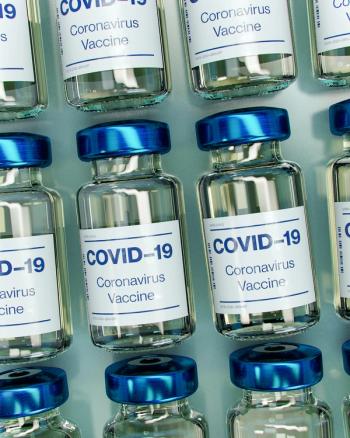




Efficacy against severe COVID-19 is 100% —based on the benchmark of 30 total severe cases, all in the placebo group. Consistent efficacy was seen across patient age, race and ethnicity groups, as well as gender demographics.

Efficacy against severe COVID-19 is 100% —based on the benchmark of 30 total severe cases, all in the placebo group. Consistent efficacy was seen across patient age, race and ethnicity groups, as well as gender demographics.

Strategies are needed to reduce the risk of COVID transmission between the breastfeeding mother and newborn. Meanwhile, mask mandates work.

The CDC may lower the days someone needs to be quarantined because of COVID exposure from the current 14, to from 7 to 10 days. That range is troublesome: Which is it, 7 or 10?

Susan E. Campbell, PhD, CIC, offers advice to infection preventionists and other healthcare professionals who’ll be working Thanksgiving on how to safely eat their holiday meal together.

Infection preventionists must brace themselves for a huge influx of COVID patients, as more data reveal just how formidable of a foe this novel coronavirus can be.

The CDC warns that it’s possible that the number of hospitalizations due to COVID-19 are likely to rise every day for the next 4 to 10 weeks, further straining an already strained healthcare system.

Kevin Kavanagh, MD: “I would be more worried about getting the family together for next Thanksgiving than this Thanksgiving. And if you’re going to get your family together this Thanksgiving, you may not have all members together next Thanksgiving, and that’s what needs to be remembered.”

Consult with experts in heating, ventilation, and air conditioning (HVAC) when determining the safety of the school environment, the CDC recommends.

Data show that AstraZeneca’s AZD1222 vaccine met its endpoint and the company is preparing regulatory submission for conditional or early approval.

Investigators argue that their findings suggest that a public health campaign touting the benefits of a COVID-19 vaccine had better begin as soon as possible. Like today.

APIC’s warning comes amid a slew of discomforting statistics. Yesterday, the United States recorded more than 187,000 new cases of COVID-19, the highest one-day total since the pandemic began.

The submission comes in the days following announcement from Pfizer and partnering company BioNTech that their phase 3 trial assessing the two-dose mRNA vaccine achieved all its primary efficacy endpoints.

The test involves collecting a nasal sample and then putting it into a vial. Within 30 minutes or less, a light-up display will show whether the person has tested positive or negative for SARS-CoV-2.


Kevin Kavanagh, MD: “We can’t just bury our heads in the sand and bleed through healthcare staff and bleed through PPE, thinking that this is not going to be something that’s going to cause severe problems in these individuals, or that it’s going to magically disappear next week."

W. Frank Peacock, MD, FACEP, FACC, FESC: “When I intubate somebody, I need to know where the tube is, and I need to know now—like within 10 seconds. You can’t tell with anything else. Nothing is as fast as the stethoscope. I can get an X-ray, but I’ve got to wait for the X-ray while you hold your breath.”

Caitlin Stowe, CIC, MPH, CPHQ, VA-VC: “The cool thing about being an infection preventionists is that I call myself the jack of all trades, but the master of really none. Because you really have to know a little bit about everything.”

IPs have not only that frontline experience, but also the ability to pivot and evolve with recommendations. In fact, our very jobs are about translating continuously evolving evidence and guidance into practice.

Data show none of the treated volunteers to develop COVID-19 experienced a severe form of the disease, versus 11 given placebo.

Faced with greater than three times the number of cases as the last surge, along with exponential growth with no end in sight, there is little hope healthcare workers can safely treat patients without a drastic change in policy and a more productive and secure supply line.

Investigators claim that their device can decontaminate N95s and surgical masks in the time it would take an infection preventionist to wash her hands.

Linda K. Groah, MSN, RN, CNOR, NEA-BC, FAAN: “Historically, we have not always had the best relationship. There’s been some competition between infection preventionists and OR managers or directors. The operating room has been that secret area behind the double doors.”

Michael Millenson: “When you dig a little deeper, you end up though with some questions. We’re a big country, and this is an enormous crisis. Well, $180 million? You can barely buy a couple of US senators with that.”

If you are an infection preventionist and are not currently involved in product review, now may be a great time to reach out to your supply chain team to explain the perspective you can bring to the table and ask to be involved.

The ability to answer questions and explain why just yesterday we were doing something differently than today occurred fairly frequently because of the evolving nature of the pandemic.