






Videos
Latest News
Advertisement
Latest Videos





CME Content


Advertisement
More News

A Portuguese hospital team significantly improved operating room cleanliness through targeted training, UV audits, and interdisciplinary collaboration, enhancing patient safety and infection prevention at AORN 2025.
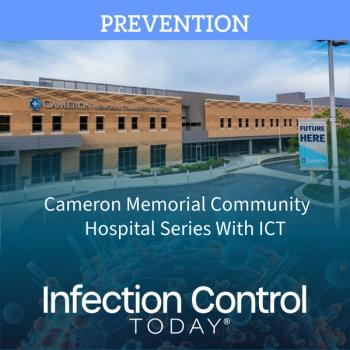
Discover how innovative strategies in scheduling, staff engagement, and continuous learning transformed a hospital’s environmental services, enhancing efficiency, employee satisfaction, and patient care standards.
Learn how Cameron Memorial Community Hospital revamped waste management protocols through collaboration, signage, and team training, achieving efficiency, cost savings, and enhanced compliance in high-risk areas like ORs and EDs.
Cameron Memorial Community Hospital streamlined pharmaceutical waste management through signage, training, and collaboration, cutting waste nearly in half and saving costs while boosting staff competencies and accountability.
Cameron Memorial Community Hospital streamlined cleaning practices by consolidating products, saving costs, empowering staff, and ensuring infection control. Collaborative efforts fostered efficiency, safety, and improved staff engagement.

Discover how reducing hand hygiene observations from 200 to 50 per unit monthly can optimize infection preventionists' time, enhance safety culture, and improve patient outcomes.

According to new research, genomic surveillance is transforming health care-associated infection detection by identifying outbreaks earlier, enabling faster interventions, improving patient outcomes, and reducing costs.
In an ICT® interview, Dr. Hudson Garrett emphasized double-gloving in infection control as crucial for protecting health care workers and patients, especially in high-risk environments.

Advanced photohydrolysis technology offers continuous disinfection, combating hospital-acquired infections and antimicrobial resistance. Safe and cost-effective, it significantly reduces health care-associated infections.

Take 5 minutes to catch up on Infection Control Today®’s highlights for the week ending July 20, 2024.
A study at the 2024 APIC conference observed MRSA and Pseudomonas contamination in a new children's outpatient pulmonary clinic during construction and after patient use, highlighting significant infection risks.
Andrea Flinchum, 2024 president of Certification Board of Infection Control and Epidemiology, INC (CBIC) explains the AL-CIP Certification at APIC Annual Conference in San Antonio, Texas.

Discover strategies for advocating infection prevention programs to the C-suite, ensuring resources, leadership support, and impactful outcomes.
Matthew Pullen, MD, explains rare infectious diseases, including Nipah, Scarlet Fever, Blastomycosis, and Dengue, that should be on the radar of every healthcare worker despite their rarity in the US.
Take 5 minutes to catch up on Infection Control Today®’s highlights for the week ending February 11, 2024.

Frontline infection preventionists (IPs) face burnout due to challenges in public health. This Round Table on IP Burnout discusses strategies to prevent and address this critical issue. The IPs emphasize the importance of understanding burnout, recognizing signs, addressing stigma, and implementing multilayered prevention strategies for both individuals and organizations.
Jill E. Holdsworth, MS, CIC, FAPIC, NREMT, CRCST, prevention manager, discusses the challenges of balancing work, family, and volunteering, emphasizing the importance of prioritizing self-care and personal interests.
Take 5 minutes to catch up on Infection Control Today®’s highlights for the week ending January 21, 2024.
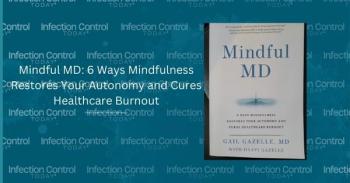
Dr. Gail Gazelle's "Mindful MD" addresses health care burnout with mindfulness, imposter syndrome, and other issues offering practical solutions and strategies for health care professionals.

ICT speaks with Christopher Reid, PhD, a biological and biomedical Sciences professor, delving into his investigations on antibiotics and fungicides and how his team's investigations will "provide an extra tool in a clinician's" toolbox for treating bacterial fungal infections."
A study in Maryland from June 2019 to December 2021 analyzed 140 Candida auris cases, revealing that patients often resided in disadvantaged neighborhoods with higher crowding, uninsured rates, and racial diversity. ICT speaks to the lead author.

Deborah Birx, MD, highlights concerns about the lack of data-driven action in the fight against COVID-19. She emphasizes the need for timely alerts and empowering communities to protect vulnerable individuals.
Deborah Birx, MD, discusses the significance of collaboration, innovation, data-driven decision-making, and community engagement in public health. Her insights underscore the need for trust-building and adaptability in pandemic response.
Doe Kley, MPH, RN, T-CHEST, LTC-CIP, CIC, speaks to Infection Control Today about her presentation and other exceptional presentations at the Association for the Health Care Environment (AHE) Exchange Conference & Solution Center
The AHE Exchange Conference in Dallas focused on emerging pathogens and the role of environmental services. Doe Kley, MPH, RN, T-CHEST, LTC-CIP, CIC, discusses hers and other exceptional presentations with Infection Control Today.
Advertisement
Advertisement
Trending on Infection Control Today
1
What Is Trichophyton indotineae? Drug-Resistant Ringworm Spreads to 29 Countries
2
Long-Acting HIV Treatment and PrEP: How Weekly Oral and Injectable Therapies Could Change Adherence and Patient Choice
3
ICT Weekly Rounds – September 17, 2026: RIngworm, Measles, Ebola Updates
4
Sterile Processing Burnout and Cognitive Overload: How Interruptions, IFUs, and Human Factors Affect Patient Safety
5