

A routine audit at Texas Children’s Hospital uncovered systemwide gaps in sterile processing, revealing deeper issues and reinforcing the critical role of education and equipment oversight.
A routine audit at Texas Children’s Hospital uncovered systemwide gaps in sterile processing, revealing deeper issues and reinforcing the critical role of education and equipment oversight.

A new study presented at the 2025 SHEA Spring Conference reveals that while infectious disease consults do influence hospitalists’ use of broad-spectrum antibiotics, the relationship is anything but straightforward—challenging assumptions in antimicrobial stewardship and offering new insights into prescribing behavior.
The proposed elimination of ASPR’s Hospital Preparedness Program in the 2026 federal budget could dismantle essential emergency readiness infrastructure and jeopardize national health care safety.


Despite their protective role, gloves are often misused in health care settings—undermining hand hygiene, risking patient safety, and worsening environmental impact. Alexandra Peters, PhD, points out that this misuse deserves urgent attention, especially today, World Hand Hygiene Day.

Sterile processing departments must be ready to maintain continuity and patient safety—even when technology fails. A downtime playbook can make all the difference.

Clear, consistent alignment between infection preventionists and sterile processing teams on IFUs is essential for safe reprocessing—and increasingly achievable with the right tools and mindset.

Hannah Schroeder, BSHA, CRCST, CIS, CHL, CER, presented a workshop at HSPA Annual Conference on how sterile processing leaders are turning to quality management systems like AAMI ST90 to drive data-informed decisions, justify resources, and improve department-wide outcomes through advocacy.

Infection preventionists face relentless demands, but true resilience begins when they replace self-judgment with grace, processing emotions with acceptance and compassion—not perfection.

With his term as HSPA president concluded at the end of the HSPA Annual Conference, Anthony Bondon CRCST, CHL, BSM, AAS, SME, LSSYB, reflects on the power of connection, service, and why sterile processing professionals are the true champions of health care.

Deep feelings run strong about the COVID-19 pandemic, and some beautiful art has come out of those emotions. Infection Control Today is proud to share this poem by Carmen Duke, MPH, CIC, in response to a recent article by Heather Stoltzfus, MPH, RN, CIC.

Social media offers opportunities to showcase sterile processing work, but a single misstep can risk compromising patient privacy, incurring legal consequences, and damaging your facility’s public reputation.

Sterile processing leaders need more than technical expertise—they require business, collaboration, and leadership skills to gain autonomy, improve outcomes, and elevate the role within health care.
With staffing shortages and rising infection risks, the TEPHI 200-Series delivers accessible, high-impact training to empower healthcare professionals and strengthen infection prevention efforts nationwide.
Vatsala Srinivasa, MPH's, research uses genomic sequencing to track hospital transmission of respiratory viruses, revealing hidden links and highlighting the potential for improved infection prevention.

UF Health’s offsite reprocessing center offers a model for scalability, efficiency, and staff support as hospitals face space limitations and growing surgical volumes. Sara Vinson, MBA, CRCST, director of sterile processing will discuss it at the 2025 HSPA Annual Conference.

Sterile processing departments face high-stakes challenges daily. At AORN 2025, Marjorie Wall outlined transformative strategies to improve safety, efficiency, and cross-departmental collaboration, and also discussed HSPA 2025.

Training EVS workers for hygiene excellence demands more than manuals—it requires active engagement, motor skills coaching, and teach-back techniques to reduce HAIs and improve patient outcomes.

Health care-associated infections are driving a shift toward disposable microfiber cloths, mop pads, and curtains—offering infection prevention, regulatory compliance, and operational efficiency in one-time-use solutions.
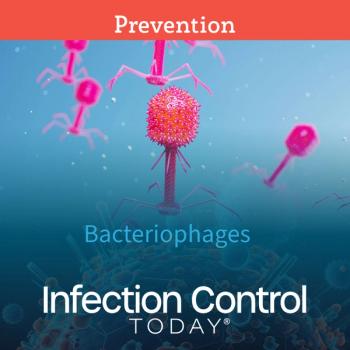
Bacteriophage therapy presents a promising alternative to antibiotics, especially as antimicrobial resistance continues to increase. Dr. Ran Nir-Paz discusses its potential, challenges, and future applications in this technology.

Reducing surgical site infections goes beyond sterile technique—factors like OR traffic, PPE, and workflow interruptions significantly impact infection risk and patient outcomes.

Sterile processing expert Kevin Anderson urges perioperative nurses to deepen collaboration with SPD teams to enhance OR efficiency, reduce SSIs, and improve patient outcomes.

Without market reform, antimicrobial innovation will collapse. Henry Skinner, PhD, MBE, MJur, CEO of AMR Action Fund, urges global economic action to prevent an antibiotic-free future.
What truly occurred during the COVID-19 pandemic? Is the new COVID.gov website accurate for those who worked in public health throughout the pandemic? A public health worker answers.

Robust infectious disease surveillance, including rapid subtyping of influenza A, is essential for early detection, containment, and public health reporting of novel viral threats.

ICT interviews Damien Berg, VP of strategic initiatives, who promises HSPA education, outreach, and growth. It will empower sterile processing professionals through standards updates, networking, and renewed purpose in patient safety.
This week’s Infection Control Today’s Hot Topics in IPC discusses the latest in the measles outbreak, H5N1 in cattle herds, and more.
Telehealth and home care are vital for protecting high-risk patients by minimizing infection exposure, enhancing safety, and supporting prevention with technology-driven, home-based health solutions.


Infection prevention demands strength—but when vulnerability is praised in men and penalized in women, leadership becomes performance, not authenticity. It’s time to challenge that imbalance.