
News
Advertisement
Advertisement
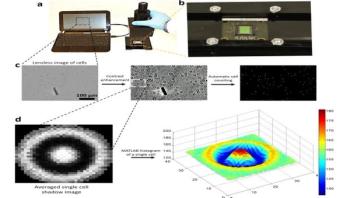
Providing vital healthcare services to people in developing countries without reliable electricity, refrigeration and state-of-the-art medical equipment poses a number of challenges. Inspired by pregnancy tests, researchers from Florida Atlantic University, Stanford University, and Baskent University in Turkey, have developed a novel method to store microfluidic devices for CD4 T cell testing in extreme weather conditions for up to six months without refrigeration.
Advertisement
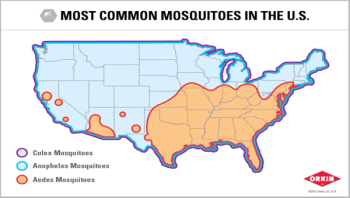

Since the recent link to severe neurological defects in infants born to mothers infected during pregnancy, Zika virus (ZIKV) has become a public health and research priority. A study published in PLOS Neglected Tropical Diseases reports details from the 2015 Zika outbreak in Rio de Janeiro--the first with a high proportion of cases confirmed by molecular diagnosis--and proposes changes to the current diagnostic criteria for ZIKV disease.
Advertisement

A simulation of how the so-called superbug carbapenem-resistant Enterobacteriaceae (CRE) might spread among healthcare facilities found that coordinated efforts prevented more than 75 percent of the often-severe infections that would have otherwise occurred over a five-year period. The study was led by researchers at the Johns Hopkins Bloomberg School of Public Health and published last month in the American Journal of Epidemiology.

Suicide allows bacteria found in opportunistic infections to create an antibiotic tolerant biofilm, according to a team including researchers at Rensselaer Polytechnic Institute (RPI). In work recently published in Current Biology, the researchers found that a molecule secreted by the bacterium Pseudomonas aeruginosa causes a breakdown in the respiratory chain, killing some of the population and triggering the creation of a biofilm among survivors, and thus conferring increased tolerance to antibiotics.
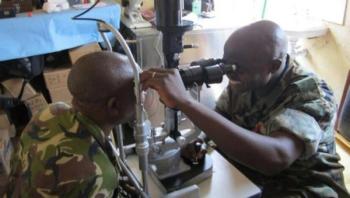
Researchers from the University of Liverpool and the King's Sierra Leone Partnership are to present new findings into post-Ebola syndrome at a major European conference this week.


Sepsis represents a serious complication of infection and is one of the leading causes of death and critical illness worldwide due in part to the lack of effective therapies. A report in the American Journal of Pathology provides evidence from both mouse and human studies that SHARPIN, a protein involved in regulating inflammation, has anti-septic effects. These findings may spur development of novel sepsis treatments.

A new study suggests that Neanderthals across Europe may well have been infected with diseases carried out of Africa by waves of anatomically modern humans, or Homo sapiens. As both were species of hominin, it would have been easier for pathogens to jump populations, say researchers. This might have contributed to the demise of Neanderthals.
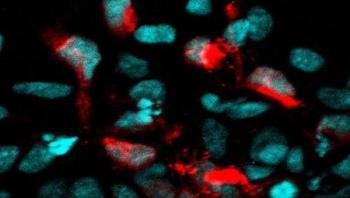
Brazilian researchers from the D'Or Institute for Research and Education (IDOR) and Federal University of Rio de Janeiro (UFRJ) have demonstrated the harmful effects of Zika virus (ZIKV) in human neural stem cells, neurospheres and brain organoids. Since ZIKV has been gradually established as a direct cause of central nervous system malformations, this study help to elucidate the etiological nature of the recently increasing number of microcephaly cases in Brazil.
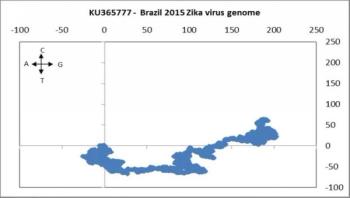
The recent epidemic of Zika virus infections in South and Latin America has raised serious concerns on its ramifications for the population in the Americas and spread of the virus worldwide. The Zika virus disease is a relatively new phenomenon for which sufficient and comprehensive data and investigative reports have not been available to date. Although first recognized as a new virus in 1947 in Uganda's Zika forest animals, its debilitating effect on human fetuses leading to babies being born with smaller braincases (microcephaly) was not known or well investigated until its epidemic form in Yap Island, Micronesia, in 2013 and now in the South American countries in 2015-16. The concern is so high that public health authorities in some countries such as Colombia, Ecuador, El Salvador, and Jamaica have asked their women to avoid pregnancies until the virus is better understood. The World Health Organization (WHO) has labeled the outbreak of such abnormalities as a Public Health Emergency of International Concern.
Advertisement
Advertisement
Trending on Infection Control Today
1
What Is Trichophyton indotineae? Drug-Resistant Ringworm Spreads to 29 Countries
2
Infection Control Today Launches First Digital Magazine for Infection Prevention Professionals
3
What Is Causing the 2026 US Measles Outbreak? Vaccination Rates, Travel, and Immigration Examined
4
ICT Weekly Rounds – September 17, 2026: RIngworm, Measles, Ebola Updates
5