News

Key factors that can combine to produce a Zika virus outbreak are expected to be present in a number of U.S. cities during peak summer months, new research shows. The Aedes aegypti mosquito, which is spreading the virus in much of Latin America and the Caribbean, will likely be increasingly abundant across much of the southern and eastern United States as the weather warms, according to a new study led by mosquito and disease experts at the National Center for Atmospheric Research (NCAR).

There is only one class of antiviral medicines against herpesviruses - a family of viruses that cause mononucleosis, herpes, and shingles, among other illnesses - meaning options for treating these infections are limited. If viruses become resistant to these frontline treatments, a growing problem particularly in clinical settings, there are no alternative drugs to serve as backup.

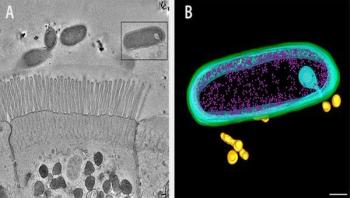
Many bacteria swim using flagella -- long tails that are attached to tiny motors made of proteins, just tens of nanometres wide. These motors spin the flagella, which work as nanoscale propellers to drive the bacterium forward.

An elderly woman in Phoenix. A Toledo toddler. An accountant in Indianapolis. All poisoned by food. Quickly uncovering that their illnesses are connected can make all the difference in halting a deadly outbreak. About 276,000 cases of foodborne illness are avoided each year because of PulseNet, a 20-year-old network coordinated by the Centers for Disease Control and Prevention (CDC), new research has found. PulseNet links U.S. public health laboratories so that they can speedily share details about E. coli, Salmonella and other bacterial illnesses.

PolyU's new invention utilizes an optical method called upconversion luminescence resonance energy transfer (LRET) process for ultrasensitive virus detection. It involves simple operational procedures, significantly reducing its testing duration from around one to three days to two to three hours, making it more than 10 times quicker than traditional clinical methods. Its cost is around HK$20 per sample, which is 80 percent lower than traditional testing methods. The technology can be widely used for the detection of different types of viruses, shedding new light on the development of low-cost, rapid and ultrasensitive detection of different viruses.

The human microbiome, a diverse collection of microorganisms living inside us and on our skin, has attracted considerable attention for its role in a broad range of human health issues. Now, researchers are discovering that the built environment also has a microbiome, which includes a community of potentially-pathogenic bacteria living inside water supply pipes.

Researchers from the University of Illinois at Urbana-Champaign have developed a highly sensitive biosensor based on a differential immuno-capture technology that can detect sub-populations of white blood cells. As part of a small, disposable biochip, the microfluidic biosensor can count CD4+/CD8+ T cells quickly and accurately for AIDS diagnosis in the field. This is a follow-up of the work earlier published by the group in Science Translational Medicine.

Enhancing quality, promoting patient safety and ensuring value is the healthcare industry's current trifecta, but there are many more imperatives from a regulatory perspective, including shifting from volume-based to value-based reimbursement, enhancing transitions and reducing hospital readmissions, and improving patient satisfaction and engagement. In concert with these efforts comes the prevention of adverse events and infections. In today's environment of transparency and reform, understanding legal liability for healthcare-acquired infections (HAIs) is more critical than ever for infection preventionists as they assist their risk managers and patient safety officers with quality improvement initiatives.

Twenty years ago, the Institute of Medicine (IOM) identified major inconsistencies in the way high quality medical care is delivered to the masses. They called for sweeping action and talked about its vision for the future in a report titled “Crossing the Quality Chasm.” Many of us were young ourselves in our understanding of quality improvement. Two leading approaches – W. Edwards Deming’s model of Total Quality Management and Joseph Juran’s work for continuous quality improvement – were being studied with attempts to adapt them into the healthcare setting.