
News
Advertisement
Advertisement
Advertisement
At the two hospitals where I work, the sterile processing departments (SPDs) are located in the basement and near the morgue. To think that people are literally dying to be closer to the SPD is a unique feature that not just any hospital department can claim!
Q: Are we allowed to use latex gloves in the decontamination area? Is there any documentation in AAMI or OSHA that dictates the use of latex gloves in the decontamination area? Secondly, are we allowed to wear gloves in the sterile prep area while putting together trays?A: According to the Occupational Safety & Health Administrations’ Blood Borne Pathogen Ruling (2001), “Personal protective equipment (i) Provision. When there is occupational exposure, the employer shall provide, at no cost to the employee, appropriate personal protective equipment such as, but not limited to, gloves, gowns, laboratory coats, face shields or masks and eye protection, and mouthpieces, resuscitation bags, pocket masks, or other ventilation devices. Personal protective equipment will be considered “appropriate” only if it does not permit blood or other potentially infectious materials to pass through or reach the employee’s work clothes, street clothes, undergarments, skin, eyes, mouth, or other mucous membranes under normal conditions of use and for the duration of time that the protective equipment will be used. Accessibility. The employer shall ensure that appropriate personal protective equipment in the appropriate sizes is readily accessible at the work site or is issued to employees. Hypoallergenic gloves, glove liners, powderless gloves, or other similar alternatives shall be readily accessible to those employees who are allergic to the gloves normally provided.”

Bacteria have evolved thousands of clever tactics for invading our bodies while evading our natural defenses. Now, UNC School of Medicine scientists studying one of the world’s most virulent pathogens and a separate very common bacterium have discovered a new way that some bacteria can spread rapidly throughout the body – by hitchhiking on our own immune cells.
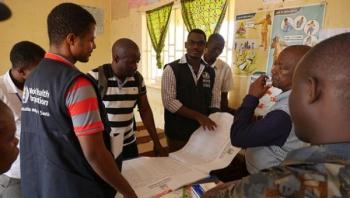
As the emergency phase of the response to the Ebola outbreak winds down in Guinea, Liberia and Sierra Leone, the three countries face an equally urgent and formidable task: building health systems capable of preventing, detecting and responding to outbreaks.
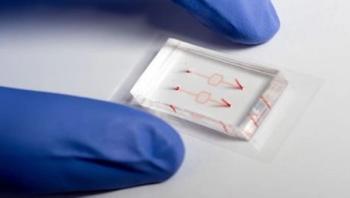
Simple physics may play a larger role than previously thought in helping control key bodily processes – such as how the body fights infection.Using a model blood vessel system built on a polymer microchip, researchers have shown that the relative softness of white blood cells determines whether they remain in a dormant state along vessel walls or enter blood circulation to fight infection. Changes in these cell mechanical properties – from stiff to soft – can be triggered as a side effect of drugs commonly used to fight inflammation or boost blood pressure.
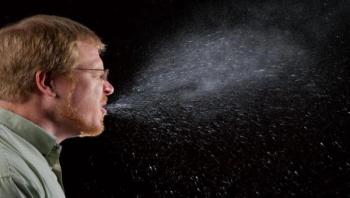
Here's some incentive to cover your mouth the next time you sneeze: New high-speed videos captured by MIT researchers show that as a person sneezes, they launch a sheet of fluid that balloons, then breaks apart in long filaments that destabilize, and finally disperses as a spray of droplets, similar to paint that is flung through the air.
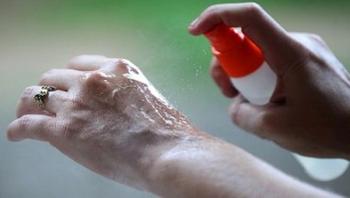
The risk of babies born with microcephaly has raised understandable concerns among women including those who are pregnant or planning to become pregnant. There are many unknowns regarding the possible causes of microcephaly. Until scientists and public health officials have more answers, there are ways that women can protect themselves from Zika infection. The World Health Organization (WHO) presents a Q&A about women and Zika virus.

Alcohol itself can directly damage liver cells. Now researchers at University of California, San Diego School of Medicine report evidence that alcohol is also harmful to the liver for a second reason - it allows gut bacteria to migrate to the liver, promoting alcohol-induced liver disease. The study, conducted in mice and in laboratory samples, is published February 10 in Cell Host & Microbe.
Advertisement
Advertisement
Trending on Infection Control Today
1
What Is Trichophyton indotineae? Drug-Resistant Ringworm Spreads to 29 Countries
2
Infection Control Today Launches First Digital Magazine for Infection Prevention Professionals
3
What Is Causing the 2026 US Measles Outbreak? Vaccination Rates, Travel, and Immigration Examined
4
ICT Weekly Rounds – September 17, 2026: RIngworm, Measles, Ebola Updates
5