



Environmental Services
Latest News
Advertisement
Latest Videos



Advertisement
More News
Congress Presses HHS to Release CDC Study on Reusable Health Care Textiles
Published: | Updated:
Lawmakers are pressing HHS to release a CDC study on reusable health care textiles and PPE. Industry leaders say reusable gowns and linens could strengthen supply chains, reduce waste, and protect health care workers during emergencies, but the report remains unpublished.
Dental assistants manage sterilization, infection control, and patient education—yet most states require zero formal training. They earn the lowest wages in dental offices. Meet Sherrie Busby's 42-year mission to secure standardized credentialing and fair recognition. (Audio podcast)
Dental assistants help bridge communication gaps between dentists and patients. Experts say patient education, follow-up conversations, and modern diagnostic tools are essential for helping individuals understand treatment recommendations and make informed oral health decisions.

Before a disinfectant reaches a hospital unit, it undergoes rigorous laboratory testing, formulation science, and regulatory validation. In this ICT Q&A, Candice Taylor, MA, explains how R&D bridges lab efficacy with real-world health care workflow, antimicrobial resistance concerns, and the evolving future of infection prevention technology.

Women make up most of the senior living workforce, especially in housekeeping and operations, yet they are often excluded from innovation and infection control decisions. When frontline women are not at the table, organizations lose critical insight into workflow, chemical safety, outbreak response, and resident comfort. Leaders who treat environmental safety as a strategic priority, not a compliance checkbox, can improve staff retention, resident outcomes, and long-term resilience.

Could engineered bacteriophages help hospitals tackle drug-resistant infections when antibiotics fail? In this ICT Q&A, researchers discuss where phage engineering may realistically fit first in hospitals, from treatment of MDR infections to environmental control, and why broad-coverage phage products remain a longer-term goal.
Why small lapses in cleaning can lead to significant infection control consequences—and how dentistry can close the gaps.
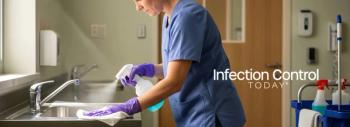
From Joseph Lister to modern airflow engineering, operating room safety depends on more than sterile technique. This in-depth review explains why EVS, airflow control, objective cleaning verification, and SPD coordination are critical to reducing surgical site infections and building high-reliability perioperative environments.

Join Health Watch USA on February 18, 2026, as Christos Argyropoulos, MD, PhD, MS, FASN, discusses how repeated COVID-19 vaccinations compare with COVID-19 disease in patients with kidney disease, with implications for infection prevention, risk communication, and care of vulnerable populations.

As “wellness” trends flood social media and consumer health marketing, separating credible infection prevention strategies from hype has never been more urgent. In this Q&A, surgeon and clinical researcher Ali Cadili, MD, MBA, MS, breaks down which 2026 wellness trends are grounded in evidence, and which risk creating false reassurance, covering air quality, hand hygiene, supplements, wearables, masking, and environmental controls.

A recent case-control study found that continuous photohydrolysis disinfection significantly reduced environmental bioburden, MDRO acquisition, COVID-19 cases, and hospital transfers in a long-term care facility, without adding staffing demands. The findings highlight the role of continuous air and surface disinfection as a complementary strategy to manual cleaning in addressing antimicrobial resistance and infection risk in LTC settings.



With the threat of antibiotic-resistant infections on the rise, hospitals must recalibrate cleaning protocols that maximize people’s health and well-being while continuously mitigating infection risks.

Are you curious what the Top 5 Infection Control Today interviews were in 2025? Read this article to find out.

Look back with ICT at their print issues and look ahead at what ICT's 30th year will hold!
To celebrate and thank the infection prevention community, Infection Control Today® introduces The Merry Microbe, a festive holiday games booklet filled with quizzes, puzzles, and crosswords designed to educate, engage, and bring a little joy to the vital work of keeping health care environments safe.

Good credentials, like a good ladder, make all the difference in how well you do the job you need to do. Read on to find out more about why credentials are vital to be successful.

With the threat of antibiotic-resistant infections rising, hospitals must recalibrate cleaning protocols to maximize people’s health and well-being while continuously mitigating infection risks.

Hospitals often champion high-reliability principles, yet overlook one of their most risk-sensitive disciplines: environmental services. EVS operates in clinical environments where a single missed step can trigger pathogen transmission, regulatory failure, or patient harm. True high reliability is impossible without recognizing EVS as a core contamination-control and patient-safety function.
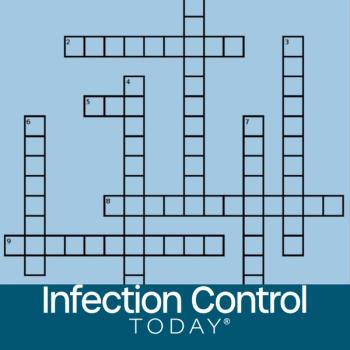
Think you know your EVS science inside and out? This crossword puts your expertise to the test with clues drawn from disinfection practices, cleaning validation, and the terminology every EVS professional and infection preventionist should know. Grab a pen or a colleague and see how far your knowledge takes you.
Oman is earning international attention for transforming hospital environmental hygiene into a national success story. Through the Clean Hospitals initiative, updated cleaning contracts, and workforce training, the Ministry of Health is showing how a unified approach to cleaning, auditing, and accountability can reduce infection risk and raise global standards in health care hygiene.
Sherrie is back! In this The Clean Bite, she discusses single-use vs Resusable Dental Supplies. Ultrasonic scaler tips, burs, and endodontic files are often reused despite being marketed as single-use. How many patients are at risk from shortcuts in reprocessing?
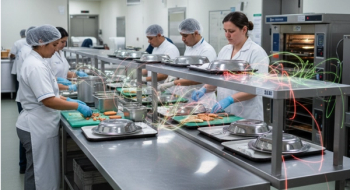
"Hospital tray lines operate at high speed to feed hundreds of patients daily. Staff members plate food, cover trays, and load them onto mobile carts that navigate elevators, hallways, and patient rooms. Each of these steps introduces opportunities for contamination."
Advertisement
Advertisement