


HAIs
Latest News
Advertisement
Latest Videos






Advertisement
More News
Cleaning failures can undermine high-level disinfection of ultrasound probes. Learn why proper cleaning, drying, and inspection matter, and how standardization and automation can improve reprocessing outcomes and patient safety.


Jill Morgan, BSN, RN, of Emory University Hospital is calling for a national, evidence-based approach to personal protective equipment for high-consequence infectious diseases. Drawing on lessons from the COVID-19 pandemic, she emphasizes the need for safer doffing processes, stronger training, and a parallel commitment to staff safety that matches the rigor long applied to patient safety.
Jill Morgan, BSN, RN, of Emory University Hospital, explains why PPE education must start earlier, go deeper, and focus on supply, process, and competency to truly protect health care workers.

As 2026 begins, Infection Control Today®'s Editorial Advisory Board reflects on a challenging year shaped by misinformation, policy uncertainty, and relentless change, reaffirming a commitment to science, truth, and supporting IPC professionals who keep showing up for patients and public health.

Are you curious what the Top 5 Infection Control Today interviews were in 2025? Read this article to find out.

Look back with ICT at their print issues and look ahead at what ICT's 30th year will hold!

Observed on December 27, the International Day of Epidemic Preparedness highlights the need for continuous investment in prevention, detection, and response to protect lives and strengthen health systems against ongoing and emerging threats.
To celebrate and thank the infection prevention community, Infection Control Today® introduces The Merry Microbe, a festive holiday games booklet filled with quizzes, puzzles, and crosswords designed to educate, engage, and bring a little joy to the vital work of keeping health care environments safe.

ICT’s top articles of 2025 spanned essential glove-use standards, CDC guidance on H5N1 monitoring, AI-driven infection prevention in operating rooms, advanced influenza surveillance for public health reporting, and APIC’s warning on communication restrictions that threaten outbreak response. Together, they highlight the evolving, high-stakes role of infection prevention in safeguarding health care and communities.

Good credentials, like a good ladder, make all the difference in how well you do the job you need to do. Read on to find out more about why credentials are vital to be successful.

With the threat of antibiotic-resistant infections rising, hospitals must recalibrate cleaning protocols to maximize people’s health and well-being while continuously mitigating infection risks.


When infection control slips, the consequences can be serious: patient harm, staff illness, fines from OSHA/local inspectors, and damage to your reputation. That’s why training isn’t optional; it’s essential.

Long-term wastewater surveillance revealed hidden SARS-CoV-2 transmission, detected variants early, and supported new EU public health mandates, demonstrating wastewater-based epidemiology as a critical early-warning tool for infection prevention, environmental hygiene, and outbreak preparedness.

Copper-infused textiles are gaining traction as hospitals confront rising antimicrobial resistance and financial pressure. In this installment of ICT linen roundtable, experts explained how passive antimicrobial fabrics can reduce infection risk, shorten length of stay, protect revenue, and strengthen operational resilience, all while working quietly in the background.
As hospitals seek stronger defenses against health care-associated infections, experts are turning their attention to an unexpected source: copper-infused linens. Learn how, supported by emerging science and real-world feasibility, these textiles may offer a practical and effective way to lower microbial loads and enhance infection prevention bundles in this installment of a recent roundtable on linen issues.
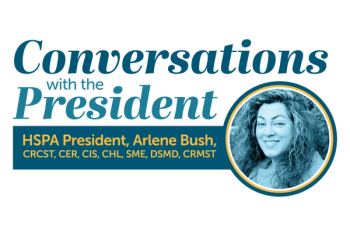
HSPA President Arlene Bush believes the sterile processing profession is stronger—and more essential—than ever. From expanding public awareness to evolving standards and global reach, Bush says the field is driven by dedicated professionals who “do amazing things, 365 days a year,” and deserve recognition for their expertise, resilience, and impact on patient safety.
A large population study of more than 1,100 adults suggests there are really 2 biologically meaningful nasal states: noses dominated by Staphylococcus aureus and noses ruled by protective commensals like Corynebacterium and Dolosigranulum. Intermittent carriers fall in between, prompting researchers to rethink long-standing categories of S aureus colonisation and risk.
As hospitals search for new ways to reduce environmental bioburden, copper-embedded textiles are emerging as a promising tool. In this second installment of ICT's recent panel discussion, experts described how these soft, everyday fabrics can rapidly kill microbes, sustain their effectiveness between washes, and strengthen infection control bundles across care settings.
From hospital beds to privacy curtains, textiles may be one of the most underestimated contributors to health care-associated infections, according to experts who say these everyday items deserve far more attention in prevention bundles.

Missed opportunities, Graves warned, place patients at risk. Many surgical patients are immunocompromised, and a stethoscope may come near the incision. “Regardless of the scenario, [cleaning the stethoscope] each time is going to protect patients.”
Stethoscope hygiene, UV technology, and dwell time failures took center stage in this second installment of a panel of experts explored why routine disinfection still lags and what must change in clinical practice.
In this provocative interview, Kevin Outterson, JD, LLM, explains why infection prevention benefits society but costs hospitals, urging fire department–style funding and PASTEUR incentives that reward diagnostics, stewardship, and antibiotic use.
For more than 80 years, the humble chicken egg has quietly powered one of modern medicine’s most vital defenses: vaccines. Even in an age of recombinant DNA, mRNA platforms, and cell-based innovations, more than 80% of the world’s influenza vaccines still begin in an egg. The process is time-tested, affordable, and reliable—but also imperfect. read this to learn more.
Advertisement
Advertisement
Trending on Infection Control Today
1
UPMC’s Genomic Surveillance Award Opens the Door to Funding Conversations
2
Proposed AHRQ Cut Raises Questions About Infection Prevention Research and Support
3
Measles Took 5 Children in 8 Days. A Century Later, Their Story Still Matters
4
How Purposeful Infection Prevention Rounding Supports Patient Safety and EVS Collaboration
5