

This week's coverage in Infection Control Today centered on a common thread: the systems, partnerships, and data that let infection prevention teams catch problems before patients are harmed.
This week's coverage in Infection Control Today centered on a common thread: the systems, partnerships, and data that let infection prevention teams catch problems before patients are harmed.

Shante Walton, MS, CIC, FAPIC, AL-CIP, discusses UCLA’s approach to infection prevention education, connecting classroom knowledge with practical experience and developing pathways that help new IPs enter the profession and experienced practitioners prepare to lead.
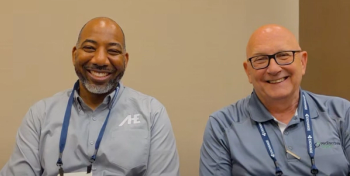
“Cutting” waste shouldn’t mean cutting people. At AHE Exchange26, David Green and Donald Sipp explored how EVS departments can improve performance by strengthening workplace culture, empowering employees, eliminating inefficient processes, and understanding EVS’s critical role in patient throughput. One case study showed bed turnaround times falling from nearly 2 hours to less than an hour, but the larger lesson wasn't simply about speed. High-performing EVS operations begin with a strong foundation.

Reusable lead aprons and thyroid collars are used daily throughout hospitals, but often fall outside standardized cleaning protocols. Infection prevention and perioperative experts discuss contamination risks, ATP testing, operational barriers, and the need for multidisciplinary collaboration to strengthen environmental hygiene and reduce the risk of HAIs.
Reusable lead aprons and thyroid collars are used daily throughout hospitals, but often fall outside standardized cleaning protocols. Infection prevention and perioperative experts discuss contamination risks, ATP testing, operational barriers, and the need for multidisciplinary collaboration to strengthen environmental hygiene and reduce the risk of HAIs.
Reusable lead aprons and thyroid collars are used daily throughout hospitals, but often fall outside standardized cleaning protocols. Infection prevention and perioperative experts discuss contamination risks, ATP testing, operational barriers, and the need for multidisciplinary collaboration to strengthen environmental hygiene and reduce the risk of HAIs.
Environmental testing found bacterial contamination on many lead garments and described what lead garment cleaning technicians routinely encounter during servicing.
Reusable lead aprons and thyroid collars are used daily throughout hospitals, but often fall outside standardized cleaning protocols. Infection prevention and perioperative experts discuss contamination risks, ATP testing, operational barriers, and the need for multidisciplinary collaboration to strengthen environmental hygiene and reduce the risk of HAIs.

International infection prevention leaders discuss how Ireland and Saudi Arabia educate, recruit, and prepare IPC professionals while advocating for broader, multidisciplinary career pathways worldwide.

COVID-19 exposed vulnerabilities in disposable PPE supply chains. TRSA CEO Joe Ricci discusses why reusable health care textiles are gaining attention for preparedness, sustainability, cost savings, and patient and worker safety.
Matthew Pullen, MD, discusses lessons from COVID-19, health care worker safety, public health fatigue, outbreak preparedness, and why local planning remains essential for future infectious disease threats.
Matthew Pullen, MD, discusses why hantavirus remains a serious but geographically limited threat, explaining how low transmissibility and high mortality reduce the likelihood of a future pandemic.
Matthew Pullen, MD, explains the differences between Sin Nombre and Andes viruses, their transmission routes, and why hantavirus pulmonary syndrome remains a serious public health concern.
A rare hantavirus outbreak linked to a South American cruise ship is drawing global attention, but experts say fears of a COVID-19-style pandemic are largely unsupported. Infectious disease physician Matthew Pullen, MD, discusses Andes virus transmission, misinformation, cruise ship risks, and what health care professionals should really be watching for.
At HSPA 2026 in Baltimore, Malinda Elammari shares why education, certification, and data literacy are critical to advancing sterile processing. Learn how stronger advocacy and recognition can elevate SPD’s role in patient safety and health care outcomes.
Sterile processing leaders Rebecca Lauber, FHSPA, and Vanessa Frank share insights from their HSPA 2026 presentation on career growth, professional identity, and active learning. Their message is clear: Empowering technicians, strengthening education, and building confidence are key to advancing patient safety and the future of sterile processing.
At HSPA 2026 in Baltimore, sterile processing leaders Katie Belski, BSHCA, a-IPC, CRCST, CHL, CIS, CER; and Nicole Simon, CIS, CHL, CRCST, emphasized collaboration, mentorship, and stronger relationships between SPD and other departments to improve communication, resources, and patient safety across health care systems.
HSPA 2026 in Baltimore opened with record preconference attendance, expanded educational sessions, charitable community outreach, and global networking, highlighting the growing influence and momentum of sterile processing professionals across healthcare.
Scan fatigue is affecting sterile processing workflows, resulting in gaps in documentation and adherence. At HSPA 2026, Deannard Esnard, CRCST, CIS, CER, CHL, CFER, CQUIA, discusses the need to streamline tracking systems, improve staff engagement, and strengthen patient safety.


Dental assistants manage sterilization, infection control, and patient education—yet most states require zero formal training. They earn the lowest wages in dental offices. Meet Sherrie Busby's 42-year mission to secure standardized credentialing and fair recognition. (Audio podcast)
Dental assistants help bridge communication gaps between dentists and patients. Experts say patient education, follow-up conversations, and modern diagnostic tools are essential for helping individuals understand treatment recommendations and make informed oral health decisions.
Dental Assistants Recognition Week spotlights the critical role dental assistants play in infection prevention, patient safety, and instrument sterilization. From PPE adherence to surface disinfection and patient education, these professionals manage complex clinical and administrative tasks that protect both patients and dental teams in high-risk aerosol-generating environments. (Entire interview)

When operating room delays and tray errors threatened efficiency, leaders at New York Presbyterian built a collaborative bridge with central sterile processing. Through shared metrics, workflow exchanges, and improved communication, first-case-on-time starts climbed from the 50 to nearly 90%.
Infection preventionists are experts at stopping pathogens, but many of the field’s hardest challenges are human. Contagious Conversations is a new video series that opens the candid, sometimes uncomfortable discussions about who belongs in infection prevention, how teams hire and grow, and what it will take to build a stronger workforce. Expect curiosity, honesty, and practical takeaways, not hot takes.
Infection preventionists are experts at stopping pathogens, but many of the field’s hardest challenges are human. Contagious Conversations is a new video series that opens the candid, sometimes uncomfortable discussions about who belongs in infection prevention, how teams hire and grow, and what it will take to build a stronger workforce. Expect curiosity, honesty, and practical takeaways, not hot takes.

Jill Morgan, BSN, RN, of Emory University Hospital, explains why PPE education must start earlier, go deeper, and focus on supply, process, and competency to truly protect health care workers.

Look back with ICT at their print issues and look ahead at what ICT's 30th year will hold!