
News
Advertisement
Advertisement
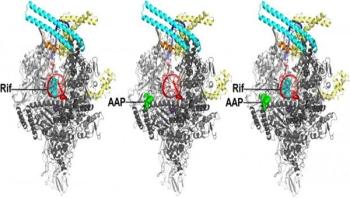
Rutgers University scientists have determined the three-dimensional structure of the target of the first-line anti-tuberculosis drug rifampin. They have also discovered a new class of potential anti-tuberculosis drugs that kill rifampin-resistant and multi-drug-resistant tuberculosis bacteria.

Advertisement
In 2015, more than 20,000 cases of whooping cough were identified in the United States. The Centers for Disease Control and Prevention (CDC) estimate that there are 16 million pertussis cases worldwide.
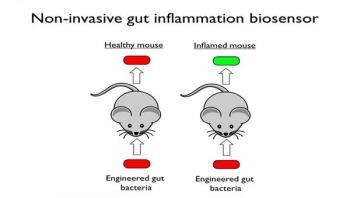
Synthetic biologists at Rice University have engineered gut bacteria capable of sensing colitis, an inflammation of the colon, in mice. The research points the way to new experiments for studying how gut bacteria and human hosts interact at a molecular level and could eventually lead to orally ingestible bacteria for monitoring gut health and disease.
Advertisement
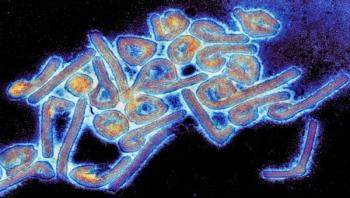
Scientists funded by the National Institutes of Health (NIH) have found that an experimental treatment cured 100 percent of guinea pigs and rhesus monkeys in late stages of infection with lethal levels of Marburg and Ravn viruses, relatives of the Ebola virus. Although the Marburg and Ravn viruses are less familiar than Ebola virus, both can resemble Ebola in symptoms and outcomes in people, and both lack preventive and therapeutic countermeasures.
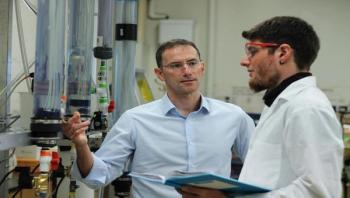
A University of British Columbia-developed system that uses bacteria to turn non-potable water into drinking water will be tested next week in West Vancouver prior to being installed in remote communities in Canada and beyond. The system consists of tanks of fiber membranes that catch and hold contaminants--dirt, organic particles, bacteria and viruses--while letting water filter through. A community of beneficial bacteria, or biofilm, functions as the second line of defense, working in concert to break down pollutants.

Zika virus is the first virus known to be transmitted to humans through the bite of an infected mosquito and through sex with an infected person. Over the course of 2016, the World Health Organization (WHO), along with the global research community, quickly built evidence that Zika virus transmission through sex was not only possible, but more common than previously assumed. But many questions still remain unanswered: How long does the virus stay in the body? Could the virus remain dormant in a person and reappear at a later stage? WHO is coordinating a research study in Brazil, called ZikaBra, to address these questions. The answers will help WHO sharpen its recommendations on how best to prevent Zika virus infection.
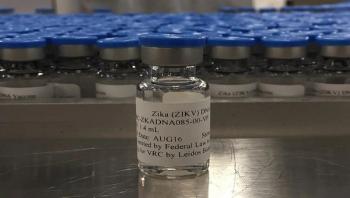
Vaccinations have begun in a multi-site Phase 2/2b clinical trial testing an experimental DNA vaccine designed to protect against disease caused by Zika infection. The vaccine was developed by government scientists at the National Institute of Allergy and Infectious Diseases (NIAID), part of the National Institutes of Health (NIH). NIAID is leading the trial, which aims to enroll at least 2,490 healthy participants in areas of confirmed or potential active mosquito-transmitted Zika infection, including the continental United States and Puerto Rico, Brazil, Peru, Costa Rica, Panama and Mexico. The two-part trial, called VRC 705, further evaluates the vaccine’s safety and ability to stimulate an immune response in participants, and assesses the optimal dose for administration. It also will attempt to determine if the vaccine can effectively prevent disease caused by Zika infection.
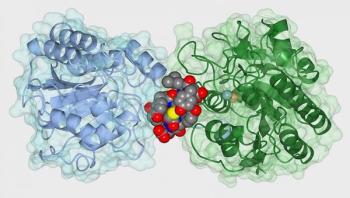
Research teams from the National Institutes of Health and abroad have identified the first inhibitor of an enzyme long thought to be a potential drug target for fighting disease-causing parasites and bacteria. The teams, led by NIH’s National Center for Advancing Translational Sciences (NCATS) and University of Tokyo scientists, sorted through more than 1 trillion small protein fragments called cyclic peptides to uncover two that could shut down the enzyme. The finding, reported April 3, 2017 in Nature Communications, could set the stage for the potential development of new types of antimicrobial drugs.

A team of researchers in the United States and Uganda has identified a novel coronavirus in a bat from Uganda that is similar to the one causing Middle East Respiratory Syndrome (MERS) in people, giving further credence to the theory that such viruses originate in bats. The work, part of the United States Agency for International Development's (USAID's) Emerging Pandemic Threats PREDICT project, was described this week in mBio®, an online open-access journal of the American Society for Microbiology.
Advertisement
Advertisement
Trending on Infection Control Today
1
What Is Trichophyton indotineae? Drug-Resistant Ringworm Spreads to 29 Countries
2
What Is Causing the 2026 US Measles Outbreak? Vaccination Rates, Travel, and Immigration Examined
3
Infection Control Today Launches First Digital Magazine for Infection Prevention Professionals
4
ICT Weekly Rounds – September 17, 2026: RIngworm, Measles, Ebola Updates
5