News
Advertisement
Advertisement


A hospital's surgical services department represents one of the most sizable challenges to infection prevention and control. Surgery also presents a significant risk to patients, and together, the operating room should be on the infection preventionist's radar for healthcare-associated infection (HAI) mitigation and elimination. Research indicates that SSIs are the most common type of hospital-acquired infection. SSIs account for 20 percent of all infections that occur in the hospital setting. Although most patients recover from an SSI without any long-term consequences, they are at a two- to 11-fold increased risk of mortality. Furthermore, SSIs are the most costly of all hospital-acquired infections. With an annual estimated overall cost of $3 billion to $5 billion in the U.S., SSIs are associated with a nearly 10-day increased length of stay and an increase of $20,000 in the cost of hospitalization per admission. As many as 60 percent of SSIs are considered to be preventable. Now that the Centers for Medicare and Medicaid Services no longer pays additional amounts for the cost of treating conditions acquired in a hospital, SSIs have been targeted not only to improve clinical quality, but also to protect hospital reimbursement.
When it comes to preventing infection in the perioperative environment, infection preventionists and perioperative nurses are strong allies. We collaborate to share our unique perspectives on patient safety and uncover little known dangers or risks that put our patients at increased risk for exposure to infectious disease. However, there is a dangerous vehicle for infection transmission in the OR that is lurking right under our noses, literally-that danger is surgical smoke.
Advertisement

The quality and vitality of the operating room is often a balance between managing patients known or suspected with infectious disease and managing potential staff occupational exposure risks associated with treating patients. With exposure risks to emerging and re-emerging microorganisms at an unparalleled high, measuring, analyzing, and preventing exposures among surgical staff is more important now than ever.

In a recent online survey of ICT readers, 73 percent of respondents indicated that they are involved in infection prevention-related product evaluation and/or purchasing for their healthcare institution, confirming the findings of Hoeksema (2011) who emphasizes that perioperative nurses play a key role in evaluating product safety, effectiveness and efficiency, environmental concerns, and cost and how these factors affect patient care. Well-informed product evaluation and purchasing is a significant way for hospitals to combat rising expenses in an environment of moderate reimbursements, Hoeksema (2011) adds.
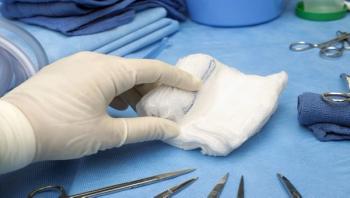
Infection prevention and surgical services departments share a united concern about retained surgical items, a healthcare threat that was No. 8 on the ECRI Institute's 2016 Top 10 Patient Safety Concerns list.
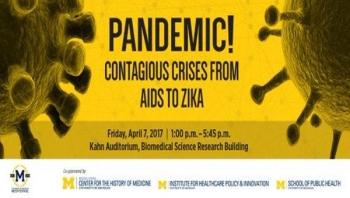
Major figures in the never-ending fight against dangerous infections will gather at U-M on Friday, April 7, for an afternoon-long exploration of how microbes spread regionally, nationally and globally – and what we can do to prevent, slow or stop them. Titled “Pandemic! Contagious Crises from AIDS to Zika,” it will begin and end with major lectures, bookending an expert panel discussion that will draw on current events and historical context.
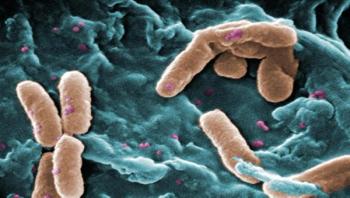
A study published in the American Journal of Respiratory and Critical Care Medicine describes a new treatment pathway for antibiotic-resistant bacteria with benefits for patients and healthcare providers. Researchers from the University of Birmingham and Newcastle University found that the unusual approach of removing antibodies from the bloodstream reduced the effects of chronic infections, the requirement for days spent in hospital and the use of antibiotics.
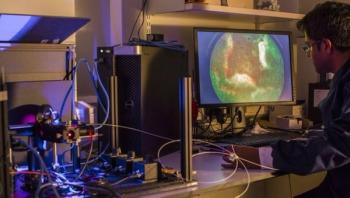
A new imaging tool that rapidly diagnoses bacterial lung infections could help prevent unnecessary use of antibiotics in intensive care units. The bedside technology can detect whether harmful bacteria are present within 60 seconds, so that patients can be treated with the right medicine quickly.
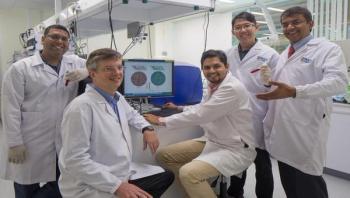
A team of researchers from the National University of Singapore (NUS) has uncovered hidden vulnerabilities on the surface of the dengue virus. This novel discovery means that scientists can now develop strategies to target these weak spots for treatment of dengue, and possibly other closely related diseases like Zika, influenza and chikungunya.
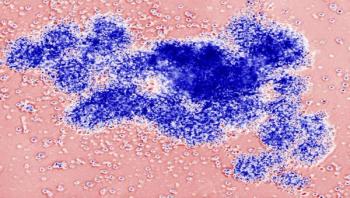
Certain white blood cells play an important role in bringing a harmful virus under control after kidney transplantations. The results of a research group at the Department of Biomedicine at the University of Basel and University Hospital Basel could contribute to improving control of immunosuppression, avoiding transplant rejection and developing relevant vaccines.

Suffering through a cold is annoying enough, but if you're lonely, you're likely to feel even worse, according to Rice University researchers. A study led by Rice psychologist Chris Fagundes and graduate student Angie LeRoy indicated people who feel lonely are more prone to report that their cold symptoms are more severe than those who have stronger social networks.

Effective care and prevention strategies have managed to reduce the spread of HIV in the U.S. and other resource-rich countries. But in sub-Saharan Africa, where more than 25 million are infected, the epidemic rages - as does the debate over how to stop it. The World Health Organization and UNAIDS have proposed using “treatment as prevention” to eliminate HIV in sub-Saharan Africa. The strategy would treat people infected with HIV to reduce their ability to infect others as a way to prevent them from transmitting the infection. UNAIDS has set goals to diagnose 90 percent of HIV-infected people and to treat 90 percent of those diagnosed individuals by 2020. But a new study by UCLA researchers concludes that although the plan sounds laudable, implementing it might not be feasible.
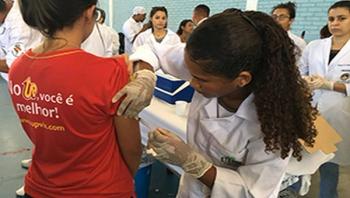
In response to the yellow fever outbreak currently on-going in Brazil some 3.5 million doses of vaccine from the emergency stockpile were deployed to the country through the International Coordinating Group (ICG) on Vaccine Provision for yellow fever. The ICG oversees a continuously replenished emergency stockpile of 6 million doses of yellow fever vaccine. The ICG includes four agencies: the World Health Organization (WHO), United Nations Children’s Fund (UNICEF,) the International Federation of Red Cross and Red Crescent Societies (IFRC), and Médicines Sans Frontières (MSF). The Government of Brazil will reimburse the cost of the 3.5 million doses sent through the yellow fever emergency stockpile financed by Gavi Alliance.
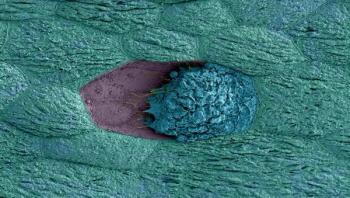
About half of all women will experience urinary tract infections in their lifetimes, and despite treatment, about a quarter will develop recurrent infections within six months of initial infection. A new study at Washington University School of Medicine in St. Louis has uncovered a trigger of recurrent UTI infections: a type of vaginal bacteria that moves into the urinary tract. The research, in mice, was published March 30 in PLOS Pathogens.

A Purdue University study shows that the bacteria Listeria monocytogenes can live inside the tissue of romaine lettuce, suggesting that conventional post-harvest sanitization practices might not be sufficient to kill the potentially lethal pathogen.
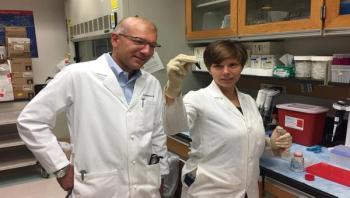
Researchers have found that a hormone responsible for controlling iron metabolism helps fight off a severe form of bacterial pneumonia, and that discovery may offer a simple way to help vulnerable patients. The researchers at the University of Virginia School of Medicine have identified a key hormone critical for preventing pneumonia bacteria from spreading throughout the body. The hormone, hepcidin, is produced in the liver and limits the spread of the bacteria by hiding the iron in the blood that the bacteria need to survive and grow.
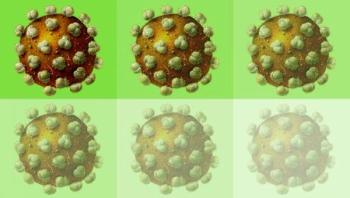
By engineering an on/off switch into a weakened form of HIV, University of Nebraska-Lincoln researchers have enhanced the safety and effectiveness of a potential vaccine for the virus that has killed approximately 35 million people during the past 35 years.
Device-associated infections due to biofilm-producing methicillin-resistant Staphylococcus aureus (MRSA) have been recently associated with the failure of antibiotic treatment and decolonization measures. The goal of the study by Günther, et al. (2017) was to evaluate the extent to which the formation of biofilms influenced the efficacy of topical decolonization agents or disinfectants such as mupirocin (MUP), octenidine (OCT), chlorhexidine (CHG), polyhexanide (POL), and chloroxylenol (CLO).Bacterial killing in biofilms by the disinfectants and MUP was determined as the reduction [%] in metabolic activity determined by a biofilm viability assay that uses kinetic analysis of metabolic activity. The test substances were diluted in water with standardized hardness (WSH) at 25 °C at the standard concentration as well as half the standard concentration to demonstrate the dilution effects in a practical setting. The tested concentrations were: CHG 1%, 2%; OCT 0.1%, 0.05%; PH 0.04%, 0.02%; and CLO 0.12%, 0.24%. A test organism suspension, 1 mL containing ~1 × 10⁹ bacterial cells/mL, and 1 mL of sterile WSH were mixed and incubated for six different exposure times (15 s, 1, 3, 5, 10 and 20 min) after the test substance was added.Additionally, the bactericidal effects of all substances were tested on planktonic bacteria and measured as the log10 reduction.The disinfectants OCT and CHG showed good efficacy in inhibiting MRSA in biofilms with reduction rates of 94 ± 1% and 91 ± 1%, respectively. POL, on the other hand, had a maximum efficacy of only 81 ± 7%. Compared to the tested disinfectants, MUP showed a significantly lower efficacy with <20% inhibition (p < .05). Bactericidal effects were the greatest for CHG (log10 reduction of 9.0), followed by OCT (7.7), POL (5.1), and CLO (6.8). MUP, however, showed a very low bactericidal effect of only 2.1. Even when the exposure time was increased to 24 h, 2% MUP did not show sufficient bactericidal effect.The researchers say their data provide evidence that OCT and CHG are effective components for disinfection of MRSA-biofilms. On the other hand, exposure to MUP at the standard concentrations in topical preparations did not effectively inhibit MRSA-biofilms and also did not show adequate bactericidal effects. Combining an MUP-based decolonization regimen with a disinfectant such as OCT or CHG could decrease decolonization failure.Reference: Günther F, et al. MRSA decolonization failure-are biofilms the missing link? Antimicrobial Resistance & Infection Control. 2017;6:32
Advertisement
Advertisement
Trending on Infection Control Today
1
What Is Trichophyton indotineae? Drug-Resistant Ringworm Spreads to 29 Countries
2
What Is Causing the 2026 US Measles Outbreak? Vaccination Rates, Travel, and Immigration Examined
3
Infection Control Today Launches First Digital Magazine for Infection Prevention Professionals
4
ICT Weekly Rounds – September 17, 2026: RIngworm, Measles, Ebola Updates
5