
News
Advertisement
About the size of a tablet, a portable device that could be used in a host of environments like a busy airport or even a remote location in South America, may hold the key to detecting the dreaded Zika virus accurately, rapidly and inexpensively using just a saliva sample. While scientists across the world are scrambling to find some sort of immunization, researchers from Florida Atlantic University are working to develop a diagnostic tool to reduce the impact of the outbreak until a vaccine is identified.
Advertisement
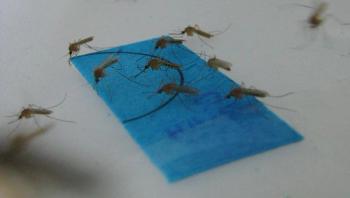
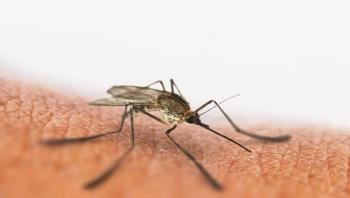
Australia's Ross River Virus (RRV) could be the next mosquito-borne global epidemic according to a new research study led by the University of Adelaide and the Australian National University. The virus has been thought to be restricted largely to Australia and Papua New Guinea where it is harbored by marsupial animals, specifically kangaroos and wallabies, and spread by mosquitoes.

The National Institute of Allergy and Infectious Diseases (NIAID), part of the National Institutes of Health (NIH), has launched a Phase 1 clinical trial to test an investigational vaccine intended to provide broad protection against a range of mosquito-transmitted diseases, such as Zika, malaria, West Nile fever and dengue fever, and to hinder the ability of mosquitoes to transmit such infections. The study, which is being conducted at the NIH Clinical Center in Bethesda, Maryland, will examine the experimental vaccine's safety and ability to generate an immune response.

A Rice University study suggests that researchers planning to use the CRISPR genome-editing system to produce designer gut bacteria may need to account for the dynamic evolution of the microbial immune system. CRISPR is an acquired immune system that allows bacteria and other single-celled organisms to store snippets of DNA to protect themselves from viruses called phages. The system allows a cell to "remember" and mount a defense against phages it has previously battled.
The mosquito-borne Zika virus might be able to infect and reproduce in a variety of common animal species, and a new study looked at 16 different types of animals, including goats, pigeons, raccoons, and ducks, to determine their potential to serve as hosts for Zika virus. Understanding possible transmission routes and the role that animal infections could play in the transmission and spread of Zika virus is crucial for effective surveillance and prevention efforts, as described in an article published in Vector-Borne and Zoonotic Diseases, a peer-reviewed journal from Mary Ann Liebert, Inc., publishers.
Advertisement

They traveled a huge distance, evaded a protective barrier, and found themselves in a strange and unwelcoming land. They're looked at suspiciously for possible links to dangerous diseases, and are under constant threat of being expelled from their adopted home. Their contribution to the greater community is only beginning to be understood. And every day, more of them arrive. "They" are immigrants -- of the microscopic kind. Specifically, they're bacteria living in human lungs. And new research pinpoints just how they get there, and opens the door to more research on what happens to them -- and our bodies -- as a result.

Children exposed to Zika virus in the womb may face complex health and developmental problems as they grow older, according to discussions at a National Institutes of Health workshop. A summary of the proceedings, authored by researchers from NIH's Eunice Kennedy Shriver National Institute of Child Health and Human Development (NICHD), is available in the latest issue of JAMA Pediatrics.
Advertisement

Researchers from Monash University in Australia and Cardiff University in the UK have come a step further in understanding how the human immunodeficiency virus (HIV) evades the immune system.

Listeria, a common food-borne bacterium, may pose a greater risk of miscarriage in the early stages of pregnancy than appreciated, according to researchers at the University of Wisconsin-Madison School of Veterinary Medicine studying how pathogens affect fetal development and change the outcome of pregnancy.
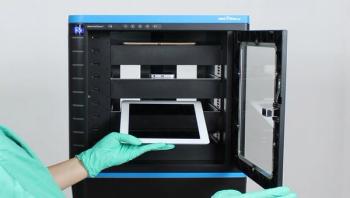
Seal Shield LLC brings its health IT solution for mobile device management and disinfection, the ElectroClave™, to the exhibit floor for the 2017 HIMSS Conference and Exhibition in Orlando, Fla. Feb. 20-23, 2017 at Booth #4444.

Mobile devices are ubiquitous in society and their infiltration of the healthcare environment poses new challenges for infection prevention and control. Numerous studies have documented that mobile handheld devices are frequently contaminated with healthcare-associated pathogens, but they are seldom cleaned and disinfected due to individuals being unsure of what kind of products and methods to use to decontaminate their electronics.

A study reported Feb. 17 in the journal Science led by researchers at Indiana University and Harvard University is the first to reveal in extreme detail the operation of the biochemical clockwork that drives cellular division in bacteria. The discovery, made possible through a revolutionary method used to color bacterial cell walls developed at IU, is an important step forward in research on bacterial growth and could inform efforts to develop drugs that combat antibiotic-resistant bacteria.
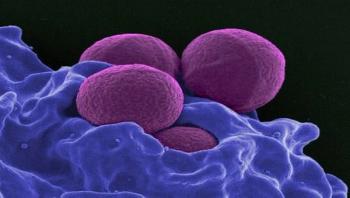
Methicillin-resistant Staphylococcus aureus (MRSA) is a bacterial scourge. As its name suggests, MRSA is resistant to most common antibiotics and thus difficult to treat, particularly in children where it commonly causes complicated skin and skin structure infections. In a randomized, controlled clinical trial -- the first of its kind -- a multi-institution research team reports that daptomycin, part of a new class of antibiotics currently approved only for use in adults, is effective and well-tolerated in children. The findings are published in the March 2017 issue of Pediatrics.

The human gut is home to some 100 trillion bacteria, comprising between 250 and 500 species. This astounding array of organisms, collectively known as the gut microbiome, is a powerful regulator of disease and health and has been implicated in conditions ranging from inflammatory bowel disease to multiple sclerosis. Gut microbes engage in an intricately choreographed conversation with the immune system, stimulating it just enough to keep disease-causing invaders at bay, while at the same time reining it in so it doesn’t mistakenly launch an attack on the body. So far, scientists have been able to listen to bits and pieces of the conversation between bacteria and individual immune cells or a handful of genes. Now, for the first time, scientists from Harvard Medical School have managed to “listen in” on the crosstalk between individual microbes and the entire cast of immune cells and genes expressed in the gut.

Little teapots with long spouts have become a fixture in many homes to flush out clogged nasal passages and help people breathe easier. Along with other nasal irrigation systems, these devices - commonly called neti pots - use a saline, or saltwater, solution to treat congested sinuses, colds and allergies. They’re also used to moisten nasal passages exposed to dry indoor air. According to the Food and Drug Administration (FDA), improper use of these neti pots and other nasal rinsing devices can increase your risk of infection.

Advertisement
Advertisement
Trending on Infection Control Today
1
What Is Trichophyton indotineae? Drug-Resistant Ringworm Spreads to 29 Countries
2
What Is Causing the 2026 US Measles Outbreak? Vaccination Rates, Travel, and Immigration Examined
3
Infection Control Today Launches First Digital Magazine for Infection Prevention Professionals
4
ICT Weekly Rounds – September 17, 2026: RIngworm, Measles, Ebola Updates
5