
News
Advertisement
Advertisement
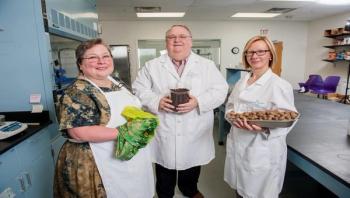
Kansas State University researchers have discovered the secret ingredient to improving kitchen food safety: include handwashing reminders and meat thermometer instructions in published recipes.
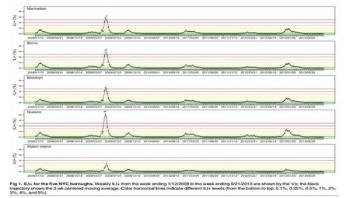
Scientists at Columbia University's Mailman School of Public Health developed a computer model to predict the onset, duration, and magnitude of influenza outbreaks for New York City boroughs and neighborhoods. They found the model effective in a test using data from 2008-2013; results appear in the journal PLOS Computational Biology.

Advertisement
Advertisement

A new testing methodology based on metagenomics could accelerate the diagnosis of foodborne bacterial outbreaks, allowing public health officials to identify the microbial culprits in less than a day. The methodology could also identify co-infections with secondary microbes, determine the specific variant of the pathogen, and help alert health officials to the presence of new or unusual pathogens.

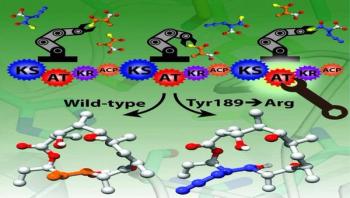
Researchers from North Carolina State University have discovered a way to make pinpoint changes to an enzyme-driven "assembly line" that will enable scientists to improve or change the properties of existing antibiotics as well as create designer compounds. The work is the first to efficiently manipulate which building blocks the enzyme selects in the act of synthesizing erythromycin, an important antibiotic.

In advance of World AIDS Day, Dec. 1, 2016, the World Health Organization (WHO) has released new guidelines on HIV self-testing to improve access to and uptake of HIV diagnosis. According to a new WHO progress report, lack of an HIV diagnosis is a major obstacle to implementing the organization’s recommendation that everyone with HIV should be offered antiretroviral therapy (ART).

With 29,747 newly reported HIV infections in 2015, the EU/EEA notification rate is similar to recent years with an overall insignificant change from 6.6 per 100,000 population in 2006 to 6.3 in 2015 (adjusted for reporting delay).
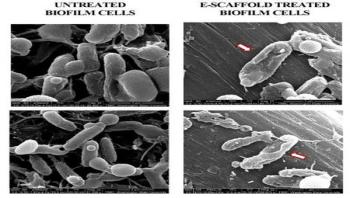
A Washington State University (WSU) research team has successfully used a mild electric current to take on and beat drug-resistant bacterial infections, a technology that may eventually be used to treat chronic wound infections. The researchers report on their work in the online edition of npj Biofilms and Microbiomes.
Advertisement
Advertisement
Trending on Infection Control Today
1
What Is Trichophyton indotineae? Drug-Resistant Ringworm Spreads to 29 Countries
2
Infection Control Today Launches First Digital Magazine for Infection Prevention Professionals
3
What Is Causing the 2026 US Measles Outbreak? Vaccination Rates, Travel, and Immigration Examined
4
ICT Weekly Rounds – September 17, 2026: RIngworm, Measles, Ebola Updates
5