News

Every year, millions of people are treated for cystitis, but despite its prevalence, the disease is still a scientific mystery. Now a research team from University of Southern Denmark has succeeded in identifying how the bacteria responsible for the disease cause the disease to develop. This is a cause for optimism that more effective treatment methods can be developed.

Tuberculosis (TB) is the leading cause of death worldwide among people infected with HIV. But as yet, no test can reliably show when latent TB infections in people with HIV starts progressing to active-and potentially fatal-TB disease. Now, a researcher at Albert Einstein College of Medicine has received a five-year, $3.7 million National Institutes of Health grant to identify biomarkers that signal an increase in activity by Mycobacterium tuberculosis (Mtb), the bacterium that causes TB, in people with HIV.

Scientists report that a specialized drug screen test using lab-grown human cells has revealed two classes of compounds already in the pharmaceutical arsenal that may work against mosquito-borne Zika virus infections. In a summary of their work, published in Nature Medicine on Aug. 29, the investigators say they screened 6,000 existing compounds currently in late-stage clinical trials or already approved for human use for other conditions, and identified several compounds that showed the ability to hinder or halt the progress of the Zika virus in lab-grown human neural cells.

Fighting Penicilliosis

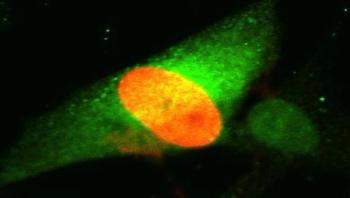
Penicilliosis, caused by the fungus Talaromyces marneffei, is a major opportunistic infection in Southeast Asia. A study published in PLOS Neglected Tropical Diseases reports that the fungal protein Mp1p is responsible for the pathogen's ability to cause disease in mice, and that it does so by allowing survival of the fungus in macrophages.

A couple of years ago, there was a report in the news that during 2008 and 2009 five children died at a Louisiana children’s hospital from an infection passed to them through their hospital linens. To follow up on this tragedy, a reporter wanted to know if there had been any changes made in how the hospital laundered its linens. The reporter posed this question to the hospital’s associate medical director of patient safety and quality. According to her account, the reporter asked the medical director who was the hospital’s current launderer. First, the medical director responded that he didn’t think it was pertinent, and then he said he didn’t know. And he said he didn’t know a second time when asked the same question at a subsequent news conference. Keep in mind: This is the hospital’s director of patient safety and quality.

Mosquitoes continue to build resistance to existing pesticides. Research has now shown that the chemical substances emitted by one of the mosquito's natural enemies - the backswimmer - makes the biological pesticide Bti more deadly. These so-called predator cues also impair the mosquito's immune system. Scientists at KU Leuven (University of Leuven), Belgium, argue that a cocktail of biological pesticides and synthetic predator cues very well be the future of mosquito control.