News


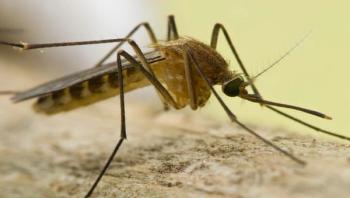
Disease ecologists working in the Amazonian city of Iquitos, Peru, have quantified for the first time how a fever affects human mobility during the outbreak of a mosquito-borne pathogen. The findings were published by Proceedings of the Royal Society B.


Patients suffering from liver cirrhosis often die of life-threatening bacterial infections. In these patients the immune cells are unable to eliminate the bacterial infections. Scientist at the University of Bonn and TU Munich have now discovered that type I IFN released by immune cells due to increased migration of gut bacteria into the cirrhotic liver incapacitate the immune system. Based on their findings, such life-threatening infections can be contained by strengthening the immune response alone -- without antibiotics. The results have now appeared in the journal Gut.


With nearly 3.2 billion people currently at risk of contracting malaria, scientists from the Institut Pasteur, the CNRS and Inserm have experimentally developed a live, genetically attenuated vaccine for Plasmodium, the parasite responsible for the disease. By identifying and deleting one of the parasite's genes, the scientists enabled it to induce an effective, long-lasting immune response in a mouse model. These findings were published in the Journal of Experimental Medicine on July 18, 2016.

Zika virus can infect numerous cell types in the human placenta and amniotic sac, according to researchers at UC San Francisco and UC Berkeley who show in a new paper how the virus travels from a pregnant woman to her fetus. They also identify a drug that may be able to block it.


Colorado State University researchers led by Olve Peersen, a professor in the Department of Biochemistry and Molecular Biology, have designed a genetic modification to one type of coxsackievirus that strips its ability to replicate, mutate and cause illness. They hope their work could lead to a vaccine for this and other viruses like it.


In a 2006 lecture, "Emerging and Re-emerging Infectious Diseases: The Perpetual Challenge,' Anthony S. Fauci, MD, director of the National Institute of Allergy and Infectious Diseases (NIAID), alluded to a statement made by physician and anthropologist T. Aidan Cockburn in 1963 in a book titled The Evolution and Eradication of Infectious Diseases. Cockburn declared, "We can look forward with confidence to a considerable degree of freedom from infectious diseases at a time not too far in the future. Indeed, it seems reasonable to anticipate that within some measurable time … all the major infections will have disappeared." In the midst of the Zika outbreak and having recently experienced the Ebola pandemic and less recently the MERS, H1N1 influenza and SARS outbreaks, and seeing infectious diseases such as poliovirus re-emerge, Cockburn's declaration from the 1960s seems quaint and overly optimistic in 2016 when the world has witnessed devastating epidemics, and here in the U.S., foreign pathogens such as dengue and monkey-pox have reached our shore. The medical community must also be prepared for an outbreak triggered by a domestic pathogen as well as those of more exotic origin.


While the saying goes that no one comes to work looking to make mistakes, they do happen, and they can lead to serious adverse events and poor patient outcomes. Where humans can introduce errors into a process, machines can help ensure standardization and uniformity, and an increasing number of healthcare organizations are evaluating and purchasing automated systems that boost their risk management strategies and patient safety efforts. Automation-driven processes are free from human fatigue and error, so they can help provide consistency and accuracy and potentially lead to a reduction in patient complications, infections and deaths. More predictable outcomes are possible with automated technology, and higher throughout can be achieved.