
News
Advertisement
Advertisement
Advertisement
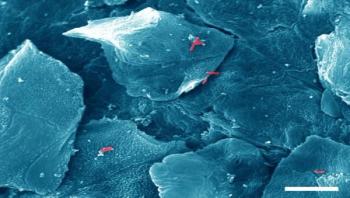
Mucous surfaces in the nose, throat, lungs, intestine, and genital tract are points of first contact for many pathogens. As a defensive strategy, most animals (and humans) can rapidly exfoliate these surfaces (i.e., shed the surface layer) to get rid of any attached attackers. A study published on May 12 in PLOS Pathogens reveals a common strategy by bacteria to prevent exfoliation and so gain extra time to colonize the mucosa or penetrate the mucosal barrier.
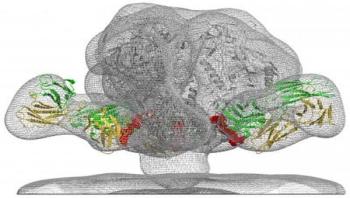
A team led by scientists at the National Institutes of Health (NIH) has reported a research trifecta. They discovered a new vulnerable site on HIV for a vaccine to target, a broadly neutralizing antibody that binds to that target site, and how the antibody stops the virus from infecting a cell. The study was led by scientists at the Vaccine Research Center (VRC) of the National Institute of Allergy and Infectious Diseases, part of NIH.
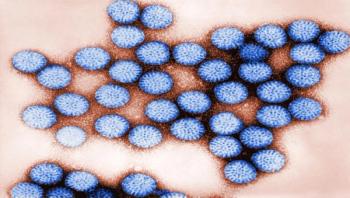
Hospitalization for rotavirus infections decreased by more than 70 percent following the introduction of a vaccine program in Ontario, Canada, according to a study published May 11, 2016 in the open-access journal PLOS ONE by Sarah Wilson from Public Health Ontario and the Institute for Clinical Evaluative Sciences, Canada, and colleagues.
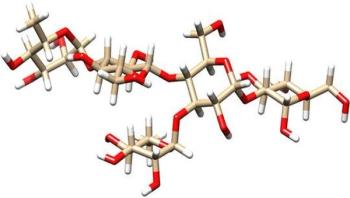
A vaccine against one of the most dangerous hospital germs may soon be available. Scientists from the Max Planck Institute of Colloids and Interfaces in Potsdam and the Freie Universität Berlin have developed a substance that elicits an immune response against the gut bacterium Clostridium difficile. The potential vaccine resembles the sugar structures presented on the surface of the bacterium and therefore primes the immune system to recognize the pathogen itself. C. difficile infects a large proportion of patients in hospitals and kills around 15,000 people a year in the U.S. alone. Doctors could treat the infection with antibiotics, but the bacterium mutates constantly, allowing it to escape the effects of the drugs. The discovery by the Max Planck researchers may pave the way for developing inexpensive and effective vaccines and drugs against C. difficile.
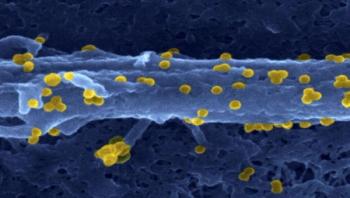
Since 2013, the mosquito-borne Chikungunya virus has spread rapidly through South America and the Caribbean, and is now threatening Southern Europe and the southern U.S. It causes flu-like symptoms with fever and joint pains, which in some cases can last for months with occasional fatalities. No treatment or vaccine exists so far - serving as an urgent reminder of just how poorly the time-consuming process of drug development is able to meet the threat posed by newly emerging viruses. Scientists at the Max Planck Institute for Infection Biology in Berlin have now teamed up with colleagues at the Paris-based Institut Pasteur to validate a new approach in the quest for a therapy - combining high-throughput screening for host cell proteins without which the virus cannot replicate, with so-called 'drug repositioning', i.e. utilizing an existing drug for new indications. They identified two existing compounds that were effective against the virus in an animal model. Their findings not only bring a Chikungunya treatment within potential reach, but also provide the proof of principle that this approach can be rapidly successful for newly emerging infectious diseases.
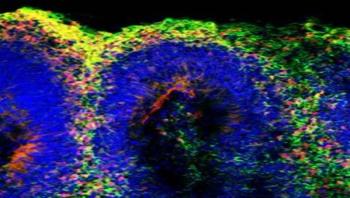
Researchers at University of California San Diego School of Medicine, with colleagues in Brazil and Senegal, have described the first “direct experimental proof” that the Brazilian strain of Zika virus can actually cause severe birth defects. The findings are published in the May 11 online issue of Nature.
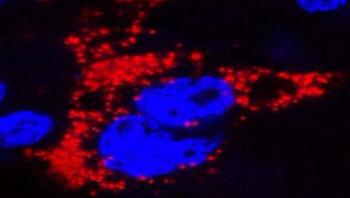
Two mouse models of Zika virus infection in pregnancy have been developed by a team of researchers at Washington University School of Medicine in St. Louis. In them, the virus migrated from the pregnant mouse’s bloodstream into the placenta, where it multiplied, then spread into the fetal circulation and infected the brains of the developing pups. The models provide a basis to develop vaccines and treatments, and to study the biology of Zika virus infection in pregnancy. The research is published May 11 in Cell.

Antibiotic-resistant bacteria most often are associated with hospitals and other healthcare settings, but a new study indicates that chicken coops and sewage treatment plants also are hot spots of antibiotic resistance. The research, led by a team at Washington University School of Medicine in St. Louis, is published May 12 in Nature.
Advertisement
Advertisement
Trending on Infection Control Today
1
What Is Trichophyton indotineae? Drug-Resistant Ringworm Spreads to 29 Countries
2
Infection Control Today Launches First Digital Magazine for Infection Prevention Professionals
3
What Is Causing the 2026 US Measles Outbreak? Vaccination Rates, Travel, and Immigration Examined
4
ICT Weekly Rounds – September 17, 2026: RIngworm, Measles, Ebola Updates
5