
News
Advertisement

Advertisement
Advertisement
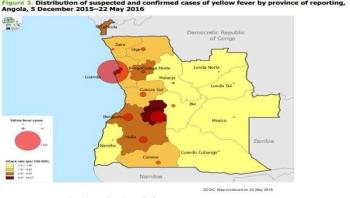
The European Centre for Disease Prevention and Control (ECDC) has updated its rapid risk assessment on the outbreak of yellow fever with the latest developments, more comprehensive information on the current situation in Angola, Democratic Republic of Congo (DRC) and Uganda and an extended threat assessment for the EU. Some of the data used in the assessment were collected during a mission to Angola in May 2016.
Advertisement
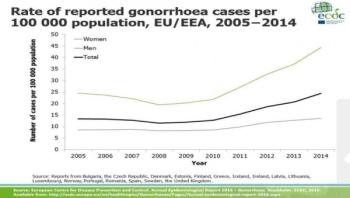
Since 2008, the overall rate of reported gonorrhea infections has more than doubled across Europe, going up from 8 per 100,000 population to 20 cases per 100,000 persons in 2014.
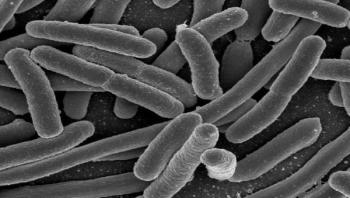
The Multidrug Resistant Organism Repository and Surveillance Network (MRSN) at the Walter Reed Army Institute of Research (WRAIR) characterized a transferrable gene for colistin resistance in the United States that may herald the emergence of truly pan-drug resistant bacteria.

As a 35-year veteran of environmental services, Scott Hedding, MBA, FACHE, the system director of environmental services for Aurora Health Care in Milwaukee, Wis., understands fully the critical role that his department plays in patient safety and infection prevention. He champions the 500 environmental services professionals that are in the 1,700-bed Aurora Health Care system, driving home the importance of quality improvement, personnel engagement in that process, and personal accountability for keeping patients safe and free from infection. Hedding shares his perspectives on motivating and leading his staff and introducing best practices and new products into existing programs and protocols successfully.

Most U.S. homes are full of familiar household products with an ingredient that fights bacteria: triclosan. Triclosan seems to be everywhere. When we wash our hands, brush our teeth, or do our laundry, we are likely putting triclosan into our water sources.
Advertisement
Advertisement
Trending on Infection Control Today
1
What Is Trichophyton indotineae? Drug-Resistant Ringworm Spreads to 29 Countries
2
Infection Control Today Launches First Digital Magazine for Infection Prevention Professionals
3
What Is Causing the 2026 US Measles Outbreak? Vaccination Rates, Travel, and Immigration Examined
4
ICT Weekly Rounds – September 17, 2026: RIngworm, Measles, Ebola Updates
5