
The move is the first step in paving the way for younger children to get COVID-19 vaccines.
The move is the first step in paving the way for younger children to get COVID-19 vaccines.

Compared to cases confirmed by human clinical testing, the air sampling used in the college dorms in the study had a success rate of 75%–100% in detecting infection by SARS-CoV-2.
The term “mild COVID-19” is an oxymoron. The devastating long-term effects of long COVID, along with future emergence of cardiovascular disease in those with minimal initial symptoms, reminds us that all SARS-CoV-2 infections may pose grave dangers to those who contract the virus.
Moderna’s phase 2/3 pediatric trial showed a lesser dose of the company’s 2-dose COVID-19 vaccine mRNA-1273 is associated with a significant neutralizing antibody response in children aged 6 to <12 years old.

Jason Tetro, author of The Germ Code: “Moving forward, I think we’re going to be going into this idea of seasonality, or as I like to say, cold, flu and COVID-19 seasons.” And the so-called "monster variant"? It's already here, says Tetro. It's called Delta.
Take 5 minutes to catch up on Infection Control Today’s highlights for the week ending October 22.
There’s been a lot of activity on the COVID-19 vaccine front thanks to research regarding waning immunity. A mix-and-match strategy seems to be emerging.
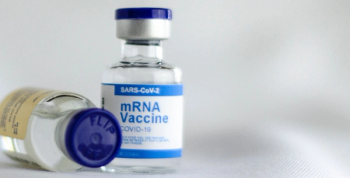
The UK Health Security Agency says that as of September 27, about 6% of sequencing tests in the UK tested positive for the Delta descendant—AY.4.2—which some scientists estimate may be 10% more infectious than original Delta.
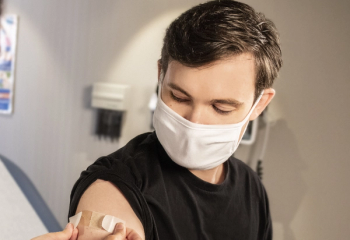
Enough of the Pfizer/BioNTech vaccine has been secured to offer vaccinations for everyone in this age group.

More frequent testing and continuation of mitigation measures such as masking would better help to protect the more vulnerable among us such as Colin Powell, a study concludes.
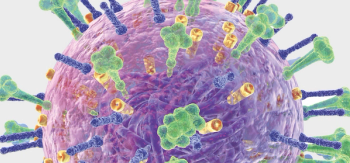
Although 61% surveyed agree that flu vaccination is the best preventive measure against flu-related deaths and hospitalizations, 44% of US adults are either unsure or do not plan to get the vaccination.

Brian Flannigan: “The reason why water quality and water safety is so important in sterile processing is that there have been direct connections made between the water systems and hospital infections: operating room infections, asset life problems, maintenance problems, staining and discoloration of equipment.”
Anthony Harris, MD, MBA, MPH: “We know that mandates such [as the COVID-19 vaccine mandate] don’t exist in isolation. For any school age child that wants to attend public school, guess what? Be vaccinated. Likewise for universities, in many cases. If you’re living in a dormitory scenario. This is not a far cry from precedent that’s already been set.”

The International Association of Healthcare Central Service Materiel Management (IAHCSMM) has joined forces with the Association of Surgical Technologists in hiring a federal lobbying firm, McAllister & Quinn, to help enact hazard pay for sterile processors, surgical technologists and surgical assistants for their work during COVID-19 in 2020 and 2021.

IAHCSMM’s Damien Berg: “COVID-19 put a light on sterile processing professionals in a positive way. We became a force multiplier in the hospital by the things we did. And we got known.”

Not only can pediatric patients of all ages carry high viral loads of SARS-CoV-2, but they can also serve as a means for the virus to mutate, according to a new study.
Take 5 minutes to catch up on Infection Control Today’s highlights for the week ending October 15.

If we want to see sustained improvements in our hospitals, administrators must step in and visibly show their support of IPs while investing their time, resources, and hospital funding to increase the capacity of the IPC department.

Vaccine hesitant health care professionals are most likely to be persuaded by fellow workers. Meanwhile, mandates can backfire.

A one-and-done vaccine that prevents both influenza and COVID-19 might help alleviate vaccine hesitancy for both conditions.

Even the most rigorous infection prevention protocols come unraveled if compliance isn’t maintained. The challenge is that for busy health care professionals, remembering when and how to disinfect is just one of many competing tasks in an extremely busy day.

As COVID-19 infection, hospitalization, and mortality rates head downward, pediatric SARS-CoV-2 rates rise, and nursing homes can again become disaster zones. And remember: Winter is coming.

Infection preventionists and other health care providers need masks that can easily be fit-tested or are more moldable to ensure a good seal—Saskia v. Popescu, PhD, MPH, MA, CIC.
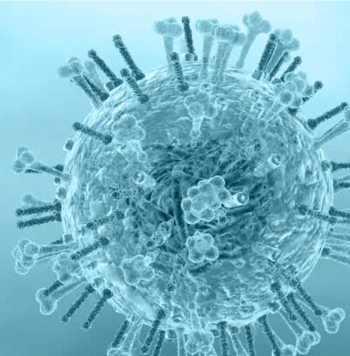
The ability of any infectious agent to maintain constant transmission enables it to be an ongoing threat to public health. Few pathogens have achieved greater success at ongoing transmission potential than the influenza virus.

IPs know the reliable sources and are familiar with reading scientific studies and being able to translate those findings to staff in an understandable way.

Preliminary data for the last quarter of 2020 revealed a jump of 34% in methicillin-resistant Staphylococcus aureus (MRSA) compared with the same quarter in 2019. Several states had much higher increases. In Arizona, for instance, rates leapt 80%; in New Jersey, that figure was 99%.

University of Oxford investigators used contact tracing to conclude that vaccinated individuals are less likely to spread COVID-19 even if they become reinfected.
The efficacy of the Pfizer/BioNTech vaccine wanes 6 months after the second dose to about 50%, but not because of the Delta variant, according to a study in The Lancet.

As rates of infection, hospitalization, and deaths from COVID-19 plummet, we’re reminded that we’ve been here before. Too many Americans remain unvaccinated and too many questions about SARS-CoV-2 remain unanswered.
Unlike influenza, SARS-CoV-2 uses ACE2 receptors to infiltrate cells. Similar to HIV, SARS-CoV-2 can silently spread throughout the host’s body and attack almost every organ.