
Take 5 minutes to catch up on Infection Control Today’s highlights for the week ending October 1.
Take 5 minutes to catch up on Infection Control Today’s highlights for the week ending October 1.

Results unveiled at IDWeek 2021 disprove any misconceptions about pediatric COVID-19 cases lacking severity.

While 55.9% of Americans are fully vaccinated and 64% of Americans have received at least 1 dose of a vaccine, only 31% of pregnant individuals have been fully vaccinated. The CDC urges health care providers to convince pregnant women to get vaccinated.

Pro: Health care professionals work around vulnerable patients, and in environments that might be contaminated by COVID-19. Con: Patients want to see their caregiver’s face.

A huge peer reviewed study in PLOS Medicine underscores just how much of a threat long COVID-19 presents: 1 in 3 survivors display symptoms of the disease 3 to 6 months after initial infection.
The CDC’s Katryna Gouin, MPH: “…[I]deally tracking antibiotic use at the facility level should be automated using either electronic health records or long-term care pharmacy dispensing data because manual tracking of antibiotics is time intensive.”
Joshua Nosanchuk, MD, Programs Chairperson for ID Week: “What the infection preventionists are doing I think is a true blessing for our community. And not always as well recognized as it should be…. I just want to say thank you to all the people that are doing this work.”

Coupling risk communication and effective engagement with the community can provide opportunities to change behavior and shape awareness of basic practices that can break the chain of transmission for many diseases.

Infection preventionists across health care settings struggle with a myriad of problems during this pandemic. IPs at nursing homes have it particularly hard.
Even if not hospitalized, COVID-19 often produces the most severe infection individuals will experience in their lifetimes and can produce lasting symptoms of fatigue, weakness, brain fog and cardiovascular damage.

Rebecca Leach, MPH, BSN, RN, CIC: “[Compassion fatigue is] a hard topic for us because we’re not used to talking about this kind of thing in infection prevention. We’re very much focused on evidence-based care and standards. And so, this delves into a little bit of dealing with our emotions, right? And in health care, we don’t talk about that kind of thing.”
Take 5 minutes to catch up on Infection Control Today’s highlights for the week ending September 24.
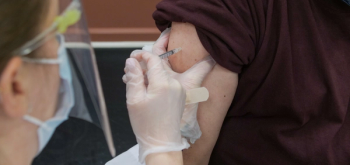
In a highly unusual move, CDC Director Rochelle Walensky, MD, overruled the agency’s panel of experts, saying that health care workers should get COVID-19 booster shots.

All the ancillary and support staff, including infection preventionists, have been called upon to help support the work of the frontline caregivers and are subject to the same stressors and potential for burnout.

If children get vaccinated and no new variant emerges, new infections will drop from 134,000 a day now to about 9,000 a day by March, according to 1 scenario. Deaths would fall to about 100 a day.
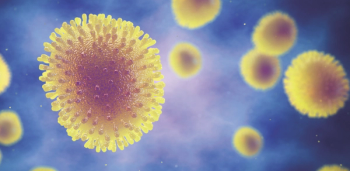
The season of respiratory tract infections is upon us. Influenza, rhinovirus, respiratory syncytial virus, and pertussis—as well as COVID-19—once again are attacking many individuals across the US and worldwide.
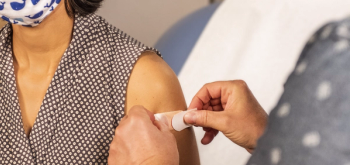
Investigators concluded that their data demonstrate the “high and stable effectiveness” of the single-dose COVID-19 vaccine across both high-risk patient subpopulations, as well as residents in areas more adversely affected by the delta variant.

The allocations are scheduled to begin next month, with initial awards totaling $885, of which $500 million will go to what the CDC calls “strike teams” that will focus on nursing homes and other long-term care facilities.
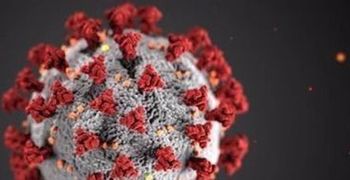
CDC: “For most children and adults with symptomatic SARS-CoV-2, the virus that causes COVID-19, infection, isolation, and precautions can be discontinued 10 days after symptom onset and after resolution of fever for at least 24 hours and improvement of other symptoms.”
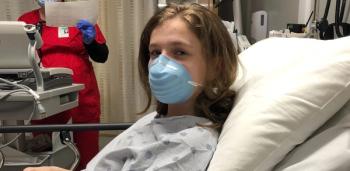
Health care workers know all too well the lasting and debilitating effects of long COVID-19. They were one of the first to become vaccinated and are some of the first experiencing breakthrough infections. They are tired, burned out, and many are on the brink of collapse.
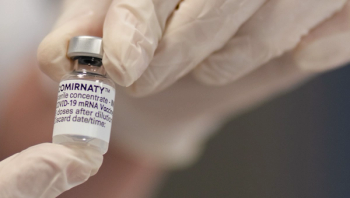
Some medical experts say that in this case, inaction is also an action—either the US gives boosters or does not. That decision needs to be based on the best available evidence. Instead, there seems to be a desire to wait another 6 months for pristine randomized controlled studies.
The CDC’s Runa Gokhale, MD, MPH: “I think that there is a role for infection preventionists to play here, and they are a community that we’ve been trying to engage through some of our sepsis awareness and sepsis prevention efforts.”

Patients with abnormally low blood pressure were less likely to receive antibiotics even though they could benefit from such treatment, according to a recent study.
Linda Spaulding, RB-BC, CIC: “The time to hold nursing homes accountable is not the time when everything’s falling apart, and they don’t know what to do, and there’s nobody there to guide them.”

The National Institutes of Health yesterday unveiled a $470 million study that it hopes will mine data from 30,000–40,000 people who suffer from long COVID. Right now, there are more questions than answers.
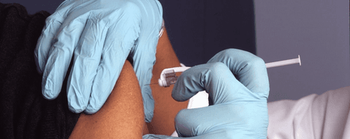
Vaccines work. They ward off severe illness and death. But they do not make health care workers invulnerable to breakthrough infections, according to a research letter in JAMA Open Network.

New antifungal agents that are being investigated for possible use against C. auris, such as Ibrexafungerp (Brexafemme), show promise—so far.
Researchers found the mu variant to be the most resistant variant to antibodies from either previous infection or from vaccines, a spot that had been previously occupied by the beta, or the South African, variant.
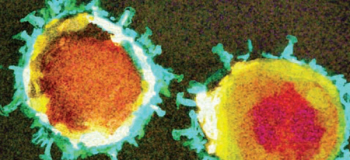
Investigators used acetone-washed, pre-autoclaved stainless-steel coupons coated with reformulated quaternary ammonium polymer to keep deadly pathogens at bay.
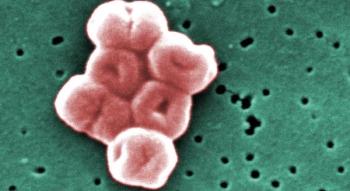
The pathogen can lurk on blankets, bed rails, trolley handles, sheets, door handles, light switches, bedside tables, bedside table drawers, curtains, sinks, food tables, curtains, normal saline stands.