


HAIs
Latest News

Advertisement
Latest Videos









CME Content


Advertisement
More News

At the Rockingham County Rehabilitation Center's Infection Control Fair, innovative and interactive approaches, including demonstrations, quizzes, and engaging activities, significantly promoted infection prevention education, making learning a fun and informative experience.
Recent CDC HICPAC revisions regarding SARS-CoV-2 control face criticism from the World Health Network and others due to alleged breaches in committee structure and erroneous infection control guidance, potentially impacting COVID-19 management and immunocompromised individuals in health care.

Health care-associated infections (HAIs) significantly impact patient outcomes, hospital expenses, and mortality rates in the United States. Hand hygiene stands as the most effective preventive method. While manual observation often produces biased results, Electronic Hand Hygiene Monitoring Systems (EHHCM) offer evolving methods for more accurate adherence assessment.

Take 5 minutes to catch up on Infection Control Today®’s highlights for the week ending November 5, 2023.
In this Hot Topics in IPC, Saskia v. Popescu, PhD, MPH, MA, CIC, FAPIC, discusses her concerns about COVID-19 and influenza for this winter, and mechanical ventilation and drug-resistant pathogens.

Staying Ahead with Company Updates and Product Innovations. This week's news is from Chicopee, GP Pro, US FDA, and Henry Schein.

Take 5 minutes to catch up on Infection Control Today®’s highlights for the week ending October 29, 2023.
Staying Ahead With Company Updates and Product Innovations. This week's news is from Moderna, CBIC, Helocyte, Pfizer, UVDI, and CloroxPro.
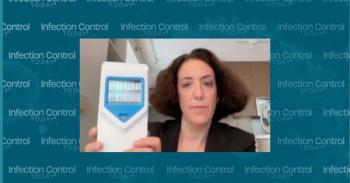
A study led by Piyali Chatterjee, PhD, and the Central Texas Veterans Health Care System explores the potential of handheld filtered Far UV-C devices in reducing hospital-acquired infections. Freestyle Partners, LLC, supported this research.

A recent American Journal of Infection Control study, led by Katharine Hoffman, MPH, CIC, LSSGB, and Lisa Waldowski, DNP, RN, CIC, applies Lean Six Sigma to improve eye device reprocessing. The research highlights the challenges, emphasizes adherence to manufacturer instructions, and promotes best practices for patient safety.

ICT speaks with Christopher Reid, PhD, a biological and biomedical Sciences professor, delving into his investigations on antibiotics and fungicides and how his team's investigations will "provide an extra tool in a clinician's" toolbox for treating bacterial fungal infections."

Recent INFORM and EPOCH studies shed light on the significant risk and poor outcomes faced by immunocompromised individuals due to COVID-19, emphasizing the need for tailored prevention strategies.

Infection Control Today analyzes the surprising findings from its recent informal survey on the minimum educational requirement for infection preventionists.

In an interview with Amy Spallone, MD, from The University of Texas MD Anderson Cancer Center, the study investigates the effects of COVID-19 precautions on healthcare-associated infections, revealing surprising results in central line-associated bloodstream infections (CLABSIs), C difficile infections, and more.
International Infection Prevention and Control Week highlights the importance of preventing infections in health care and other settings. Share this poem to help educate others about IPC.

Building Information Modeling (BIM) plays a pivotal role in designing health care facilities that minimize infection risks, promoting efficient planning, and coordination while reducing construction challenges.

Belinda Ostrowsky, MD, MPH, FIDSA, FSHEA, and SHEA Chair, highlights IDWeek 2023's hybrid format and discusses the critical topic of antimicrobial resistance, emphasizing the role of vaccines in reducing AMR.

The latest news on CLABSIs in the pediatric population is presented at IDWeek 2023.

At IDWeek 2023, a look into managing VAIs in children.
This edition of Infection Intel from Infection Control Today covers infection control and prevention company news out of IDWeek, being held in Boston, Massachusetts, from October 11 to 15, 2023.

An 18-month trial with 801,668 ICU admissions showed that mupirocin nasal ointment effectively reduces Staphylococcus aureus and MRSA infections by 18% and 15% respectively, offering hope in ICU infection prevention.
Take 5 minutes to catch up on Infection Control Today®’s highlights for the week ending October 8, 2023.

Infection Control Today's® Product Locator is a monthly column highlighting some of the latest advanced technology in the infection prevention field.
Bug of the Month helps educate readers about existing and emerging pathogens of clinical importance in health care facilities today.

In the delicate world of neonatal care, every precaution is taken to protect premature infants in the Neonatal Intensive Care Unit (NICU). It's crucial to acknowledge the strides made in safeguarding these vulnerable infants, whose wellbeing hinges on the meticulous efforts of health care professionals and evolving best practices.
Advertisement
Advertisement
Trending on Infection Control Today
1
What HIV/AIDS Taught Health Care About Needlesticks and Occupational Exposure
2
Is Your Hospital Treating Trash Like Medical Waste? Rethinking Sustainable Waste Management
3
At AHE Exchange26: Building Safer, Smarter Reusable Linen Programs
4
Once a Teacher, Always a Teacher: Why Infection Prevention Is Education
5