





HAIs
Latest News
Advertisement
Latest Videos









CME Content


Advertisement
More News

A recent study published in JAMA discusses the efficacy and safety of acetaminophen in sepsis patients.
Discover the critical connection between sepsis and nonventilator hospital-acquired pneumonia (NV-HAP), impacting healthcare quality measures and patient outcomes.
Tisha Mitsunaga, DrPH, ScM, discusses innovative approaches fostering collaboration between public health and healthcare facilities to combat multidrug-resistant organism (MDRO) spread.
A study presented at the Society for Healthcare Epidemiology of America (SHEA) conference evaluated adherence to laxative administration guidelines before CDI testing in Veteran Affairs (VA) hospitals and explored associated demographic and contextual factors.

Hospitals using CDC prevention strategies had different incidences of hospital-associated Clostridioides difficile infection compared to those that didn't, but the reasons are not necessarily the strategies themselves.

Read on about how, as hospitals grapple with the costly burden of healthcare-associated infections (HAIs), artificial intelligence (AI) emerges as a game-changer in revolutionizing infection prevention strategies.

Merck's V116, a 21-valent pneumococcal vaccine, exhibits strong immunogenicity and coverage in diverse adult populations. Real-world data reveal its potential to combat pneumococcal diseases effectively.

Carole W. Kamangu, MPH, RN, CIC, shares her inspiring journey from the Democratic Republic of Congo to health care leadership in the US today. (This is the French translation of the interview with Carole W. Kamangu.)
Carole W. Kamangu, MPH, RN, CIC, shares her inspiring journey from the Democratic Republic of Congo to health care leadership in the US today.
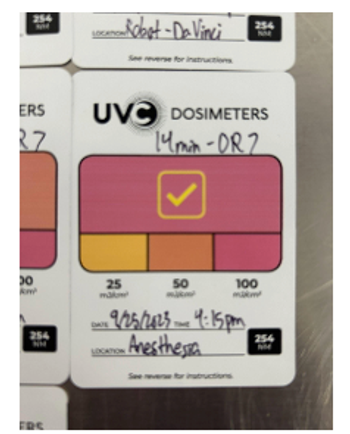
Recent research in the American Journal of Infection Control reveals gaps in routine hospital disinfection, highlighting the need for UV-C audits. Learn how to validate UV-C dosages effectively and conduct successful audits.

Learn about the FDA's approval of Zevtera (ceftobiprole medocaril sodium) for Staphylococcus aureus infections in adults and pediatric patients, including common side effects and precautions.
Important Recall Notice: AvKARE recalls Atovaquone Oral Suspension due to potential Bacillus cereus contamination. Learn about risks, recommendations, and how to proceed if you have this product.

Stay informed on the growing threat of Candida auris with expert insights on its multidrug-resistance, clinical manifestations, and effective prevention strategies for health care settings.

Take 5 minutes to catch up on Infection Control Today®’s highlights for the week ending March 31, 2024.

Addressing the delicate balance between ethics and directives, learn how infection preventionists can approach requests to remove reported health care-associated infections.

In an exclusive interview, Ruth Carrico, professor at the University of Louisville, and independent infection prevention consultant, discusses her groundbreaking study with Timothy L. Wiemken, PhD, MPH, CIC, on AI's role in identifying health care-associated infections and its implications for the field.

In the dynamic world of infection prevention and control (IPC), Erica Smith knows perioperative nursing and infection prevention. With a passion for supporting surgery centers and independent ASCs, her upcoming presentation dives deep into the common mistakes and challenges faced in IPC practices.

Infection Control Today's® Product Locator is a column that highlights the latest advanced technology in infection prevention.

Discover the critical role infection preventionists play in combating multidrug-resistant organisms, from the impact on patient care to the challenges of treatment, and the evolving landscape of antimicrobial resistance with Katharine J Hoffman, MPH, CIC.
Explore the enigmatic world of prions with insights from Ryan A. Maddox, PhD, from the CDC, as ICT® delves into handling, risks, and precautions for these rare, formidable proteins.

Meet Infection Control Today's Editorial Board Member: Tabrikah Mohammed, MSc, BSN, CIC, CPHQ, FAPIC
Published: | Updated:
Meet the experts shaping infection prevention: Infection Control Today's Editorial Board members share insights, experiences, and cutting-edge strategies to enhance health care safety and quality. Meet Tabrikah Mohammed, MSc, BSN, CIC, CPHQ, FAPIC.

Rare Disease Day on February 29, 2024, shines a global light on the impact of rare diseases, including rare infectious diseases. With a focus on early diagnosis and treatment access, this day highlights the struggles of those with rare conditions.

Enmetazobactam (Exblifep; Orchid Pharma) has received FDA approval for treating complicated urinary tract infections (cUTIs), offering a promising solution in the battle against antimicrobial resistance.
Infection Control Today's® Product Locator is a monthly column highlighting some of the latest advanced technology in the infection prevention field.
Water, essential in health care, from hygiene to medical procedures. AAMI's ST108 sets new standards, vital for patient safety and equipment integrity.
Advertisement
Advertisement
Trending on Infection Control Today
1
What HIV/AIDS Taught Health Care About Needlesticks and Occupational Exposure
2
Is Your Hospital Treating Trash Like Medical Waste? Rethinking Sustainable Waste Management
3
At AHE Exchange26: Building Safer, Smarter Reusable Linen Programs
4
Once a Teacher, Always a Teacher: Why Infection Prevention Is Education
5