



Take 5 minutes to catch up on Infection Control Today®’s highlights for the week ending January 20, 2023.
Take 5 minutes to catch up on Infection Control Today®’s highlights for the week ending January 20, 2023.

A study clearly shows that surgical site infections (SSIs) can be reduced by changing surgical gloves and instruments before the closing abdominal wound closure.

Information for infection preventionists to manage ESBL-producers even while fighting against COVID-19.
Take 5 minutes to catch up on Infection Control Today®’s highlights for the week ending January 6, 2023.

In this third installment of 3, Infection Control Today® continues the one father's story of how sepsis can enter central lines and how it affects the entire family.

Even during the COVID-19 pandemic, infection preventionists, nurses, environmental services personnel, and other health care workers cannot forget about C auris.
In this second installment of 3, Infection Control Today® continues a personal story of how sepsis can enter central lines and how it affects the entire family.
Take 5 minutes to catch up on Infection Control Today®’s highlights for the week ending December 9, 2022.

The TAP Strategy developed by the CDC and SAIL from the US Department of Veterans Affairs prove to be key tools for setting health care-associated infection prevention goals on CLABSI and CAUTI.
Infection Control Today's® Product Locator is a monthly column highlighting some of the latest advanced technology in the infection prevention field.
Take 5 minutes to catch up on Infection Control Today®’s highlights for the week ending December 2, 2022

The study's investigators noted that adequate hand hygiene in the OT by nonsterile health care workers and surgeons is vital to prevent post-operative wound infections.

A summary of the top stories of 2022, and what to look for in the new year.
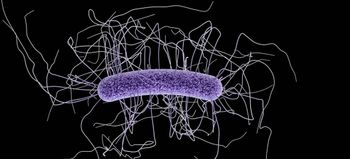
Any decrease in the devastation of Clostridioides difficile is welcomed, but an investigative team brought the numbers down by 50%. See what control measures they used.
Take 5 minutes to catch up on Infection Control Today’s highlights for the week ending November 25, 2022.

Artificial intelligence increases infection prevention and control measures in health care facilities and beyond.
Take 5 minutes to catch up on Infection Control Today’s highlights for the week ending November 18, 2022.

Most often, the first place a patient enters a hospital is through the emergency department and sometimes by emergency medical services. Where else to better stop Clostridioides difficile from coming into the hospital than at the entrance?
Saskia v. Popescu, PhD, MPH, MA, CIC, covers updates on health care associated-infections, masking at schools, and Ebola in Uganda and Dengue in Arizona. Read on for all the details.
Take 5 minutes to catch up on Infection Control Today’s highlights for the week ending November 11, 2022.

Extra-intestinal pathogenic Escherichia coli (ExPEC) and Staphylococcus aureus (S. aureus) are 2 of the leading causes of severe sepsis, and Janssen Pharmaceutical Companies of Johnson & Johnson is developing vaccines to fight those diseases.

While sequencing-based diagnostics have been used since the 1970s, only recently has the technology been used for infectious diseases.
Take 5 minutes to catch up on Infection Control Today’s highlights for the week ending November 4, 2022.

Can antimicrobial products withstand day-to-day real-life wear and tear if the antimicrobial material is part of the product and not only a coating? A study in Switzerland tried to find out.

Take 5 minutes to catch up on Infection Control Today’s highlights for the week ending October 28.