


Policy
Latest News
Advertisement
Latest Videos


Shorts
0:36
“Why Put More Children at Risk?” Robert H. Hopkins Jr, MD on CDC Vaccine Policy
8 months ago
0:45
Why the Flu Vaccine Still Matters During an H3N2 Season, According to Robert H. Hopkins Jr, MD
8 months ago
0:57
Robert H. Hopkins Jr., MD, on CDC Vaccine Schedule Changes and the Risk to Children’s Health
8 months ago

1:42
CDC Shake-Up Raises Stakes for Infection Prevention
10 months ago
by
Tori Whitacre Martonicz, MA(+1 more)
CME Content

Advertisement
More News

Sina Bavari, PhD, discusses promising preclinical findings for the investigational TNX-801 vaccine, emerging mpox variants, durable immunity, and why infection preventionists should continue preparing for future outbreaks.

Federal officials say new gain-of-function restrictions will improve biosecurity, but infectious disease experts warn limiting carefully regulated research could weaken preparedness for future outbreaks and emerging public health threats.

New US Ebola travel restrictions require many travelers leaving the DRC to spend 21 days outside the country before returning home, creating logistical, financial, and operational challenges for health care responders.

The FDA says a recent false-positive laboratory result does not change its Cyclospora outbreak investigation. In a media briefing, agency officials explained why epidemiologic evidence and traceback investigations continue to point to shredded iceberg lettuce supplied by Taylor Farms as the source of a major multistate outbreak.
Why are US citizens still concerned about infectious diseases years after COVID-19? This interview explores public perceptions of Ebola, measles, vaccination, environmental contamination, and disaster recovery, and examines how education, preparedness, and infection prevention can strengthen public health resilience.

How can you prevent Cyclospora infection? This article outlines practical food safety measures, symptom recognition, diagnostic recommendations, and prevention strategies for patients and health care professionals during the current multistate Cyclospora outbreak.
Cyclospora infections are increasing across the US. This article explains how Cyclospora cayetanensis spreads, common symptoms, current outbreak investigations, and the role IPs and IPC professionals play in surveillance, diagnosis, reporting, and public health collaboration.
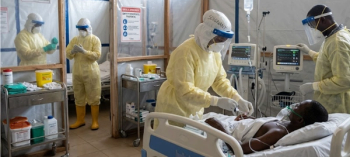
More than 100 health care workers have been infected during the current Ebola outbreak in the Democratic Republic of the Congo and Uganda. While the risk to US health care facilities remains low, the outbreak provides powerful lessons about PPE readiness, surveillance, staffing, and community trust. This commentary explores why infection preventionists should pay close attention, not because Ebola is coming here, but because the challenges are universal.

Think you know your infection control acronyms? Test your expertise with our ICT Expert Acronym Challenge! From CLABSI to VRE, this 20-question puzzle covers essential health care-acquired infection prevention terminology that every infection control professional should master. How many can you match correctly? Try the challenge now! Perfect for IPC specialists, infection prevention coordinators, and health care epidemiologists!
As the Ebola outbreak in the Democratic Republic of the Congo and Uganda grows, this commentary examines why sustained investment in NETEC and the National Special Pathogen System remains essential for US preparedness.
A real-world study from Brazil found the TAK-003 dengue vaccine provided strong protection against symptomatic disease and hospitalization, offering new evidence to inform vaccination strategies during large dengue outbreaks.
What determines whether an Ebola outbreak explodes? According to a new CDC model, it may be less about the virus and more about how long it spreads before it's recognized. Early detection remains one of the most powerful tools in infection prevention.
A poster at the APIC Annual Conference and Exposition held from June 15 to 17, 2026, in Nashville, Tennessee. After managing bloodborne pathogen exposures affecting more than 3,000 patients, Providence Health & Services developed a multidisciplinary playbook to improve preparedness, communication, and response during future large-scale events.
The 2026 FIFA World Cup will present one of the most complex infectious disease challenges ever faced by infection preventionists and public health officials. Spanning 3 countries, 16 host cities, and millions of international travelers, the tournament creates opportunities for the spread of respiratory illnesses, foodborne diseases, sexually transmitted infections, vector-borne pathogens, and rare high-consequence diseases. While the matches will last only a few weeks, surveillance efforts will need to continue for months afterward as infections such as tuberculosis and other travel-associated diseases emerge.

A large real-world study involving more than 430,000 adults aged 65 years and older found comparable effectiveness between adjuvanted and high-dose influenza vaccines, reinforcing current ACIP recommendations and giving health care systems greater flexibility during vaccine procurement and influenza season planning. In this Q&A, Mendel Haag, PhD, senior director of the Center of Outcomes Research & Epidemiology in global medical affairs at CSL Seqirus, discusses vaccine confidence, influenza misinformation, operational barriers to vaccination, and why ongoing real-world evidence remains critical for protecting vulnerable older adult populations.

The MV Hondius hantavirus outbreak exposed a critical surveillance gap: by the time official alerts were issued, exposed passengers had already dispersed across multiple countries. This article explores how infection preventionists can use emerging open-source dashboards, real-time data aggregation tools, and internal informatics systems to bridge the dangerous lag between exposure events and actionable public health intelligence. From cruise ship outbreaks to facility-level exposures, the piece examines how digital surveillance may help IPs shift from reactive outbreak reconstruction to faster, proactive containment strategies.

The 2026 Bundibugyo Ebola outbreak is rapidly escalating across the DRC and Uganda, exposing how fragile global outbreak preparedness becomes when surveillance systems, community engagement programs, and frontline public health infrastructure are allowed to erode. This article examines how delayed detection, funding cuts, weakened infection prevention capacity, and growing community resistance are complicating containment efforts for a strain with no approved vaccine or targeted treatment. The outbreak is becoming a stark reminder that global health security depends on sustained investment long before the next emergency begins.

Test your infection prevention and control knowledge with this IPC-themed crossword puzzle featuring terms and concepts related to hand hygiene, sterilization, PPE, outbreak prevention, and health care-associated infections. Designed for health care professionals, the puzzle offers an engaging way to reinforce key IPC principles while promoting education and awareness.
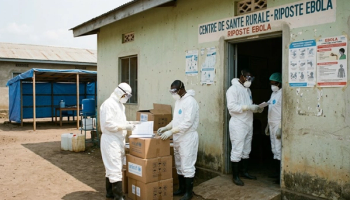
The 2026 Ebola outbreak is forcing infection prevention teams to confront a difficult question: Are hospitals truly prepared for a high-consequence infectious disease event today? With the rare Bundibugyo strain spreading across Central Africa and no licensed vaccine or approved treatment available, experts say now is the time for facilities to reopen, review, and test the HCID response plans many have not touched since 2015.
The 2026 Ebola outbreak has now spread to the Democratic Republic of Congo and Uganda, with the WHO reporting more than 513 cases and over 130 suspected deaths linked to the Bundibugyo strain, which currently has no approved vaccine or treatment. This article examines the outbreak through both a global health and infection prevention lens, highlighting concerns over weakened public health infrastructure, CDC staffing cuts, reduced USAID funding, and lessons still unlearned from prior Ebola and COVID-19 responses. Experts warn that while widespread US transmission remains unlikely, early investment in global outbreak response is critical to preventing future public health emergencies.
Johns Hopkins experts warn malaria remains a global threat despite vaccine progress. Drug resistance, climate change, and funding cuts could reverse gains, highlighting the need for sustained investment, surveillance, and layered prevention strategies.

A new global study reveals meningitis caused 259,000 deaths in 2023, with children most affected, highlighting stalled progress, vaccine gaps, and the need for stronger surveillance and prevention strategies.

Antimicrobial resistance threatens all of modern medicine. Infectious disease expert Amesh Adalja, MD, FIDSA, senior scholar at the Johns Hopkins Center for Health Security, warns that health care workers face occupational exposure to drug-resistant bacteria. Judicious antibiotic use and policy reforms like the PASTEUR Act are critical solutions.
Tuberculosis affects 10.7 million annually. IPC professionals prevent health care-associated TB through respiratory isolation, staff screening, and contact investigation. World TB Day 2026 affirms TB elimination is achievable through dedicated infection prevention.

Federal court halts vaccine schedule changes, upholding evidence-based immunization practices. ICT reached out to key opinion leaders to find out their thoughts
Advertisement
Advertisement
Trending on Infection Control Today
1
What HIV/AIDS Taught Health Care About Needlesticks and Occupational Exposure
2
Is Your Hospital Treating Trash Like Medical Waste? Rethinking Sustainable Waste Management
3
Once a Teacher, Always a Teacher: Why Infection Prevention Is Education
4
At AHE Exchange26: Building Safer, Smarter Reusable Linen Programs
5