






Take 5 minutes to catch up on Infection Control Today’s highlights for the week ending December 3.

Take 5 minutes to catch up on Infection Control Today’s highlights for the week ending December 3.

Vaccinations continue to be the key strategy. The administration is looking at ways to encourage adults to get booster doses, as well as opening family clinics to get children vaccinated, and adults booster doses.

Scientists have yet to determine the lethality and transmissibility of the Omicron variant.

Some epidemiologists reportedly posit that Omicron might be a way out of the COVID-19 pandemic if the variant’s symptoms are mild, as some initial reports indicate.
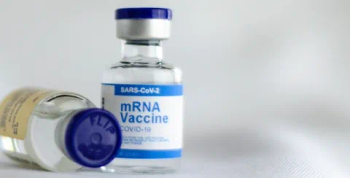
Booster shots are being pushed as a way to offer more protection against Omicron and hopefully ward off a fifth wave of COVID-19 in the United States.

Health care workers at facilities that treat patients who have Medicare or Medicaid coverage were required to get their first dose of a COVID-19 vaccine by this Sunday. Ten states asked for a temporary injunction and got it.

Although not much has been disclosed about Omicrom so far, its appearance made the WHO label it a variant of concern and caused a cascade of travel restrictions around the world.

Kevin Kavanagh, MD: “One person with COVID-19 can spend months in the ICU, which would prevent 10 or 20, non-COVID-19 cases from going to the ICU, whether it’s for a coronary bypass, or just angioplasty, or getting a cancer procedure. You have 10 or 20 times the number of patients that can’t get care for other serious illnesses.”

Perhaps another reason why pregnant women should get the COVID-19 vaccine? Investigators found COVID-19 infection altered the mothers’ immunity at delivery, and gestational COVID-19 exposure alters the immunity of the newborns.

La’Titia Houston MPH, BSN, RN, CIC: “We work not only with the bedside nurses and the sterile processors, but even with our clinicians, our physicians. They want a timeout before the procedure is even performed because they want to ensure that the scope did pass during the high-level disinfection procedure.”

Recent research into COVID-19 suggests that health care systems need to move beyond the idea that pathogen spread happens either via droplets or aerosolized particles. Patients can generate the full range of respiratory particles.
Confusion surrounding just who should get COVID-19 booster shots addressed in latest guidance from the Centers for Disease Control and Prevention.

Kevin Kavanagh, MD: “The deer apparently live with COVID-19 quite well, but, yet rapidly spread it amongst the herds. And that’s actually very problematic, because if it finds a host that it doesn’t make sick, but yet it can mutate and change and then reinfect other animals and plus mankind, that is one of the worrisome scenarios that could take place.”

Health care professionals were getting vaccinated at a steady clip. Then came the drop-off. Now, only about 70% are fully vaccinated. Infection preventionists to the rescue?

There is growing evidence that fully vaccinated should be defined as having 3 doses of an mRNA vaccine.
Take 5 minutes to catch up on Infection Control Today’s highlights for the week ending November 19.

The CDC is expected to approve the move today. But some experts question: Does it go far enough? Shouldn’t everybody get a booster?

As part of infection prevention against COVID-19, schools spent millions of federal dollars trying to upgrade ventilation systems. That money has been ill-spent, warn some experts.
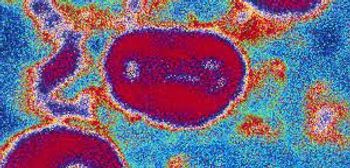
If smallpox reemerges, it could be devastating with its 30% fatality rate and an ability to spread comparable to the Delta variant of COVID-19.

One of many presentations at the ISSA Show North America 2021 this week seeks to light an entrepreneurial fire under an old concept.

A hospital system in India was able to vaccinate 90% of health care workers in part by using role models, photos, and social media, according to a new study.

No health care worker is immune from the dangers of handling sharps. Physicians hold a rate just under that of nurses, mostly related to use of scalpels, but are less likely to report these injuries.
Take 5 minutes to catch up on Infection Control Today’s highlights for the week ending November 12.

What does the post-COVID-19 future look like for infection preventonists? Great strides in infection prevention have been made because of the COVID-19 response, but look for them to be modified moving forward.

Adenosine triphosphate (ATP) bioluminescence needs technological enhancement if it’s to reach its full potential as a disinfection tool, says a study.