




Infection preventionists and other health care providers need masks that can easily be fit-tested or are more moldable to ensure a good seal—Saskia v. Popescu, PhD, MPH, MA, CIC.
Infection preventionists and other health care providers need masks that can easily be fit-tested or are more moldable to ensure a good seal—Saskia v. Popescu, PhD, MPH, MA, CIC.
The ability of any infectious agent to maintain constant transmission enables it to be an ongoing threat to public health. Few pathogens have achieved greater success at ongoing transmission potential than the influenza virus.

IPs know the reliable sources and are familiar with reading scientific studies and being able to translate those findings to staff in an understandable way.

Preliminary data for the last quarter of 2020 revealed a jump of 34% in methicillin-resistant Staphylococcus aureus (MRSA) compared with the same quarter in 2019. Several states had much higher increases. In Arizona, for instance, rates leapt 80%; in New Jersey, that figure was 99%.

University of Oxford investigators used contact tracing to conclude that vaccinated individuals are less likely to spread COVID-19 even if they become reinfected.
The efficacy of the Pfizer/BioNTech vaccine wanes 6 months after the second dose to about 50%, but not because of the Delta variant, according to a study in The Lancet.

As rates of infection, hospitalization, and deaths from COVID-19 plummet, we’re reminded that we’ve been here before. Too many Americans remain unvaccinated and too many questions about SARS-CoV-2 remain unanswered.
Unlike influenza, SARS-CoV-2 uses ACE2 receptors to infiltrate cells. Similar to HIV, SARS-CoV-2 can silently spread throughout the host’s body and attack almost every organ.
Take 5 minutes to catch up on Infection Control Today’s highlights for the week ending October 1.

Results unveiled at IDWeek 2021 disprove any misconceptions about pediatric COVID-19 cases lacking severity.

While 55.9% of Americans are fully vaccinated and 64% of Americans have received at least 1 dose of a vaccine, only 31% of pregnant individuals have been fully vaccinated. The CDC urges health care providers to convince pregnant women to get vaccinated.

Pro: Health care professionals work around vulnerable patients, and in environments that might be contaminated by COVID-19. Con: Patients want to see their caregiver’s face.

A huge peer reviewed study in PLOS Medicine underscores just how much of a threat long COVID-19 presents: 1 in 3 survivors display symptoms of the disease 3 to 6 months after initial infection.

The CDC’s Katryna Gouin, MPH: “…[I]deally tracking antibiotic use at the facility level should be automated using either electronic health records or long-term care pharmacy dispensing data because manual tracking of antibiotics is time intensive.”

Joshua Nosanchuk, MD, Programs Chairperson for ID Week: “What the infection preventionists are doing I think is a true blessing for our community. And not always as well recognized as it should be…. I just want to say thank you to all the people that are doing this work.”

Coupling risk communication and effective engagement with the community can provide opportunities to change behavior and shape awareness of basic practices that can break the chain of transmission for many diseases.

Infection preventionists across health care settings struggle with a myriad of problems during this pandemic. IPs at nursing homes have it particularly hard.
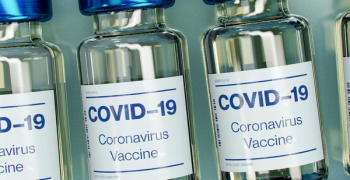
Even if not hospitalized, COVID-19 often produces the most severe infection individuals will experience in their lifetimes and can produce lasting symptoms of fatigue, weakness, brain fog and cardiovascular damage.

Rebecca Leach, MPH, BSN, RN, CIC: “[Compassion fatigue is] a hard topic for us because we’re not used to talking about this kind of thing in infection prevention. We’re very much focused on evidence-based care and standards. And so, this delves into a little bit of dealing with our emotions, right? And in health care, we don’t talk about that kind of thing.”
Take 5 minutes to catch up on Infection Control Today’s highlights for the week ending September 24.
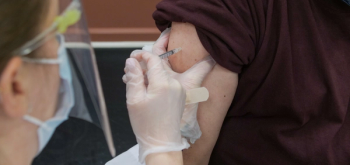
In a highly unusual move, CDC Director Rochelle Walensky, MD, overruled the agency’s panel of experts, saying that health care workers should get COVID-19 booster shots.

All the ancillary and support staff, including infection preventionists, have been called upon to help support the work of the frontline caregivers and are subject to the same stressors and potential for burnout.

If children get vaccinated and no new variant emerges, new infections will drop from 134,000 a day now to about 9,000 a day by March, according to 1 scenario. Deaths would fall to about 100 a day.
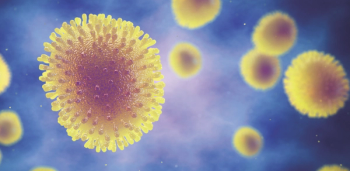
The season of respiratory tract infections is upon us. Influenza, rhinovirus, respiratory syncytial virus, and pertussis—as well as COVID-19—once again are attacking many individuals across the US and worldwide.

Investigators concluded that their data demonstrate the “high and stable effectiveness” of the single-dose COVID-19 vaccine across both high-risk patient subpopulations, as well as residents in areas more adversely affected by the delta variant.