



Sterile Processing
Latest News
Advertisement
Latest Videos



CME Content


Advertisement
More News

At AORN 2026 in New Orleans, a colorectal SSI bundle shows how standardized intraoperative nursing practices, interdisciplinary collaboration, and data tracking can reduce infections and improve surgical outcomes.
At AORN26 in New Orleans, a poster highlights surgical smoke risks, urging nationwide evacuation policies to protect health care workers and patients and strengthen nurse-led advocacy for safer operating rooms.
AORN26 highlights a colorectal SSI prevention bundle using evidence-based isolation techniques, interdisciplinary collaboration, and audit tracking to improve compliance and reduce infection risk in perioperative practice.
AORN26 highlights a multidisciplinary, culture-driven approach that reduced colon surgical site infections by over 27%, demonstrating how standardized bundles, collaboration, and perioperative alignment can significantly improve patient outcomes.
AORN26 highlights how using the teach-back method during PACU discharge education improved patient understanding and reduced surgical site infections, demonstrating the critical role of communication in infection prevention beyond the OR.
AORN26 highlights how collaboration between the operating room and sterile processing department (SPD) reduced instrument contamination, minimized case delays, and improved patient safety, reinforcing the critical role of SPD partnerships in perioperative infection prevention.
AORN26 highlights a hands-on Scrub Bootcamp program that improves perioperative nurse readiness, confidence, and procedural skills, offering a scalable model to strengthen operating room training and patient safety.

The cohosts of Contagious Conversation speak with Tori Whitacre Martonicz, lead editor of Infection Control Today, about her presentation at the SoCal SPA Spring Conference, and how the conference speakers emphasized leadership beyond titles, urging SPD professionals to share knowledge, speak up, and turn everyday insights into safer patient care practices.
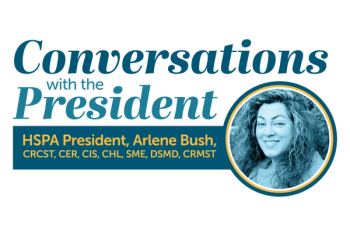
HSPA President Arlene Bush, CRCST, CER, CIS, CHL, SME, DSMD, CRMST, discusses certification advocacy, Capitol Hill efforts, workforce challenges, and why sterile processing is essential to patient safety, urging leaders to recognize and support the professionals behind every successful surgical outcome.


AI and agentic systems are transforming infection prevention by enabling real-time surveillance, predictive risk modeling, and earlier intervention, shifting health care from reactive response to proactive prevention and improving patient safety outcomes.

A former infection prevention professional shares his battle with MRSA and sepsis, revealing the lasting impact of health care–associated infections and why vigilance, accountability, and patient advocacy matter more than ever.

A new human factors study reveals the hidden complexity behind sterile processing. Research from the Medical University of South Carolina shows how sterile processing, operating rooms, and courier networks function as one interconnected system. Understanding “work as done” rather than “work as imagined” may be key to improving surgical safety and supporting frontline staff.

Dental assistants manage sterilization, infection control, and patient education—yet most states require zero formal training. They earn the lowest wages in dental offices. Meet Sherrie Busby's 42-year mission to secure standardized credentialing and fair recognition. (Audio podcast)
When sterile instruments look perfect but hidden soil remains, patient safety is at risk. In this in-depth ICT article, Marjorie Wall, EDBA, CRCST, CIS, CHL, CSSBB, explains why ultrasonic cleaning is not just equipment, but a critical quality system, and how failures in cavitation, lumen flushing, or water quality can quietly undermine infection prevention in the operating room and sterile processing department.

Why small lapses in cleaning can lead to significant infection control consequences—and how dentistry can close the gaps.
In this ICT podcast, HSPA President Arlene Bush reflects on a year of global collaboration, shifting standards, and the realities of compliance in sterile processing. She shares why 2026 should focus on celebrating throughput wins, strengthening training through rounding, and leading with empathy in high-stress departments.

As 2026 begins, Infection Control Today®'s Editorial Advisory Board reflects on a challenging year shaped by misinformation, policy uncertainty, and relentless change, reaffirming a commitment to science, truth, and supporting IPC professionals who keep showing up for patients and public health.

Are you curious what the Top 5 Infection Control Today interviews were in 2025? Read this article to find out.
When infection control slips, the consequences can be serious: patient harm, staff illness, fines from OSHA/local inspectors, and damage to your reputation. That’s why training isn’t optional; it’s essential.


Thank you, IPC professionals, from Infection Control Today!

With hospitals across the country accelerating investments in automation, why does human competence remain vital?
Advertisement
Advertisement
Trending on Infection Control Today
1
How Purposeful Infection Prevention Rounding Supports Patient Safety and EVS Collaboration
2
UPMC’s Genomic Surveillance Award Opens the Door to Funding Conversations
3
The Clean Bite: Making Dental Infection Control Part of Every Day
4