

At AORN 2026, Colleen Becker, PhD, MSN, RN, CCRN-K, highlights how nursing education must evolve with technology, generational learning styles, and workforce shortages to better prepare nurses for modern health care challenges.
At AORN 2026, Colleen Becker, PhD, MSN, RN, CCRN-K, highlights how nursing education must evolve with technology, generational learning styles, and workforce shortages to better prepare nurses for modern health care challenges.
At AORN 2026 in New Orleans, a colorectal SSI bundle shows how standardized intraoperative nursing practices, interdisciplinary collaboration, and data tracking can reduce infections and improve surgical outcomes.
At AORN26 in New Orleans, a poster highlights surgical smoke risks, urging nationwide evacuation policies to protect health care workers and patients and strengthen nurse-led advocacy for safer operating rooms.
At AORN 2026, experts highlight gaps in endoscope reprocessing, stressing pre-cleaning, visual inspection, and borescope use to improve patient safety and strengthen perioperative and sterile processing collaboration.
At AORN 2026, experts highlight how dedicated perioperative infection preventionists reduce surgical site infections, improve staff engagement, and drive ROI through standardized practices, real-time education, and data-driven strategies.
AORN26 highlights a colorectal SSI prevention bundle using evidence-based isolation techniques, interdisciplinary collaboration, and audit tracking to improve compliance and reduce infection risk in perioperative practice.
AORN26 highlights a multidisciplinary, culture-driven approach that reduced colon surgical site infections by over 27%, demonstrating how standardized bundles, collaboration, and perioperative alignment can significantly improve patient outcomes.
AORN26 highlights how using the teach-back method during PACU discharge education improved patient understanding and reduced surgical site infections, demonstrating the critical role of communication in infection prevention beyond the OR.
At AORN 2026, Erica Smith, DrPH, MBA, shares a practical framework for turning infection prevention guidelines into flexible, sustainable policies that help perioperative teams improve compliance without overwhelming staff or overcomplicating protocols.
AORN26 highlights how collaboration between the operating room and sterile processing department (SPD) reduced instrument contamination, minimized case delays, and improved patient safety, reinforcing the critical role of SPD partnerships in perioperative infection prevention.
AORN26 highlights a hands-on Scrub Bootcamp program that improves perioperative nurse readiness, confidence, and procedural skills, offering a scalable model to strengthen operating room training and patient safety.

The Association of periOperative Registered Nurses (AORN) Global Surgical Conference & Expo 2026 is coming up soon. It will be held in New Orleans, Louisiana, from April 11 to 14. To give a taste of what will be available, Infection Control Today® is publishing the as-yet unposted interviews from 2025. This interview is on a poster titled “Advocacy Reduces Infection Related to Anastomotic Leaks and Incidental Lacerations.”
Sterile processing departments face high-stakes challenges daily. At AORN 2025, Marjorie Wall outlined transformative strategies to improve safety, efficiency, and cross-departmental collaboration, and also discussed HSPA 2025.

Sterile processing expert Kevin Anderson urges perioperative nurses to deepen collaboration with SPD teams to enhance OR efficiency, reduce SSIs, and improve patient outcomes.

ICT interviews Damien Berg, VP of strategic initiatives, who promises HSPA education, outreach, and growth. It will empower sterile processing professionals through standards updates, networking, and renewed purpose in patient safety.

Communication breakdowns between the operating room and central processing led to delays and frustration—until collaboration, cross-training, and shared goals turned metrics around and strengthened teamwork.

Occupational exposure to surgical smoke significantly alters biological and oxidative stress markers in operating room staff, highlighting urgent risks and the need for improved safety measures.
At AORN 2025, Dr. Michael Sinnott called for a unified safety culture—one that protects both patients and staff through shared responsibility, accountability, and systemic change.
Pennsylvania Hospital cut complex spinal fusion surgical site infections by over 31% through a multidisciplinary initiative focused on evidence-based interventions and collaborative surgical care.
A barcode-based tracking system for surgical instruments has slashed packing errors, boosted staff training, and dramatically improved patient safety through precise, real-time traceability.
John Kimsey’s interactive sterile processing department game bridges understanding between the operating room and sterile processing teams, promoting collaboration, hands-on learning, and improved patient safety through real-world simulation.

From April 5 to 8, 2025, thousands of perioperative nurses will gather in Boston for the 2025 AORN Global Surgical Conference & Expo—a transformational experience designed to elevate nursing practice, build lifelong connections, and advance surgical care.

Boston is a great place to go to conferences. But what else is there to do? Read on to find out!

Infection Control Today (ICT) had the privilege of catching up with Vangie Dennis, MSN, RN, CNOR, CMLSO, at the Association of periOperative Registered Nurses (AORN) Global Surgical Conference & Expo 2024. As the former president of AORN and an esteemed figure in perioperative services, Vangie Dennis shared insights into her recent endeavors and the exciting new chapter she's embarked upon.
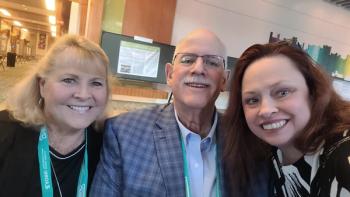
Discover research by Peter Graves, BSN, RN, CNOR, and Maureen Spencer, MEd, RN, CIC, FAPIC, the lasting impact and hidden expenses of SSIs, shedding light on effective prevention strategies.
During AORN's 2024 conference, Michael Sinnott, MBBS, FACEM, FRACP, shared insights on enhancing safety education's impact. Learn how to engage audiences and ensure lasting lessons in health care instruction.

Here are 5 highlights from Infection Control Today®'s (ICT®’s) wide-ranging coverage of the infection prevention and control world. Everything from interviews with known opinion leaders to the news that infection preventionists and other health care professionals can use on their jobs.
Patient safety is as important as staff safety. Yet, how do health care instructors get others to remember their lessons? One presentation, given by Michael Sinnott, MBBS, FACEM, FRACP, at the AORN International Surgical Conference & Expo 2024, had a unique suggestion.
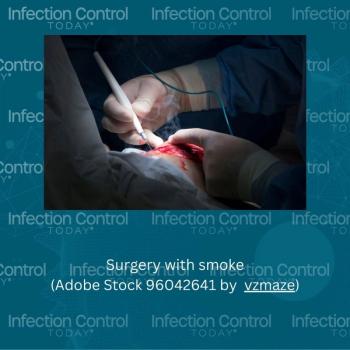
At the AORN’s International Surgical Conference & Expo 2024, a team from Massachusetts General Hospital (MGH) showcased their transformative project, "Becoming Smoke-Free in the OR." This initiative underscored the critical need for smoke evacuation in surgical settings.