
Today's Infection Intel discusses updates from Johnson & Johnson MedTech, Merck and Ridgeback, MicroLumix, and Evinature. Read on to learn the latest.
Today's Infection Intel discusses updates from Johnson & Johnson MedTech, Merck and Ridgeback, MicroLumix, and Evinature. Read on to learn the latest.

Discover SHEA's visionary 10-year plan to reduce HAIs by advancing infection prevention strategies, understanding transmission, and improving diagnostic practices for better patient outcomes.
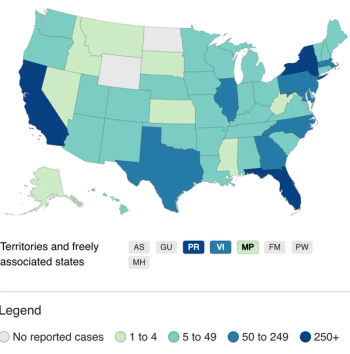
Explore how climate change accelerates the spread of mosquito-borne diseases like dengue and Zika, highlighting innovative solutions, challenges, and the urgent need for global action.

Learn more about how effective air pressure regulation in health care facilities is crucial for controlling airborne pathogens like tuberculosis and COVID-19, ensuring a safer environment for all patients and staff.

Discover how a groundbreaking color additive for disinfectant wipes improved hospital cleanliness by 69.2%, reduced microbial presence by nearly half, and enhanced cleaning efficiency—all without disrupting workflows.
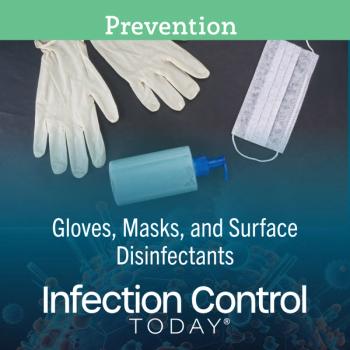
Gloves, masks, and surface disinfectants are infection prevention powerhouses. Equip your practice with these essentials to protect patients and staff this cold and influenza (flu) season.

A CDC report reveals 25 years of splash pad-linked waterborne outbreaks, highlighting risks from pathogens like Cryptosporidium. Prevention requires better hygiene, water treatment, and public health strategies.
Infection Control Today’s Infection Intel learns more about Stryker’s Oculan Lighting Platform and Hexaware Technologies’ Clinical Data Automation as a Solution (CDAaaS).
Infection preventionists play a vital role in health care, leveraging change management techniques to overcome resistance, unite stakeholders, and implement strategies prioritizing patient safety.

A critical H5N1 case in a British Columbia teen underscores zoonotic disease challenges, highlighting the virus's mutation potential and the need for vigilance and cross-sector collaboration.
A new study finds nearly 80% of hospitals lack sufficient infection prevention staffing, linking understaffing to increased health care-associated infections and highlighting a need for reform.
Lyme disease, caused by Borrelia bacteria and transmitted by black-legged ticks, demands vigilant prevention, timely diagnosis, and effective treatment to minimize health and public safety risks.

Mount Sinai Brooklyn’s expanded Candida auris screening protocols identified more cases, enabling timely isolation and disinfection measures to prevent outbreaks and enhance patient safety in hospital settings.
The Bug of the Month helps educate readers about existing and emerging pathogens that are clinically important in today's health care facilities.

Germitec, STERIS, ASP, and Zuno Medical are pioneering sterilization advancements with groundbreaking technologies that enhance SPD workflows, improve patient safety, and redefine infection control standards.
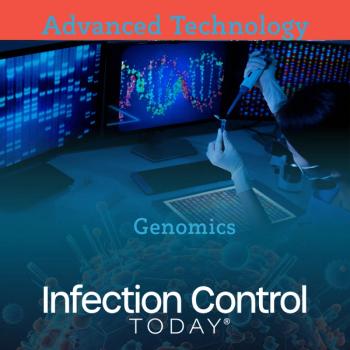
According to new research, genomic surveillance is transforming health care-associated infection detection by identifying outbreaks earlier, enabling faster interventions, improving patient outcomes, and reducing costs.
Get Well’s digital patient engagement platform decreases hospital-acquired infection rates by 31%, improves patient education, and fosters involvement in personalized care plans through real-time interaction tools.
Supporting grieving colleagues can feel daunting, but small gestures of empathy and respect for boundaries can profoundly impact their healing while maintaining workplace connection.
Shyld AI's autonomous UV sanitization system leverages AI to target high-risk surfaces, enhancing infection prevention, improving patient safety, and optimizing hospital workflows without disrupting operations.
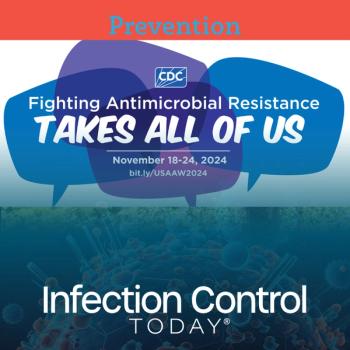
The CDC’s US Antibiotic Awareness Week emphasizes a One Health approach, uniting humans, animals, and environmental health to fight antimicrobial resistance and promote responsible antibiotic use.

Madhavi Ponnapalli, MD, discusses effective wound care strategies, including debridement techniques, offloading modalities, appropriate dressing selection, compression therapy, and nutritional needs for optimal healing outcomes.

At IDWeek, Invivyd highlighted Pemgarda’s effectiveness under FDA Emergency Use Authorization for immunocompromised patients, demonstrating efficacy against evolving COVID-19 variants since the Omicron strain.

The Leapfrog Group enhances hospital safety by publicizing hand hygiene performance, improving patient safety outcomes, and significantly reducing health care-associated infections through transparent standards and monitoring initiatives.
The Cherokee parable of 2 wolves illustrates the importance of emotional intelligence in infection prevention. Feeding the "positive wolf" fosters resilience, collaboration, and meaningful leadership.
Michelle S. Cespedes, MD, MS, discusses the challenges of managing multimorbidity and polypharmacy in HIV treatment, emphasizing patient education, evolving guidelines, and real-world insights from the REPRIEVE study.
Longhorn Vaccines and Diagnostics revealed promising data on universal influenza vaccine LHNVD-110 and AMR sepsis vaccine LHNVD-303 at IDWeek 2024, addressing critical global health challenges.
Learn how Germitec’s Chronos uses patented UV-C technology for high-level disinfection of ultrasound probes in 90 seconds, enhancing infection control, patient safety, and environmental sustainability.
The CDC HICPAC discussed updates to airborne pathogen guidelines, emphasizing the need for masks in health care. Despite risks, the committee resisted universal masking, highlighting other mitigation strategies

Clostridioides difficile infections burden US healthcare. Electronic Hand Hygiene Monitoring (EHHMS) systems remind for soap and water. This study evaluates EHHMS effectiveness by comparing C difficile cases in 10 hospitals with CMS data, linking EHHMS use to reduced cases.