

AAMI TIR17:2024 provides updated, evidence-based guidance on material compatibility with sterilization modalities. It offers essential insights for medical device design and ensures safety without compromising functionality.
AAMI TIR17:2024 provides updated, evidence-based guidance on material compatibility with sterilization modalities. It offers essential insights for medical device design and ensures safety without compromising functionality.
Veterinary infection control experts Leslie Kollmann, BS, AAS, CVT, CIC, Denise Waiting, LVT, and Leslie Landis, LVT, BS, discuss challenges, zoonotic disease risks, and the importance of education, collaboration, and resource development in animal care facilities.

Take 5 minutes to catch up on Infection Control Today’s highlights for the week ending March 23, 2025.
The Bug of the Month helps educate readers about existing and emerging pathogens that are clinically important in today's health care facilities.
This week's Infection Control Today's Hot Topics in IPC discusses outbreak updates on measles and avian flu and the latest in global health disruptions.

A Candida auris outbreak in a burn intensive care unit (BICU) in Illinois has highlighted the persistent challenges of infection control in high-risk health care settings. Despite rigorous containment efforts, this multidrug-resistant fungal pathogen continued to spread, underscoring the need for enhanced prevention strategies, environmental monitoring, and genomic surveillance.

Dr Noah Greenspan discusses the evolving understanding of long COVID, current treatment strategies, diagnostic challenges, and the critical need for research and awareness in post-viral syndromes.

"The greater impact of gratitude, whether localized or systemic, is to increase the opportunities for others to experience gratitude and to experience higher levels of gratitude in both personal and professional environments."
In this remembrance of SMART4TB and Project ACCLERATE, 2 global health initiatives, Heather Stoltzfus, MPH, RN, CIC, explains what they are and why they serve as a warning of what has been lost and what more could be lost in the future.
Discover how wise leadership in infection control transforms challenges into opportunities, fosters teamwork, and safeguards patient safety through emotional intelligence, strategic vision, and inspiring action.
This week's Infection Control Today's Hot Topics in IPC covers the latest in measles outbreak, the Sudan Ebola Virus (SVD) outbreaks, and more.
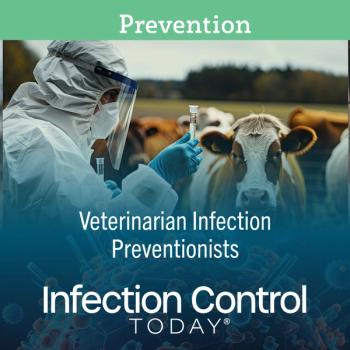
Danielle Banks, a UK-based veterinary nurse, discusses the growing importance of infection prevention in animal care, tackling antimicrobial resistance, hand hygiene, and adapting human health care protocols.
Budget cuts to the CDC threaten disease surveillance, outbreak response, and public health programs, increasing risks from measles, avian flu, and future pandemics while straining health care infrastructure nationwide.
Health care-associated infections pose a global threat. In the op-ed, experts advocate for Far-UVC light as a safe, effective tool to reduce airborne pathogens, enhancing infection control in hospitals and public spaces.
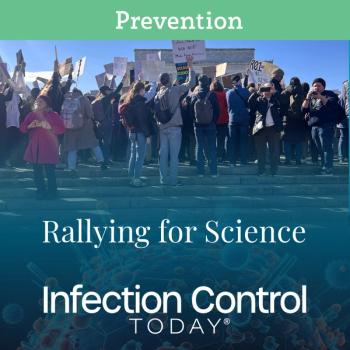
Infection Control Today's Editorial Advisory Board member and contributing editor, Heather Stoltzfus, MPH, RN, CIC, recently joined the Stand Up for Science rally in Washington, DC. She gives a first-person perspective on the rally and the rally-goers' strong message.

Ultrasonic cleaners enhance sterile processing by removing microscopic bioburden, ensuring safer medical instruments, reducing infection risks, and improving efficiency compared to manual cleaning alone.

David Angulo, MD, infectious disease expert, discusses the alarming rise of drug-resistant fungal infections, the lack of treatment options, and the urgent need for new antifungal therapies.

Experts Niobis Queiro, MBA, and Imamu Tomlinson, MD, MBA, discuss how Medicaid cuts could impact infection prevention, reduce vaccinations, and strain health systems, exacerbating health disparities.

The growing H5N1 avian flu outbreak threatens public health and food security. Without urgent action, mutations could spark human-to-human transmission, creating the next global pandemic.
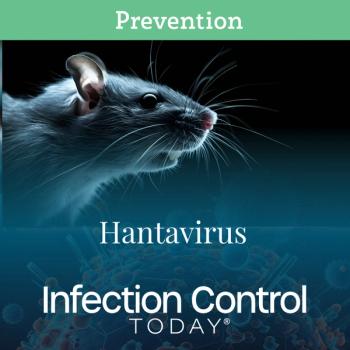
Hantavirus infections transmitted through rodent exposure can be deadly. To reduce transmission, infection prevention personnel should focus on early detection, rodent control, and public awareness.
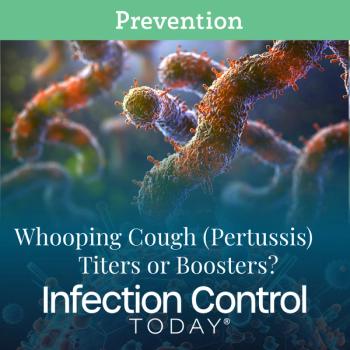
Whooping cough immunity can wane over time. Experts explain why a titer test may not be the best choice and boosters are essential for lasting protection.

Reusable health care textiles enhance infection prevention, reduce waste, and strengthen supply chains. Hygienically clean textiles offer a sustainable, cost-effective alternative to disposable PPE, ensuring patient safety and environmental responsibility.
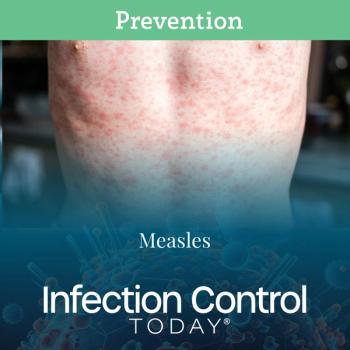
Measles cases in Canada are rising, with 227 infections reported in early 2025. Public health officials urge vaccination to prevent outbreaks, severe complications, and further community transmission.
Experts like Michael Glazier, MD, warn that waning immunity, declining vaccination rates, and increased transmission are driving this resurgence. Vaccination remains the best defense, with pediatricians urging timely immunization to protect vulnerable populations and prevent further outbreaks.

Will Duffy’s Final Experiment highlights the importance of experience in changing minds. Public health can use similar methods to improve vaccine confidence and counter misinformation.

HHS’s move to eliminate public input on health policies threatens patient safety and infection prevention. APIC demands transparency, accountability, and urgent action to protect public health.
Reusable PPE offers a cost-effective, sustainable solution for health care, reducing waste and improving supply chain resilience. Overcoming adoption barriers requires education, policy support, and industry-wide collaboration.

Norovirus, flu, and measles cases are surging, along with rising fears about avian flu, which are raising public health concerns. Valerie Cadet, PhD, shares expert advice on prevention, immunity, and debunking viral misinformation. Stay protected.
The recent measles-related death in Texas has reignited fears about the consequences of declining vaccination rates and misinformation. Once declared eliminated in the US, measles is resurging with over 150 cases and climbing. APIC warns: this crisis is preventable—but only if we act now.
Silent threats lurk within—heart infections can stem from unnoticed bacteria, viruses, or fungi. Infection preventionists hold the power to stop these hidden killers before they strike.