




Personal Protective Equipment
Latest News
Advertisement
Latest Videos

CME Content


Advertisement
More News
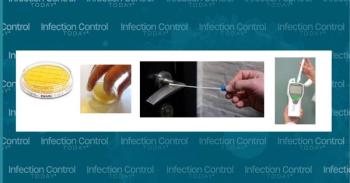
In 2003, the CDC recommended hospitals to clean and disinfect frequently touched surfaces. Later, they advised hospitals to closely supervise cleaning procedures near patients. This article explains what IPC personnel need to know about ATP testing.

The commentators at the recent HICPAC meeting had different reactions, ranging from concern to anger.

Assisted living facilities face distinct challenges when it comes to infection prevention and control due to their unique nature.
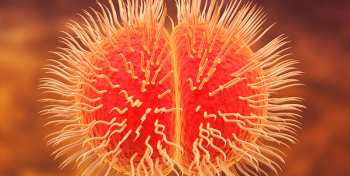
Bug of the Month helps educate readers about existing and emerging pathogens of clinical importance in health care facilities today.
In this installment of IPC Pros Helping Each Other, a long-term care infection preventionists in New Hampshire describes the IPC educational fair her facility organized for the rest of the staff. Michele M, director of nursing services, said, “[The educational fair] was a creative and interactive way to engage staff in infection control education.”
Take 5 minutes to catch up on Infection Control Today®’s highlights for the week ending July 30, 2023.

Choosing the correct disinfectant can be difficult. This expert explains how to select the proper one.
In this opinion article, the authors discuss their concerns about the recent HICPAC/CDC proposals on infectious diseases.

Mold, a menacing presence that can grow within the walls of your facility, may be lurking and waiting to cause problems. Are you equipped to deal with it?

3D-Printed PPE in emergencies seemed like a great idea during the COVID-19 pandemic. But a recent study shows they could be a contamination risk to patients and staff.
In his analysis, Kevin Kavanagh, MD, explores the measures taken by the infectious disease sector in response to the pandemic, pointing out both effective and ineffective approaches. He also discusses how the pandemic has affected the treatment of other infectious diseases.

New Haven's infection prevention department created a procedure to identify and manage COVID-19 cases in BH units based on literature findings about how it spreads.
As more and more residents in long-term care facilities get Candida auris, infection preventionists must know how to prevent, prepare for, and control a C auris outbreak. An expert explains how.
The recent increase in drug-resistant strains of Candida auris, causing mortality at rates as high as 60%, raises questions regarding the spread of this pathogen as a health care-associated infection, cleaning/disinfecting protocol, and treatment via antifungal drugs.
What is the CDC's Antimicrobial Resistance Funding map? A key opinion leader explains.

COVID-19, schools, and children are sensitive topics. Some worry about transmission in schools, while others don't see it as a concern. Which is it?
Take 5 minutes to catch up on Infection Control Today®’s highlights for the week ending June 4, 2023.

Human bodies, especially surgical personnel's hair, scalp, and skin, are a major source of bacterial contamination in the surgical environment and a major cause of SSIs. Yet, not it hasn't always been a consideration.

In the first of this new series, IPC Pros Helping Each Other: When is the right time to unmask in long-term care? One IP explains how she and her facility unmasked and what led to their decision.

Infection preventionists come from many different backgrounds. However, many left the field during the COVID-19 pandemic. It will require creative methods to preserve existing IP staff and educate those entering the field.

“It doesn't matter if the public health emergency goes away or not. Because we haven't taken advantage of the public health emergency over the last 2 years to understand and address the gaps quite apparent to every American out there.”
Establishing a permanent system for monitoring the persistence and emergence of dangerous pathogens is necessary, especially COVID-19.

Maintaining proper hand hygiene is crucial in ensuring our safety and that of those around us and is rightly celebrated worldwide.
To prevent the spread of C auris, the CDC recommends that IPs and environmental hygienists play a critical role. In this interview, the medical scientists clarify what specific actions they should take.

A study published in AJIC describes how one health care system implanted an initiative by their IPs to prevent the health care-acquired infections when COVID-19 loomed over their work.
Advertisement
Advertisement
Trending on Infection Control Today
1
Suspected Plague Case in Russia: What Infection Preventionists Should Know
2
Where to Begin With ST108: Water Testing and Implementation Readiness
3
How Can OR and Sterile Processing Teams Improve Collaboration and Instrument Readiness?
4