


Personal Protective Equipment
Latest News
Advertisement
Latest Videos





Advertisement
More News

In the heart of the hospital, decontamination technicians tackle one of health care’s dirtiest—and most vital—jobs. At HSPA 2025, 6 packed workshops led by experts Jill Holdsworth and Katie Belski spotlighted the crucial, often-overlooked art of PPE removal. The message was clear: proper doffing saves lives, starting with your own.
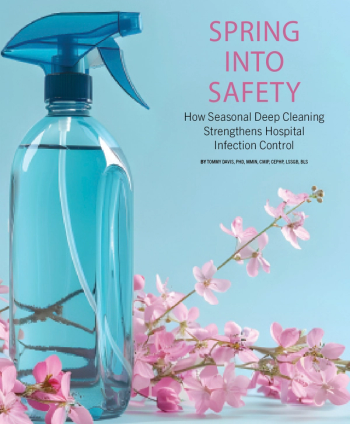
Rooted in ancient rituals of renewal, spring-cleaning has evolved from cultural tradition to a vital infection prevention strategy in modern hospitals—one that blends seasonal deep cleaning with advanced disinfection to reduce pathogens, improve air quality, and protect patients.
When an unclear airborne isolation order disrupted patient care, one infection preventionist had to unravel entrenched practices and prioritize safety, communication, and staff trust.
As infection prevention infrastructure unravels, professionals face déjà vu from the pandemic’s darkest days—making resilience not just important, but essential for survival and progress.
The disbanding of HICPAC has left infection prevention experts scrambling to preserve national standards and ensure continuity amid growing concern over science-driven public health policy. Connie Steed, MSN, RN, CIC, FAPIC, speaks with ICT.
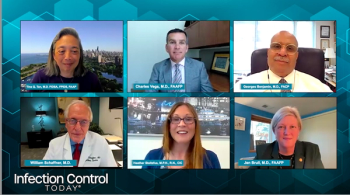
In 2025, vaccine science is thriving—but trust is faltering. ICT and Medical Economics convene experts to examine policy shifts, hesitancy, and the path forward through evidence and empathy.
The abrupt disbanding of HICPAC silences decades of infection control expertise, leaving health care workers without unified guidance as deadly threats to patient safety rise.

Despite their protective role, gloves are often misused in health care settings—undermining hand hygiene, risking patient safety, and worsening environmental impact. Alexandra Peters, PhD, points out that this misuse deserves urgent attention, especially today, World Hand Hygiene Day.

Deep feelings run strong about the COVID-19 pandemic, and some beautiful art has come out of those emotions. Infection Control Today is proud to share this poem by Carmen Duke, MPH, CIC, in response to a recent article by Heather Stoltzfus, MPH, RN, CIC.
What truly occurred during the COVID-19 pandemic? Is the new COVID.gov website accurate for those who worked in public health throughout the pandemic? A public health worker answers.
Telehealth and home care are vital for protecting high-risk patients by minimizing infection exposure, enhancing safety, and supporting prevention with technology-driven, home-based health solutions.
This week’s Infection Control Today’s Hot Topics in IPC discusses the latest in the measles outbreak, biocontainment, Group A Strep, and more.

At AORN 2025, Dr. Michael Sinnott called for a unified safety culture—one that protects both patients and staff through shared responsibility, accountability, and systemic change.

Take 5 minutes to catch up on Infection Control Today’s highlights for the week ending March 23, 2025.
A Candida auris outbreak in a burn intensive care unit (BICU) in Illinois has highlighted the persistent challenges of infection control in high-risk health care settings. Despite rigorous containment efforts, this multidrug-resistant fungal pathogen continued to spread, underscoring the need for enhanced prevention strategies, environmental monitoring, and genomic surveillance.

Dr Noah Greenspan discusses the evolving understanding of long COVID, current treatment strategies, diagnostic challenges, and the critical need for research and awareness in post-viral syndromes.
Danielle Banks, a UK-based veterinary nurse, discusses the growing importance of infection prevention in animal care, tackling antimicrobial resistance, hand hygiene, and adapting human health care protocols.

The growing H5N1 avian flu outbreak threatens public health and food security. Without urgent action, mutations could spark human-to-human transmission, creating the next global pandemic.

Reusable health care textiles enhance infection prevention, reduce waste, and strengthen supply chains. Hygienically clean textiles offer a sustainable, cost-effective alternative to disposable PPE, ensuring patient safety and environmental responsibility.
Reusable PPE offers a cost-effective, sustainable solution for health care, reducing waste and improving supply chain resilience. Overcoming adoption barriers requires education, policy support, and industry-wide collaboration.
A silent invader lurks in health care settings, exploiting human oversights to spread. Discover how vigilance, hand hygiene, and disinfection can stop infections before they begin.

The 160th CDS Midwinter Meeting showcased dental advancements, scientific courses, and infection control discussions, drawing nearly 25,000 attendees and highlighting innovations, oral pathology, and patient safety strategies.
At the 2025 Chicago Dental Society Midwinter Meeting, Dr. Marie Fluent passionately discussed infection control, emphasizing hand hygiene, waterlines, and the critical role of vaccinations in dental settings.
Proper glove use is crucial in health care settings to prevent infections. Guidelines from TJC, CDC, and WHO stress correct selection, usage, and disposal to minimize health care–associated infections (HAIs) and cross-contamination risks. Infection preventionists (IPs) play a key role in educating staff, enforcing compliance, and improving patient safety through standardized glove practices.
The US exit from the UNHRC and cuts to UNRWA funding jeopardize global health, humanitarian aid, and pandemic preparedness, isolating America and endangering millions worldwide.
Advertisement
Advertisement
Trending on Infection Control Today
1
How Can OR and Sterile Processing Teams Improve Collaboration and Instrument Readiness?
2
UPMC’s Genomic Surveillance Award Opens the Door to Funding Conversations
3
ICT Weekly Rounds: Genomic Surveillance Wins, Reprocessing Drift, and a Century-Old Measles Warning
4