

Infection prevention is everyone’s responsibility, but environmental services (EVS) professionals are often overlooked. At AHE’s Exchange25, Shannon Simmons, DHSc, is on a mission to change that.
Infection prevention is everyone’s responsibility, but environmental services (EVS) professionals are often overlooked. At AHE’s Exchange25, Shannon Simmons, DHSc, is on a mission to change that.

The Association for the Health Care Environment (AHE) is set to host its largest event of the year—Exchange Summit 2025—from June 8 to 11 in Columbus, Ohio. With over 600 environmental services (EVS) professionals expected to attend, this year’s conference focuses heavily on infection prevention, interdepartmental collaboration, and education that empowers frontline health care support leaders to improve patient safety and operational efficiency.

The Bug of the Month helps educate readers about existing and emerging pathogens that are clinically important in today's health care facilities.
As tick-borne diseases such as Lyme, Babesia, and Anaplasma increase across the US, accurate early detection remains a critical challenge. Jason Barker, ND, clinical lab educator at Vibrant Wellness, explains how innovative multiplex testing is transforming diagnostics and improving outcomes for patients and providers alike.
Manual cleaning gaps on shared hospital equipment can undermine infection control efforts. New research shows far UV-C light can serve as a safe, automated backup to reduce contamination in real-world clinical settings.
The CDC’s updated hospital respiratory reporting requirement has added new layers of responsibility for infection preventionists. Karen Jones, MPH, RN, CIC, FAPIC, clinical program manager at Wolters Kluwer, breaks down what it means and how IPs can adapt.
As infection threats evolve and the IP workforce faces burnout and attrition, a new study reveals a critical weak spot: inconsistent access to infection prevention certification—and the training needed to succeed.
Policy changes made by Robert F. Kennedy Jr as the HHS Secretary are alarming health care providers, including changes in water fluoridization, COVID-19 vaccine recommendations, and more.
New HSPA President Arlene Bush, CRCST, CER, CIS, SME, DSMD, CRMST, shares insights from the 2025 conference, including groundbreaking innovations, member engagement, and her goals for advancing the sterile processing field.
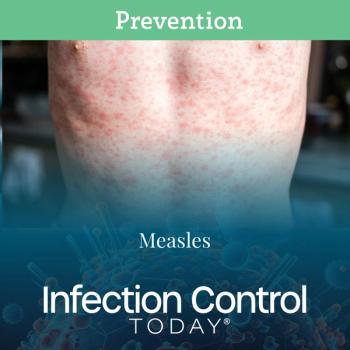
As measles cases climb across the US, discredited myths continue to undercut public trust in vaccines. In an exclusive interview with Infection Control Today, Michigan Medicine’s Marschall Runge, PhD, confronts misinformation head-on and explores how clinicians can counter it with science, empathy, and community engagement.
This issue covers COVID-19, measles, H5N1, screwworms, bedbugs, AI, and more.
In a major shift, the CDC has pulled routine COVID-19 vaccine guidance for healthy children and pregnant women, sparking sharp reactions from medical leaders.

In a strong statement, Devin Jopp, CEO of APIC, and Leah Binder, CEO of The Leapfrog Group, urge health care leaders to strengthen their commitment to infection prevention and control (IPC).

When an unclear airborne isolation order disrupted patient care, one infection preventionist had to unravel entrenched practices and prioritize safety, communication, and staff trust.

It’s a familiar request at the dentist—“close your lips around the suction.” But that small act could expose you to backflow contamination from previous patients. This first article in a brand new column by Sherrie Busby, EDDA, CDSO, CDIPC, explores the unseen risks of dental suction devices—and why patients should pause before obeying.

Flexible endoscopes revolutionized modern medicine—but their complex design poses persistent sterilization challenges. With mounting infection risks and emerging innovations, experts are rethinking how to clean and safeguard one of health care’s most indispensable tools.

With surgical site infections on the rise, experts argue that systemic antibiotics fall short, and targeted drug delivery may be the future of surgical infection prevention.

A string of infections following routine knee surgeries in Tennessee has escalated into litigation, raising questions about how—and when—health care facilities should detect outbreaks. As genomic surveillance gains traction in infection prevention, some fear it could increase legal risk. In reality, it may offer hospitals their strongest legal defense.
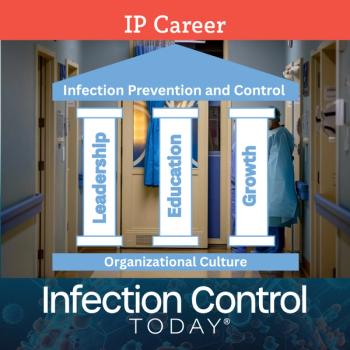
Key Takeaways from WHO’s 2024 Global Report and Insights from Real-world Experience

At the 2025 Healthcare Sterile Processing Association (HSPA) Annual Conference & Expo, Cheron Rojo, BS, FCS, CHL, CIS, CER, CFER, CRCST, spotlighted real-world gaps in sterile processing education, stressing the urgent need for better tools, training, and collaboration when handling intricate medical devices like shaver handpieces.

At the 2025 HSPA conference, experts emphasized the vital role of detergents and enzymatic cleaners in reprocessing medical devices—highlighting how temperature, concentration, and technique directly impact cleaning performance in today’s increasingly complex surgical instrumentation.
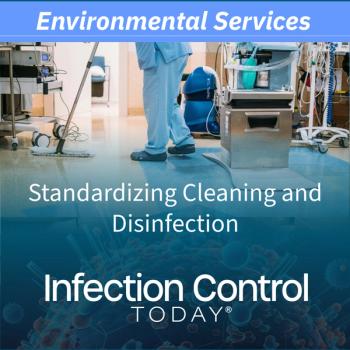
Inconsistent cleaning practices continue to jeopardize patient safety. Experts urge health care leaders to treat cleaning as clinical care—essential, standardized, and foundational to infection prevention.
HHS Secretary Robert F. Kennedy Jr. faced intense scrutiny over sweeping budget cuts and public health reforms during back-to-back hearings on Capitol Hill this week.

Invisible yet deadly, endotoxins evade traditional sterilization methods, posing significant risks during routine surgeries. Understanding and addressing their threat is critical for patient safety.

This article explores why it is essential to train housekeeping staff and leaders in health care facilities, emphasizing key reasons and evidence-based practices to back this necessity.
As infection prevention infrastructure unravels, professionals face déjà vu from the pandemic’s darkest days—making resilience not just important, but essential for survival and progress.
Far-UVC technology offers a promising solution for continuous disinfection in occupied spaces, with growing evidence supporting its safety, efficacy, and potential in health care environments.
A rare Tennessee outbreak of Mycobacterium fortuitum revealed deep gaps in infection prevention at outpatient surgery centers—where oversight, staffing, and reporting often fall short.
The disbanding of HICPAC has left infection prevention experts scrambling to preserve national standards and ensure continuity amid growing concern over science-driven public health policy. Connie Steed, MSN, RN, CIC, FAPIC, speaks with ICT.
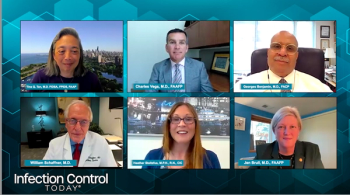
In 2025, vaccine science is thriving—but trust is faltering. ICT and Medical Economics convene experts to examine policy shifts, hesitancy, and the path forward through evidence and empathy.