



COVID-19
Latest News

Advertisement
Latest Videos








CME Content


Advertisement
More News
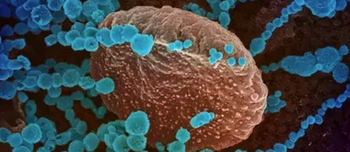
SARS-CoV-2 causes a system infection and is commonly detected in the heart and brain, exemplified by the loss of smell from brain tissue destruction and loss of cardiac function from myocarditis.

Keeping youngsters in school has become a major goal of public health and education authorities. But the current COVID-19 surge might make that harder to do.

If CDC Director Rochelle Walensky, MD, endorses the FDA’s decision, the recommendation can go into effect this week.

Anthony Harris, MD, MBA, MPH: “There are nights where I go to bed thinking, ‘Will tomorrow be the day that I read about a tremendous increase in severity in Omicron, and antibody dependent enhancement could be the cause of it?’”

CDC investigators looked at what might cause reinfections during the first wave of the pandemic.

Those dental practices that come out of the COVID-19 pandemic with an appreciation of and renewed commitment to infection control best practices will maintain the trust of their patients and survive, whereas those that scoff at the costs of doing the right thing will not.

Earloop toggles or a mask brace made for a better seal and enhanced the fit of medical masks. The mask brace “significantly improved” how cloth masks fit.

One of the benefits of contact tracing is that it’s the least intrusive of the nonpharmaceutical interventions, a study says.
Many health care workers are just tired and fed up. But we have taken oaths to protect and do no harm hence we will continue to try to keep people alive who threaten and laugh at us.

Heather Saunders, MPH, RN, CIC: “We really need to make sure that we’re taking care of our teams. Infection preventionists are burned out. This has been a long 22 months. There are likely some rough months ahead of us.”

With an eye on Omicron and the staffing shortages, the agency shortened isolation time for those who test positive for COVID-19. Infection preventionists will need to be extra vigilant.
Omicron can significantly avoid immunity created by both prior infections and vaccines, and younger people and people of “African ethnicity” have higher rates of infection with Omicron than with Delta, says a new study.
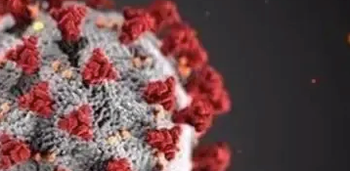
In the space of 2 days, the FDA approved at-home oral treatments for patients with mild-to-moderate COVID-19, drug that were months in development. Today, it was Merck and Ridgeback Biotherapeutics’ turn.
The US health care system, already straining to contain a Delta spike, must now deal with Omicron. One expert predicts that Omicron will infect 20% to 30% of health care workers.
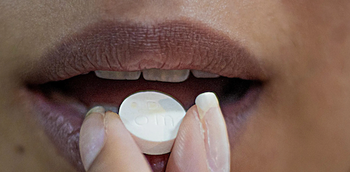
The pill, Paxlovid, showed an 88% decrease in hospitalization and death for those taking it 5 days after experiencing COVID-19 symptoms.

At a White House press briefing, President Biden outlined steps that include sending in reinforcements of doctors and nurses to areas hard hit by COVID-19.

Even though Omicron may not have as high of a fatality rate, its infectivity being 3 times higher than the Delta variant creates a grave risk to nations. Overstressed health care systems may collapse.

There is no one left to cover sick calls and vacations now. There are no vacations for nurses and doctors. There are no Christmas celebrations or New Year celebrations for these workers.

Just how much celebrating the pandemic-weary public can do turns on the vaccinated or unvaccinated question.
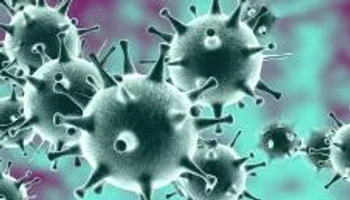
Omicron poses a grave risk to the US health care system. The US has a low rate of vaccination and obtaining boosters, and a relatively large segment of our population is elderly or immunocompromised. A 2-dose mRNA vaccine's immunity appears to rapidly wane and unlike South Africa, many in the US were fully vaccinated very early in the pandemic.
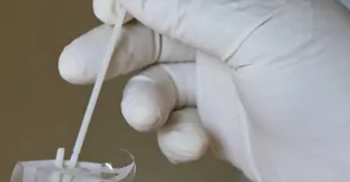
Children in the United States will be able to avoid potentially millions of hours of at-home quarantining under a testing program unveiled by the CDC today.
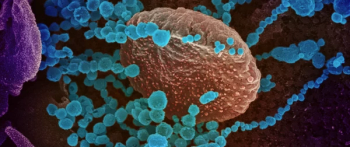
Just what health care professionals don’t want to hear. Omicron multiplies about 70 times faster than Delta or other COVID-19 variants inside human respiratory tract tissue, says a preprint study.
Take 5 minutes to catch up on Infection Control Today’s highlights for the week ending December 17

Any COVID-19 vaccine is better than none. But the CDC recommends that people get the Janssen vaccine only if they can’t get the Pfizer/BioNTech or Moderna vaccines.

The World Health Organization warns that vaccines alone won’t protect health care systems from being swamped.
Advertisement
Advertisement
Trending on Infection Control Today
1
Suspected Plague Case in Russia: What Infection Preventionists Should Know
2
Where to Begin With ST108: Water Testing and Implementation Readiness
3
How Can OR and Sterile Processing Teams Improve Collaboration and Instrument Readiness?
4