



COVID-19
Latest News
Advertisement
Latest Videos








CME Content



Advertisement
More News

Only a small percentage of the Omicron variant of COVID-19 cases require hospitalization so far, but high infectivity may turn this small percentage into a large number of patients, which will further stress our health care system.

Initial clinical data out of South Africa suggest that patients with the Omicron variant of COVID-19 don't have severe illness.

Take 5 minutes to catch up on Infection Control Today’s highlights for the week ending December 10.

The debate over whether fully vaccinated should mean three shots hasn’t concluded, as the debate over the need for four doses begins.

In a small study, Omicron appears to ward off vaccines, but those vaccines still carry plenty of wallop against the variant, and boosters enhance protection, say experts.

The looming surge from the Omicron variant may well have a lower case-fatality-rate but its high infectivity will further strain our health care system and fill our hospitals.

Three doses ought to offer ample protection from infection, the companies say.

Exactly how the new variant of COVID-19 fares against vaccinated people continues to be studied.

The number of mutations to the spike protein in Omicron suggests a very different evolutionary trail than had been seen in other iterations of COVID-19, say some experts.

If the infectivity, lethality, and immune avoidance of the Omicron variant is confirmed, it will be of utmost importance that all who can, become vaccinated. In addition, antiviral medications will become of prime importance.
Take 5 minutes to catch up on Infection Control Today’s highlights for the week ending December 3.

Vaccinations continue to be the key strategy. The administration is looking at ways to encourage adults to get booster doses, as well as opening family clinics to get children vaccinated, and adults booster doses.

Scientists have yet to determine the lethality and transmissibility of the Omicron variant.

Some epidemiologists reportedly posit that Omicron might be a way out of the COVID-19 pandemic if the variant’s symptoms are mild, as some initial reports indicate.
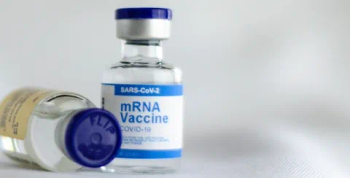
Booster shots are being pushed as a way to offer more protection against Omicron and hopefully ward off a fifth wave of COVID-19 in the United States.

Health care workers at facilities that treat patients who have Medicare or Medicaid coverage were required to get their first dose of a COVID-19 vaccine by this Sunday. Ten states asked for a temporary injunction and got it.

Although not much has been disclosed about Omicrom so far, its appearance made the WHO label it a variant of concern and caused a cascade of travel restrictions around the world.

Kevin Kavanagh, MD: “One person with COVID-19 can spend months in the ICU, which would prevent 10 or 20, non-COVID-19 cases from going to the ICU, whether it’s for a coronary bypass, or just angioplasty, or getting a cancer procedure. You have 10 or 20 times the number of patients that can’t get care for other serious illnesses.”

Perhaps another reason why pregnant women should get the COVID-19 vaccine? Investigators found COVID-19 infection altered the mothers’ immunity at delivery, and gestational COVID-19 exposure alters the immunity of the newborns.

La’Titia Houston MPH, BSN, RN, CIC: “We work not only with the bedside nurses and the sterile processors, but even with our clinicians, our physicians. They want a timeout before the procedure is even performed because they want to ensure that the scope did pass during the high-level disinfection procedure.”

Recent research into COVID-19 suggests that health care systems need to move beyond the idea that pathogen spread happens either via droplets or aerosolized particles. Patients can generate the full range of respiratory particles.
Confusion surrounding just who should get COVID-19 booster shots addressed in latest guidance from the Centers for Disease Control and Prevention.

Kevin Kavanagh, MD: “The deer apparently live with COVID-19 quite well, but, yet rapidly spread it amongst the herds. And that’s actually very problematic, because if it finds a host that it doesn’t make sick, but yet it can mutate and change and then reinfect other animals and plus mankind, that is one of the worrisome scenarios that could take place.”

Health care professionals were getting vaccinated at a steady clip. Then came the drop-off. Now, only about 70% are fully vaccinated. Infection preventionists to the rescue?

There is growing evidence that fully vaccinated should be defined as having 3 doses of an mRNA vaccine.
Advertisement
Advertisement
Trending on Infection Control Today
1
Suspected Plague Case in Russia: What Infection Preventionists Should Know
2
Where to Begin With ST108: Water Testing and Implementation Readiness
3
How Can OR and Sterile Processing Teams Improve Collaboration and Instrument Readiness?
4