




Operating Room
Latest News
Advertisement
CME Content
Advertisement



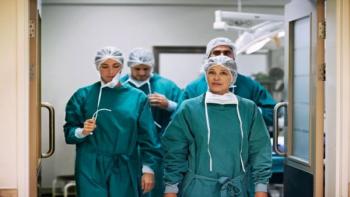


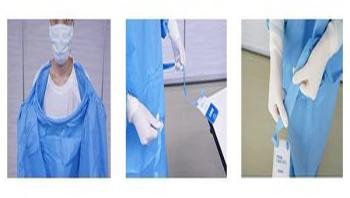
In the healthcare setting, there is an increasing need for a self-donning surgical gown that healthcare personnel can don without the need for any assistance. Also, in the context of crisis management for the Ebola virus and other severe infectious diseases, use of a gown that can be donned and removed quickly and safely as infection protection to prevent transmission to the environment is more important than ever.

A new type of wound dressing could improve thousands of people's lives, by preventing them from developing infections. The dressing, a type of compression held in place by a bandage, uses an antibacterial substance formed from the shells of crustaceans like shrimps. It is described in a paper published in the May issue of Radiation Physics and Chemistry.
A hospital's surgical services department represents one of the most sizable challenges to infection prevention and control. Surgery also presents a significant risk to patients, and together, the operating room should be on the infection preventionist's radar for healthcare-associated infection (HAI) mitigation and elimination. Research indicates that SSIs are the most common type of hospital-acquired infection. SSIs account for 20 percent of all infections that occur in the hospital setting. Although most patients recover from an SSI without any long-term consequences, they are at a two- to 11-fold increased risk of mortality. Furthermore, SSIs are the most costly of all hospital-acquired infections. With an annual estimated overall cost of $3 billion to $5 billion in the U.S., SSIs are associated with a nearly 10-day increased length of stay and an increase of $20,000 in the cost of hospitalization per admission. As many as 60 percent of SSIs are considered to be preventable. Now that the Centers for Medicare and Medicaid Services no longer pays additional amounts for the cost of treating conditions acquired in a hospital, SSIs have been targeted not only to improve clinical quality, but also to protect hospital reimbursement.
When it comes to preventing infection in the perioperative environment, infection preventionists and perioperative nurses are strong allies. We collaborate to share our unique perspectives on patient safety and uncover little known dangers or risks that put our patients at increased risk for exposure to infectious disease. However, there is a dangerous vehicle for infection transmission in the OR that is lurking right under our noses, literally-that danger is surgical smoke.

The quality and vitality of the operating room is often a balance between managing patients known or suspected with infectious disease and managing potential staff occupational exposure risks associated with treating patients. With exposure risks to emerging and re-emerging microorganisms at an unparalleled high, measuring, analyzing, and preventing exposures among surgical staff is more important now than ever.
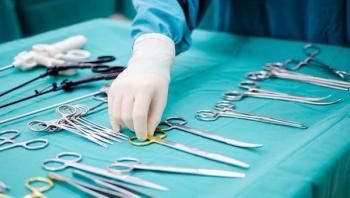
In a recent online survey of ICT readers, 73 percent of respondents indicated that they are involved in infection prevention-related product evaluation and/or purchasing for their healthcare institution, confirming the findings of Hoeksema (2011) who emphasizes that perioperative nurses play a key role in evaluating product safety, effectiveness and efficiency, environmental concerns, and cost and how these factors affect patient care. Well-informed product evaluation and purchasing is a significant way for hospitals to combat rising expenses in an environment of moderate reimbursements, Hoeksema (2011) adds.
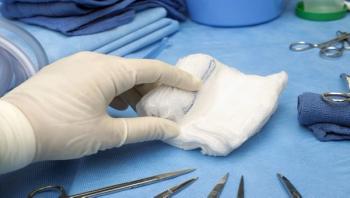
Infection prevention and surgical services departments share a united concern about retained surgical items, a healthcare threat that was No. 8 on the ECRI Institute's 2016 Top 10 Patient Safety Concerns list.

Maintaining normothermia of the surgical patient is part of the prevention of surgical site infections, and a study by Steelman, et al. (2013) found that perioperative hypothermia was among the top patient safety issues identified by perioperative nurses. In this study, AORN members employed in ambulatory and hospital settings (N = 37,022) received an electronic survey; of the 3,137 returned surveys that contained complete information, 966 respondents (30.8 percent) identified prevention of hypothermia as a high priority. However, debate over the safety of forced-air warming systems continues, and clinicians should first and foremost consider all sides of the argument when making product evaluation and purchasing decisions. Alternatives to forced-air warming include direct-conduction fluid warming systems and systems that use conductive fabric technology. Conductive fabric systems do not require the use of a disposable blanket, which can help reduce waste and keep costs down.
Advertisement
Advertisement
Trending on Infection Control Today
1
International Infection Prevention Week 2026: The Roles of IPs, SPD, and EVS
2
WHO 5 Moments for Hand Hygiene: How to Apply Them in Ambulatory and Outpatient Care
3
Sterile Processing Week: Recognizing SPD’s Role in Patient Safety and Infection Prevention
4