Using 20,000 virus samples and weather statistics, researchers have now discovered more details about how outdoor temperature and flu outbreaks are linked.
Using 20,000 virus samples and weather statistics, researchers have now discovered more details about how outdoor temperature and flu outbreaks are linked.

In the future, it will be possible to carry out tests of new drugs on bacteria much more efficiently using microfluidic devices, since each of the hundreds and thousands of droplets moving through the microchannels can act as separate incubators. So far, however, there has been no quick or accurate method of assessing the oxygen conditions in individual microdroplets. This key obstacle has been overcome at the Institute of Physical Chemistry of the Polish Academy of Sciences.

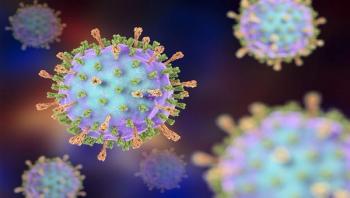
Mumps emerged among highly vaccinated populations in the Netherlands, and this offered a unique opportunity to study mumps virus transmission. In particular the extent to which asymptomatic infections in vaccinated people contribute to ongoing mumps virus transmission is uncertain. Hahné, et al. (2017) say insight into this could help project the future burden of mumps in vaccinated populations. They therefore studied the relative infectiousness of symptomatic and asymptomatic cases.
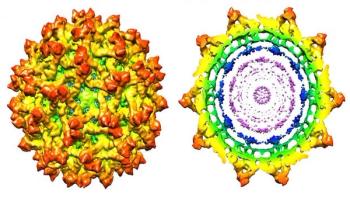
Researchers at Purdue University have determined the high-resolution structure of immature Zika virus, a step toward better understanding how the virus infects host cells and spreads.
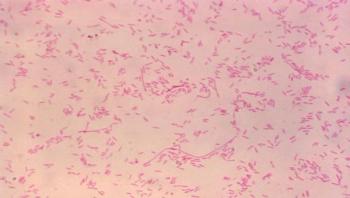


2017 promises to present a number of continuing and new challenges for the infection prevention and healthcare epidemiology community. One of the most significant for the field as well as the entire country is a new Presidential Administration. Sara Cosgrove, MD, MS, FSHEA, FIDSA, associate professor of medicine and epidemiology at Johns Hopkins University, and the 2017 president of the Society of Healthcare Epidemiologists of America (SHEA), acknowledges what she characterizes as "an enormous amount of uncertainty" about how a revamped White House and Congress could impact infection prevention and antibiotic stewardship-related issues.
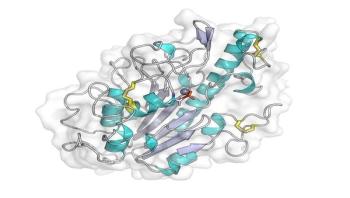
An international research team, led by the University of Bristol, has provided the first clues to understand how the mcr-1 gene protects bacteria from colistin, a last-resort antibiotic used to treat life-threatening bacterial infections that do not respond to other treatment options.