





Hand Hygiene
Latest News
Advertisement
Latest Videos







Shorts

0:50
When Gloves Were Considered Insulting to Patients
9 months ago
1:15
Why 'Gotcha' Moments Don't Work in Health Care
9 months ago

2:21
Learning Out Loud: How New IPs Build Credibility Without Becoming the “Compliance Police”
10 months ago

1:28
Infection Prevention Expands Beyond Hospitals Into Schools
a year ago
by
Tori Whitacre Martonicz, MA(+1 more)

0:32
Check Out This Bug of the Month: I Like to Hitch a Ride
a year ago
by
Isis Lamphier, MPH, MHA, CIC, AL-CIP
CME Content



Advertisement
More News

New US Ebola travel restrictions require many travelers leaving the DRC to spend 21 days outside the country before returning home, creating logistical, financial, and operational challenges for health care responders.

Foodborne outbreaks like Cyclospora are often blamed on contaminated produce, but delayed data sharing may be the larger problem. This article examines how modern digital traceability, standardized data systems, and faster outbreak investigations could reduce illnesses and improve food safety across the supply chain.

Food safety experts explain how epidemiology, traceback investigations, surveillance, and food safety practices work together to identify contamination sources during Cyclospora outbreaks while highlighting ongoing challenges in protecting the food supply.
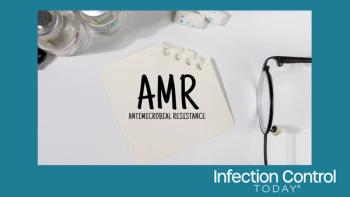
Antimicrobial resistance hotspot mapping combines laboratory results, antibiotic prescribing, patient movement, and environmental data to identify where resistant pathogens emerge and spread. Emerging research suggests integrated surveillance, AI, and One Health collaboration could improve infection prevention while helping health systems detect resistance earlier and target interventions more effectively.
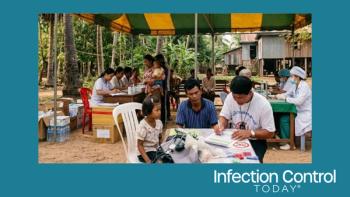
How much infection prevention training should volunteers receive before participating in medical missions? A new perspective in Infection Control Today follows one college student's experience volunteering in rural Cambodia, where he was asked to perform clinical tasks well beyond his training. Years later, he realized just how many infection prevention risks he had unknowingly encountered. The article explores what his experience reveals about volunteer preparation, resource-limited care, and why basic infection prevention education should be considered essential for anyone participating in clinical outreach. Read the full story.

Cyclospora cases continue to rise across the United States, leaving many people with questions about symptoms, testing, and treatment. In this expert commentary, a physician explains: • Why Cyclospora is difficult to diagnose • Why symptoms can last for weeks • Why investigators linked the outbreak to contaminated lettuce • Why ivermectin is not an effective treatment • How you can reduce your risk

The FDA and CDC traced a Cyclospora outbreak to lettuce from Taco Bell in 5 states. Learn the latest findings, expert guidance, and what infection preventionists need to know.

A major cyclosporiasis outbreak is underway. The CDC has confirmed 1,645 domestically acquired cases across 34 states since May 1 — with a multistate cluster of 400+ cases in Michigan, Ohio, West Virginia, and Kentucky that investigators believe may share a common food source. Lettuce and salad greens are under scrutiny. For IPs: Standard disinfectants won't eliminate Cyclospora, and the parasite is routinely missed in standard lab panels without a specific order.
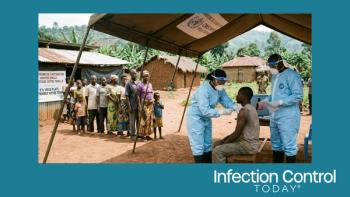
The latest Ebola outbreak is raising new challenges for global public health. Existing Ebola vaccines were designed for a different viral strain, leaving health care workers and communities to rely on supportive care while researchers test promising new treatments and vaccine candidates. Learn what this means for infection prevention professionals.
Cyclospora infections are increasing across the US. This article explains how Cyclospora cayetanensis spreads, common symptoms, current outbreak investigations, and the role IPs and IPC professionals play in surveillance, diagnosis, reporting, and public health collaboration.

Think you know your infection control acronyms? Test your expertise with our ICT Expert Acronym Challenge! From CLABSI to VRE, this 20-question puzzle covers essential health care-acquired infection prevention terminology that every infection control professional should master. How many can you match correctly? Try the challenge now! Perfect for IPC specialists, infection prevention coordinators, and health care epidemiologists!
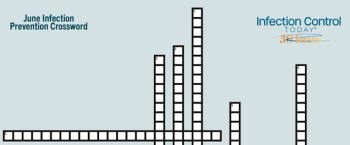
Infection Control Today's June's Infection Prevention and Control Crossword Puzzle
Published: | Updated:
Test your infection prevention and control knowledge with this IPC-themed crossword puzzle featuring terms and concepts related to hand hygiene, sterilization, PPE, outbreak prevention, and healthcare-associated infections. Designed for health care professionals, the puzzle offers an engaging way to reinforce key IPC principles while promoting education and awareness.

The Bug of the Month helps educate readers about existing and emerging pathogens that are clinically important in today's health care facilities.

The MV Hondius hantavirus outbreak exposed a critical surveillance gap: by the time official alerts were issued, exposed passengers had already dispersed across multiple countries. This article explores how infection preventionists can use emerging open-source dashboards, real-time data aggregation tools, and internal informatics systems to bridge the dangerous lag between exposure events and actionable public health intelligence. From cruise ship outbreaks to facility-level exposures, the piece examines how digital surveillance may help IPs shift from reactive outbreak reconstruction to faster, proactive containment strategies.
On World Hand Hygiene Day (May 5), new insights highlight a critical gap: even when compliance is documented, sanitizer dose size may limit effectiveness, making proper ABHR dosing essential for true infection prevention.
Handwashing gaps persist despite high awareness, according to Bradley’s 2026 survey. As World Hand Hygiene Day (May 5) marks 17 years, experts stress clean restrooms, access, and behavior change are key to infection prevention.

Improper glove use in health care can turn protective barriers into vectors of infection, increasing contamination risks, cross-transmission, and HAIs when hand hygiene and proper protocols are not consistently followed.

At AORN 2026, Colleen Becker, PhD, MSN, RN, CCRN-K, highlights how nursing education must evolve with technology, generational learning styles, and workforce shortages to better prepare nurses for modern health care challenges.
At AORN 2026 in New Orleans, a colorectal SSI bundle shows how standardized intraoperative nursing practices, interdisciplinary collaboration, and data tracking can reduce infections and improve surgical outcomes.
At AORN26 in New Orleans, a poster highlights surgical smoke risks, urging nationwide evacuation policies to protect health care workers and patients and strengthen nurse-led advocacy for safer operating rooms.
AORN26 highlights a colorectal SSI prevention bundle using evidence-based isolation techniques, interdisciplinary collaboration, and audit tracking to improve compliance and reduce infection risk in perioperative practice.
AORN26 highlights a multidisciplinary, culture-driven approach that reduced colon surgical site infections by over 27%, demonstrating how standardized bundles, collaboration, and perioperative alignment can significantly improve patient outcomes.
AORN26 highlights how using the teach-back method during PACU discharge education improved patient understanding and reduced surgical site infections, demonstrating the critical role of communication in infection prevention beyond the OR.
AORN26 highlights how collaboration between the operating room and sterile processing department (SPD) reduced instrument contamination, minimized case delays, and improved patient safety, reinforcing the critical role of SPD partnerships in perioperative infection prevention.
AORN26 highlights a hands-on Scrub Bootcamp program that improves perioperative nurse readiness, confidence, and procedural skills, offering a scalable model to strengthen operating room training and patient safety.
Advertisement
Advertisement
Trending on Infection Control Today
1
When the Ebola Outbreak is Spreading Faster Than the Response Can Follow
2
Pathogen Pulse: The Alarming Rise of Dengue in Florida
3
Sterile Processing Burnout and Cognitive Overload: How Interruptions, IFUs, and Human Factors Affect Patient Safety
4
Long-Acting HIV Treatment and PrEP: How Weekly Oral and Injectable Therapies Could Change Adherence and Patient Choice
5